15 YEARS OF SERVICE

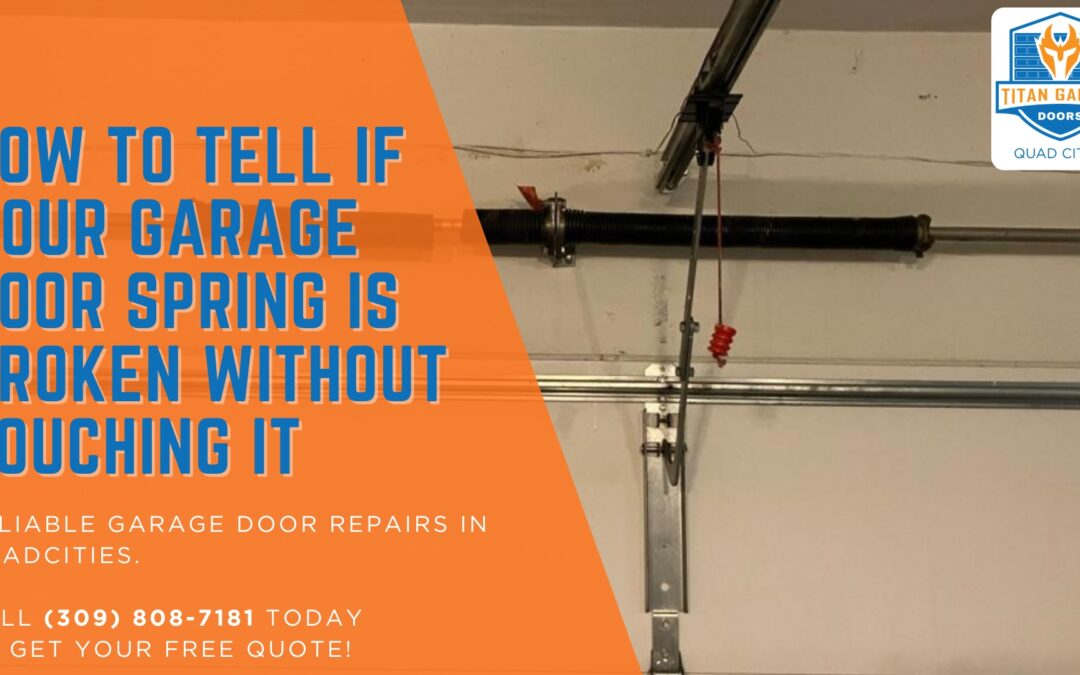
A garage spring broken problem can stop your whole day without warning. Your garage door may only lift a few inches, feel unusually heavy, or make a loud bang that leaves you wondering what happened. It is tempting to test the remote again, pull the emergency release, or look closer at the spring. However, garage door springs carry strong tension and should never be touched, adjusted, or removed by a homeowner.
The safest approach is to watch for signs from a distance. This guide explains how to spot a broken garage door spring, what the door may do differently, and when it is time to call Titan Garage Doors Quad Cities for help.
Garage Spring Broken? Start With Safe Signs
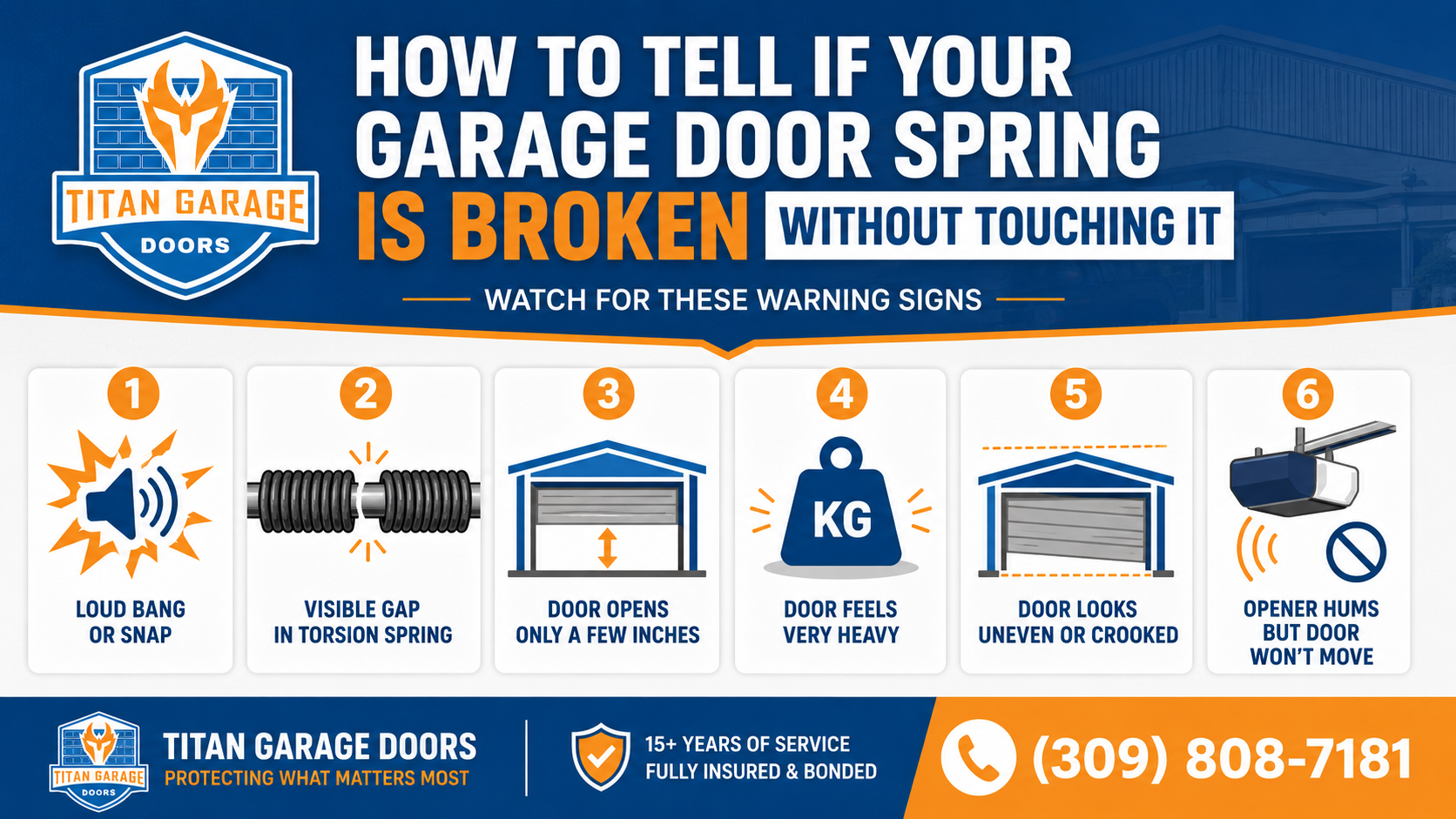
You do not need to touch the spring to notice a problem. In many cases, the garage door itself gives you clear warning signs.
Look for these changes:
- The garage door opens only a few inches.
- The opener hums, but the door will not lift.
- The door feels much heavier than usual.
- One side of the door hangs lower.
- The door moves unevenly or shakes.
- You heard a loud bang from inside the garage.
- The garage door will not stay open.
- The opener strains or stops during operation.
A working spring helps carry the door’s weight. When it breaks, the opener may not have enough power to lift the door. That is why a door can seem stuck even though the opener still has power.
How to Spot a Garage Spring Broken From a Distance
Also, the type of spring affects what you may see. Most residential garage doors use either torsion springs or extension springs.
Torsion Spring Warning Signs
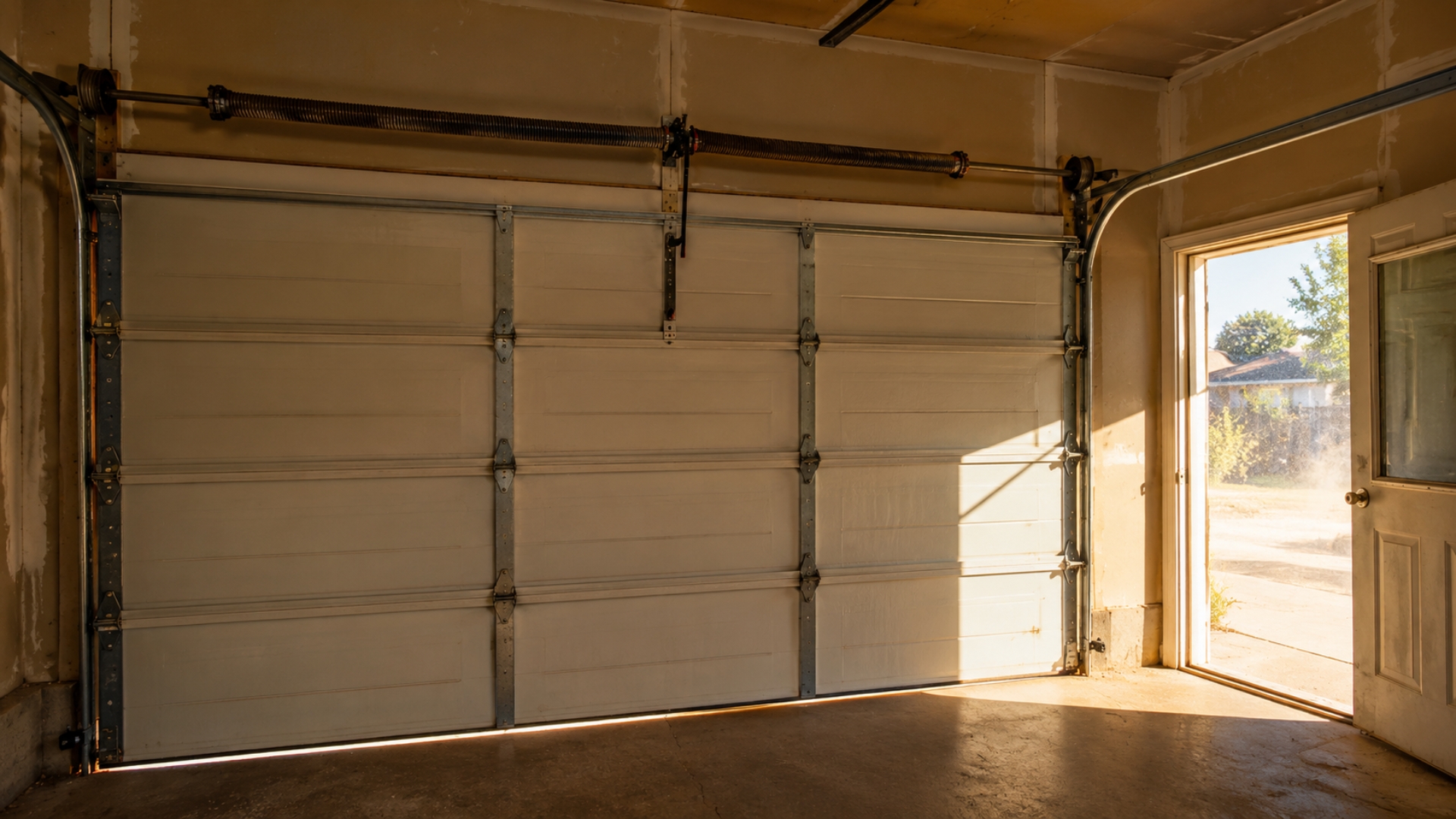
Torsion springs sit above the garage door opening on a metal shaft. They help lift the door by twisting and releasing stored energy.
A clear sign of a garage spring broken issue is a visible gap in the torsion spring coil. The break may create a space of about two inches between the separated sections.
You may also notice:
- A spring that looks split in the middle.
- A door that will not open more than a few inches.
- A loud snap or bang before the door stopped working.
- An opener that strains but cannot lift the door.
Do not stand on a ladder or reach toward the shaft for a closer look. A visual check from the ground is enough.
Extension Spring Warning Signs
Extension springs sit along the sides of the door tracks. They stretch when the door closes and help pull the door upward.
Unlike torsion springs, extension springs naturally show spacing while they stretch. So, a visible gap between coils is not always a sign of failure.
Instead, look for:
- A spring hanging loose or separated.
- A broken section near the track.
- A safety cable sitting out of place.
- One side of the door rising differently from the other.
- A door that feels heavy or unstable.
If an extension spring looks damaged, keep clear of the area. Do not touch the spring, pulley, cable, or safety cable.
Watch How the Garage Door Moves
Garage door behavior can reveal a lot. If the spring fails, the door loses the support that makes it easier to lift.
A garage spring broken problem may cause the door to:
- Stop after moving only a few inches.
- Rise slowly, then reverse.
- Look crooked while opening.
- Shake or jerk during movement.
- Slam shut faster than normal.
- Stay closed even when the opener is running.
The most important warning sign is a door that feels very heavy. A properly balanced garage door should not require extreme effort to lift. If it suddenly feels much heavier, stop testing it.
Do not use the opener repeatedly. Each attempt can strain the motor, bend the rail, or create more damage to the garage door system. Instead, call for an emergency garage door repair immediately.
Sounds That Can Signal a Garage Spring Broken Issue
A loud bang is one of the most common signs of a broken garage door spring. Homeowners often describe it as a popping, snapping, or crashing sound from the garage.
That sound can happen when the spring releases tension suddenly.
Other sounds may include:
- Loud popping while the door moves.
- Grinding from the opener as it struggles.
- Scraping caused by uneven door movement.
- Repeated clicking without door movement.
Squeaking alone does not always mean the spring is broken. It can come from dry rollers, hinges, or other moving parts. However, squeaking combined with a heavy or uneven door deserves professional attention.
What Not to Do When a Garage Spring Is Broken
A broken spring is not a DIY repair. The door may look simple from the outside, but the spring system holds powerful tension.
Avoid these mistakes:
- Do not touch the spring.
- Do not loosen cables or brackets.
- Do not use the opener again and again.
- Do not pull the emergency release if the door is open, crooked, or unstable.
- Do not try to lift the door alone if it feels heavy.
- Do not stand under a door that will not stay open.
- Do not attempt to replace a spring using online tutorials.
A garage spring broken situation can also affect cables, rollers, tracks, and the opener. A certified technician can inspect the full system and make sure the door is safe before restoring normal movement.
Broken Spring Signs and Safe Next Steps
This table can help you recognize whether the problem may involve the spring system. If the door is heavy, uneven, or unstable, professional garage door spring repair is the safest next step. Here’s a quick cheat sheet for handling a broken garage door spring:
| What You Notice | What It May Mean | Safe Next Step |
|---|---|---|
| Loud bang from the garage | Spring may have snapped | Stop using the door and inspect from a distance |
| Door opens only a few inches | Opener cannot lift the full door weight | Stop testing the opener |
| Door feels very heavy | Broken spring or balance issue | Do not lift it alone |
| Visible gap in torsion spring | Torsion spring may be broken | Call a garage door technician |
| Door hangs unevenly | Cable, spring, or track issue | Keep people and vehicles away |
| Opener hums but door will not move | Opener is straining against a heavy door | Stop using the remote and wall button |
| Door drops or closes quickly | Spring support may be lost | Do not stand under the door |
Hot Summer Days in Quad Cities and Older Garage Springs
Hot weather does not usually break a healthy spring by itself. However, summer heat in Quad Cities, frequent daily use, and seasonal temperature changes can expose wear in older springs.
A spring that has been used for years may begin to weaken. More trips in and out during summer can also add stress to the system.
Watch for early signs such as:
- More noise during door movement.
- A slower or rougher lift.
- A door that starts to move unevenly.
- Visible rust or wear near the spring area.
- An opener that seems to work harder than before.
A yearly garage door tune-up can help find worn springs and balance issues before they become an emergency repair.
Why Professional Garage Door Spring Repair Matters
A professional spring repair does more than replace a broken part. The technician also checks whether the door is balanced, the cables are secure, the rollers move smoothly, and the opener was damaged during the failure.
This matters because a new spring must match the door’s weight, size, and lift system. The wrong spring can make the door unsafe or cause the opener to work harder than it should.
Titan Garage Doors Quad Cities can inspect the full door system, explain the issue clearly, and recommend the right repair before work begins.
FAQs
Can a garage door still open with a broken spring?
Sometimes the opener may move the door a few inches even with a broken garage door spring. However, it should not be forced. The opener can strain or fail when it tries to lift a heavy door without spring support.
How can I tell if my torsion spring is broken?
Look for a visible gap in the coil above the garage door to know if your torsion spring is broken. You may also hear a loud bang and notice that the door will not lift normally.
Is a loud bang always a broken garage door spring?
A loud bang is not always a sign of a broken spring, but it is a common. If the door also feels heavy or will not open, stop using it and schedule an inspection.
Can I manually open the garage door with a broken spring?
Do not try to open your garage door manually unless a professional tells you it is safe. A broken spring can make the door very heavy and difficult to control. For power outage guidance, see our related guide on how to open a garage door manually.
How soon should I repair a broken garage door spring?
As soon as possible, call for an emergency garage door spring repair. Avoid using the door until it has been inspected and repaired. Waiting can strain the opener and create more damage.
Final Thoughts on Identifying a Broken Garage Door Spring
A garage spring broken issue can make your garage door heavy, uneven, noisy, or impossible to lift. The safest way to respond is to stay clear of the spring system, stop using the opener, and look for warning signs from a distance.
A visible torsion spring gap, a loud bang, loose extension spring parts, or a door that will not lift normally all point to a problem that needs professional attention.
Safe Garage Door Spring Repair in Quad Cities
If you think your garage spring is broken, do not force the door or try to repair the spring yourself. Titan Garage Doors Quad Cities can inspect the spring system, check the door balance, and provide a safe repair solution for your home.
Call Titan Garage Doors Quad Cities at (309) 808-7181 today for garage door spring repair and a Free Estimate.