15 YEARS OF SERVICE


A garage door problem can make you want to grab a toolbox and figure it out fast. Maybe the remote stopped working or the door will not close. Maybe the opener hums, but the door barely moves. Some DIY garage door troubleshooting is safe and helpful, especially when the issue is simple. But some problems are not worth guessing on. Springs, cables, tracks, and heavy doors can become dangerous when handled the wrong way. This guide will help you understand what you can check safely, what should be left to a trained technician, and why a professional diagnosis can save time, stress, and repair costs.
Short Summary
DIY garage door troubleshooting is safe for simple checks like remote batteries, power issues, dirty sensors, and basic visual inspections. But if the door is heavy, crooked, off track, stuck, or making loud popping sounds, professional diagnostics are the safer choice.
DIY Garage Door Troubleshooting: What Homeowners Can Check First
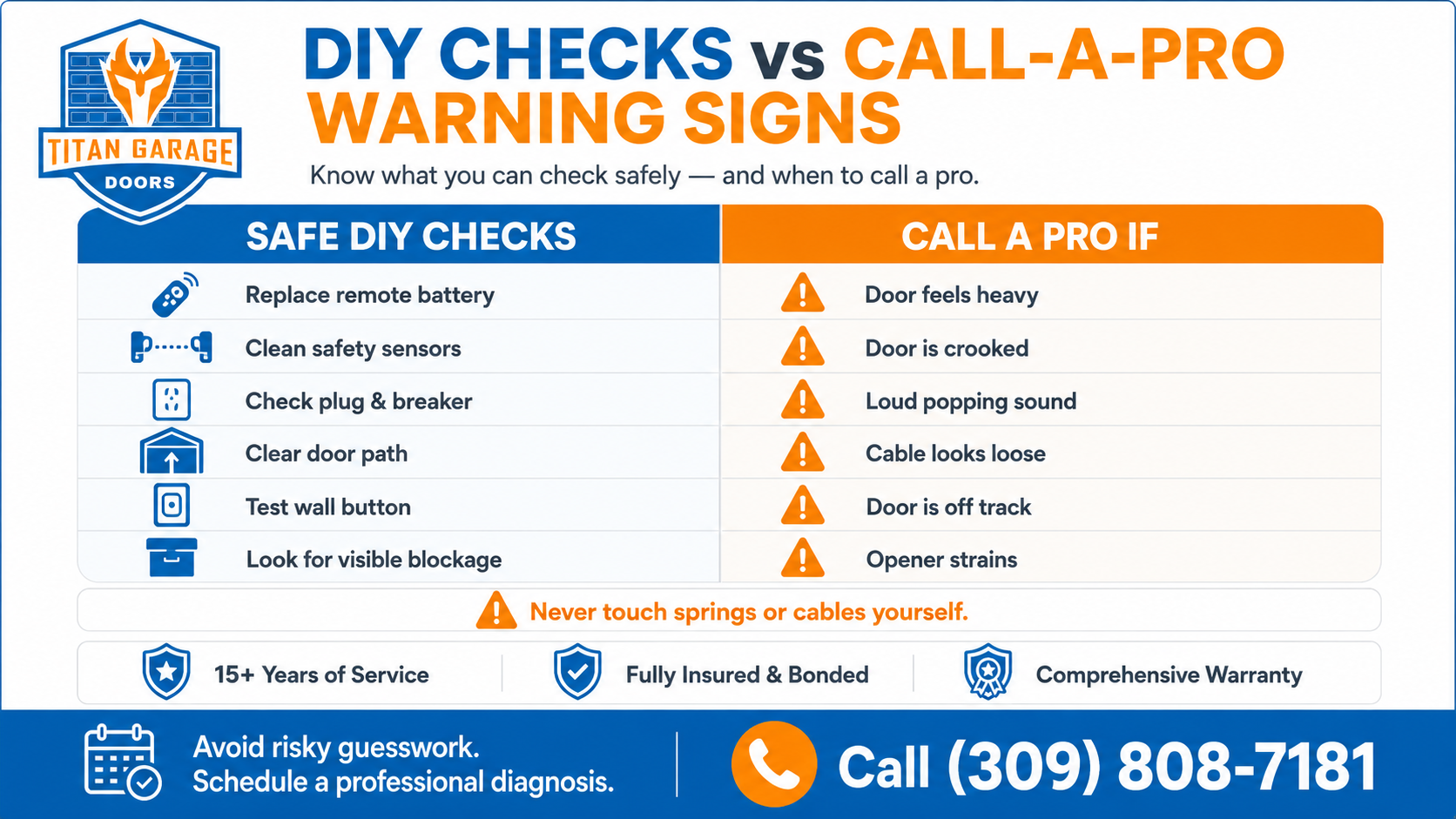
Not every garage door issue needs immediate repair. Sometimes the fix is simple. Before you assume the worst, start with safe checks that do not involve springs, cables, or heavy parts.
Here are simple things homeowners can inspect:
- Replace the remote battery.
- Check if the opener is plugged in.
- Test the wall button.
- Look for a tripped breaker.
- Clean the safety sensors.
- Move boxes or tools away from the sensor path.
- Check if the door is locked.
- Listen for unusual sounds.
- Look for anything blocking the tracks.
These steps can help you narrow down the issue without putting yourself near high-tension parts. If the door starts working after a battery change or sensor cleaning, you may not need a repair visit.
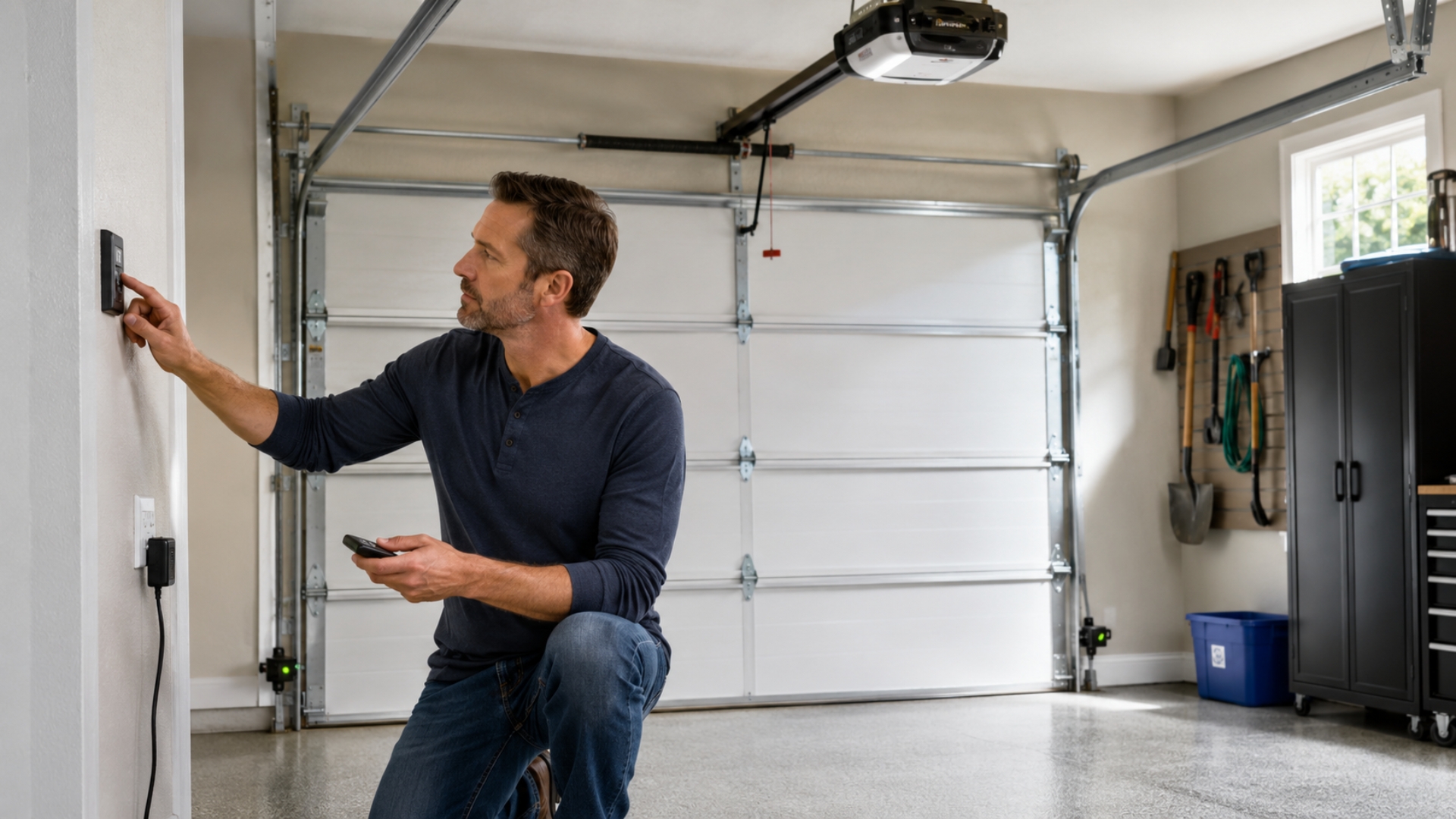
However, stop troubleshooting if the door feels heavy, hangs crooked, or will not move smoothly. That means the problem may be deeper than a simple DIY fix.
DIY Garage Door Troubleshooting for Remote and Opener Problems
Remote and opener problems are often the safest place to start. If the door does not respond, check the remote battery first. Then try the wall button.
If the wall button works but the remote does not, the remote may need a new battery, reprogramming, or replacement. If neither the remote nor the wall button works, the opener may not be getting power.
Try these safe checks:
- Make sure the opener is plugged in.
- Check the breaker panel.
- Replace the remote battery.
- Test the remote from different distances.
- Look for a blinking opener light.
- Make sure the antenna wire is hanging down from the opener.
If the opener clicks or hums but the door will not move, stop. The opener may be trying to move a stuck or damaged garage door. Forcing it can strain the motor and damage the door system. Instead, call for expert garage door opener repairs in Moline.
DIY Garage Door Troubleshooting for Sensor Issues
Garage door safety sensors sit near the bottom of the tracks. They stop the door from closing when something blocks the path. If your door starts to close, then reverses, the sensors may be dirty, blocked, or misaligned.
You can safely:
- Wipe the sensor lenses with a soft cloth.
- Remove leaves, tools, or boxes near the sensors.
- Check if both sensor lights are steady.
- Gently adjust the sensor position if one light is blinking.
Do not ignore sensor problems. The sensors are part of the safety system. If cleaning and clearing the area do not solve the problem, a technician can check wiring, alignment, and opener settings.
When DIY Garage Door Troubleshooting Should Stop
Some garage door issues should not be handled as a DIY project. A garage door can weigh hundreds of pounds. Springs and cables carry strong tension. If one of those parts fails, the door can drop, shift, or pull loose suddenly.
Stop and call a professional if you notice:
- The door feels very heavy.
- The door drops fast.
- The door is crooked.
- A cable is loose or hanging.
- A spring looks broken or stretched.
- The door is off track.
- The opener rail bends while running.
- The door makes a loud pop or bang.
- The door shakes or jams.
These signs often point to spring, cable, track, roller, or balance problems. DIY garage door troubleshooting can help you spot the warning signs, but it should not turn into risky repair work.
DIY Garage Door Troubleshooting vs Professional Diagnostics
A professional diagnosis does more than confirm that something is wrong. It finds the real cause. That matters because one symptom can have several causes.
For example, a door that will not close may have dirty sensors. But it may also have damaged wiring, poor alignment, track resistance, or opener setting issues. A door that feels heavy may have spring trouble, cable damage, or balance problems.
Certified technicians can check:
- Spring tension and balance
- Cable condition
- Roller movement
- Track alignment
- Opener strain
- Sensor wiring
- Door weight
- Hardware wear
- Safety reversal settings
This helps prevent guesswork. Instead of replacing random parts, you get a clearer answer about what needs repair and what still works.
Cost Considerations for DIY Garage Door Troubleshooting
Before deciding between DIY garage door troubleshooting and professional diagnostics, it helps to understand where costs can change. Some checks are low-cost and simple, but risky repairs can become more expensive if the wrong part is forced, adjusted, or replaced.
| Cost Factor | DIY Consideration | Professional Diagnostic Value |
|---|---|---|
| Remote or keypad issue | Usually low-cost if it only needs batteries or reprogramming | Confirms if the issue is the remote, receiver, keypad, or opener |
| Sensor problem | Cleaning sensors is usually simple and low-cost | Checks alignment, wiring, safety settings, and opener response |
| Opener not responding | Homeowners can check power, plug, breaker, and wall button | Finds motor, circuit board, wiring, or opener failure issues |
| Loud door movement | Lubrication may help if parts are only dry | Identifies worn rollers, hinges, bearings, or track problems |
| Heavy garage door | DIY should stop immediately | Checks spring balance, cables, and door weight safely |
| Crooked or uneven door | Forcing it can create more damage | Finds cable, roller, track, or spring-related issues |
| Wrong repair attempt | May lead to extra parts, damage, or safety risks | Helps prevent guesswork and unnecessary repairs |
| Emergency repair need | Delays can make the problem worse | Faster diagnosis can reduce damage and restore safe operation |
Why Professional Diagnostics Can Save Money
DIY repairs may seem cheaper at first. But guessing wrong can make the problem worse. A worn roller can become track damage. Also, a strained opener can become motor failure. A loose cable can turn into a door that hangs unevenly.
Professional diagnostics can help you avoid:
- Replacing parts that are not the real issue
- Forcing a damaged door
- Damaging the opener
- Bending tracks
- Making cable or spring problems worse
- Creating a safety risk
A certified technician, like Titan Garage Doors Quad Cities, can explain what is urgent, what can wait, and what repair option makes sense. That gives you better control over the decision.
FAQs: DIY Garage Door Troubleshooting
Can a garage door problem get worse if I keep testing it?
Yes. If the opener strains, the door drags, or the problem keeps coming back, repeated testing can cause more damage. Stop using the door and schedule a diagnosis.
Is it more affordable to diagnose a garage door problem early?
Usually, yes. Small issues can turn into bigger problems if ignored. Early diagnostics can help prevent damage to the opener, tracks, cables, or panels.
Should I buy replacement garage door parts before calling a technician?
It is better to wait. Many garage door problems look similar. A technician can confirm the real issue before you spend money on the wrong part.
How do I open garage door manually during a power outage?
Use the emergency release cord only if the door is fully closed and safe to lift. If the door feels heavy, crooked, or stuck, stop. For full steps, read How to Open Garage Door Manually When the Power Is Out.
What should I tell the technician when scheduling diagnostics?
Share what the door is doing, when it started, and if you heard loud sounds. Also mention if the door is stuck, crooked, heavy, or if the opener is making noise.
Conclusion
DIY garage door troubleshooting can help you solve small problems and understand what may be going wrong. Checking the remote, power source, sensors, and visible obstructions is a smart place to start.
But garage doors are heavy systems with parts that carry tension. If the problem involves springs, cables, tracks, uneven movement, or opener strain, it is safer to stop and get a professional diagnosis.
Get a Clear Answer Before the Problem Gets Worse
You do not have to guess your way through a garage door problem. If you already checked the remote, power, sensors, and visible obstructions but the door still feels off, it is time to have the full system looked at.
Titan Garage Doors Quad Cities can inspect the opener, springs, cables, rollers, tracks, sensors, and door balance to find out what is really causing the issue. You will know whether the problem is simple, urgent, or something that could lead to bigger damage if ignored.
If your garage door is loud, heavy, crooked, stuck, or not responding the way it should, call Titan Garage Doors Quad Cities at (309) 808-7181 and ask for a Free Estimate. We will help you take the next step with a clear diagnosis and a repair plan that makes sense.