15 YEARS OF SERVICE

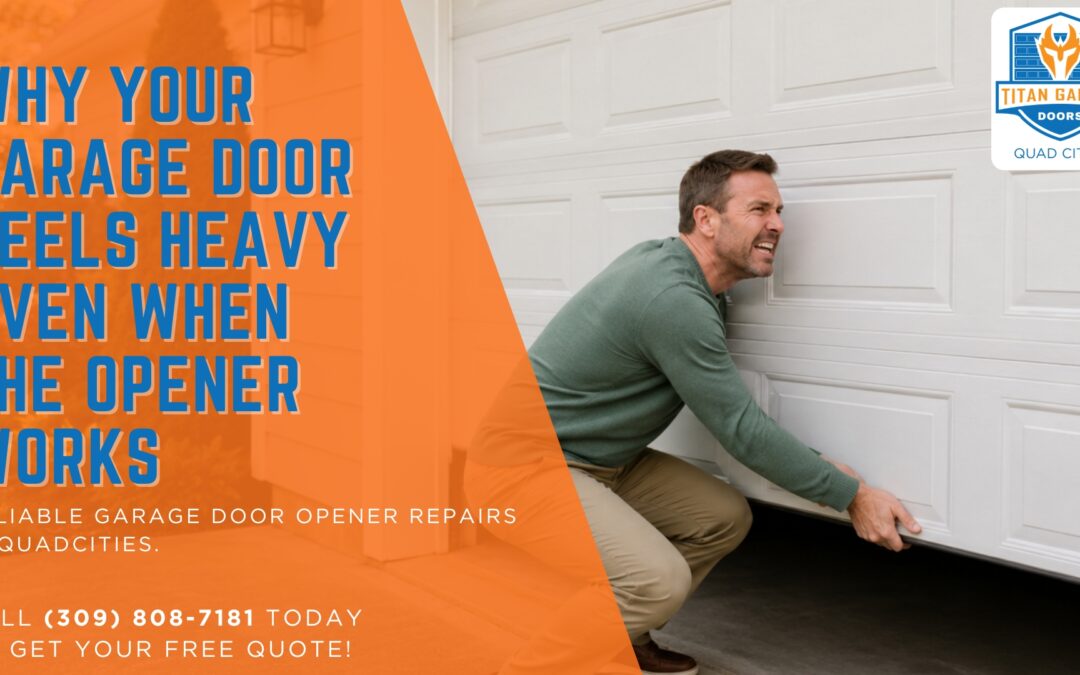
A heavy garage door can be confusing, especially when the opener still lifts it. You press the button, the motor runs, and the door goes up. However, when you pull the emergency release or try to lift the door by hand, it feels much heavier than it should.
Why does that happen? In most cases, the opener is not the main problem. The garage door springs carry most of the door’s weight, while the opener guides the door as it moves. If the springs become weak, lose tension, or break, the opener may continue working for a while. It simply has to work much harder.
At Titan Garage Doors Quad Cities, we often inspect doors that still open but already show clear signs of spring or balance trouble. This guide explains why your heavy garage door needs attention, what may be causing it, and when to schedule professional service.
What Causes a Heavy Garage Door?
Several problems can make a garage door feel heavier than normal. Some involve the springs, while others create resistance as the door moves. A technician should inspect the full system before recommending a repair. Still, the following causes are the most common:
1. Weak or Worn Garage Door Springs
Garage door springs do not stay equally strong forever. Every time you open and close the door, the springs complete another cycle. Over time, the metal weakens and loses some of its lifting force. A worn spring may not break right away. Instead, the door may gradually become harder to lift. The opener may also sound strained because it has started carrying more of the load.
This type of wear often leads to a heavy garage door that still opens with the wall button. Homeowners sometimes blame the motor, but the springs may be the real cause. A professional can check the condition of the springs and determine whether garage door spring repair or replacement will restore proper balance.
2. A Broken Torsion Spring
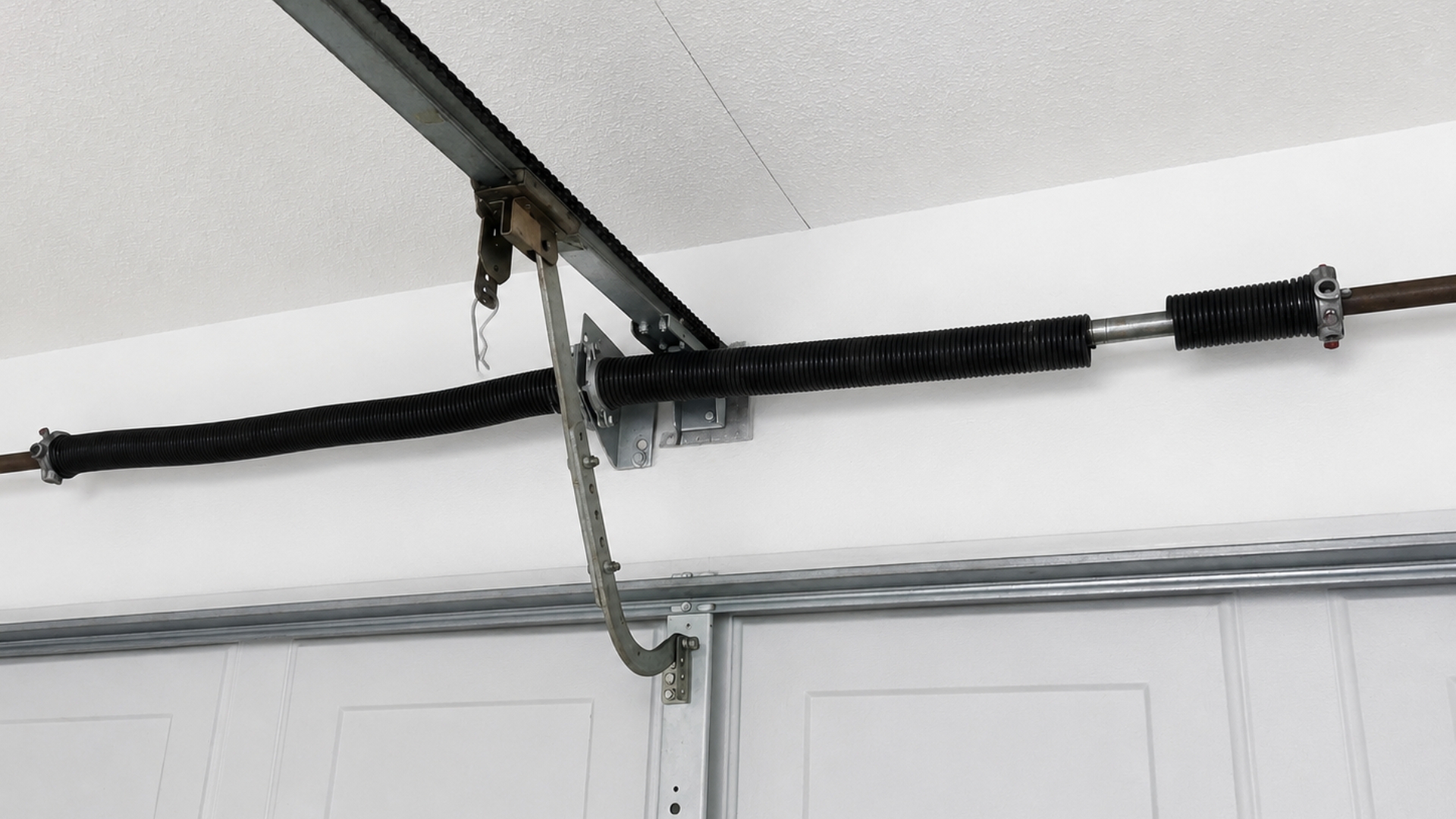
A broken torsion spring can make the door feel extremely heavy almost immediately. Torsion springs sit above the garage door on a metal shaft. When one breaks, you may hear a loud bang from the garage. You may also notice a visible gap in the spring.
In a two-spring system, the remaining spring may still provide some support. That can allow the opener to move the door, although it must work much harder than normal. Do not continue using the opener if you suspect a broken spring. The extra load can damage the motor, belt, chain, or internal gears.
A technician can complete the broken spring repair, inspect the second spring, and provide a clear spring replacement estimate before starting the work.
3. Incorrect Garage Door Spring Tension
The springs need the correct amount of tension to support the door properly. Too little garage door spring tension can leave the door heavy, while too much tension can cause it to rise too quickly. Incorrect tension can develop after a poor repair, a spring adjustment, or the installation of a spring that does not match the door’s weight.
You may notice that the door falls when partly open or refuses to stay in place. It may also move unevenly because one side carries more force than the other. Adjusting spring tension involves stored energy and should never become a do-it-yourself task. A trained technician can test the balance and make the correct adjustment safely.
4. Worn Rollers, Hinges, or Tracks
Not every heavy garage door comes from a spring problem. Sometimes the door feels heavy because damaged or dry moving parts create too much resistance. Worn rollers may drag instead of moving smoothly through the tracks. Bent tracks can pinch the rollers, while rusty hinges can make each section harder to move.
You may hear scraping, squeaking, or grinding when these parts begin to wear out. The door may also shake or slow down at certain points. A technician should inspect the hardware before replacing the springs. If friction causes the problem, servicing the rollers, hinges, or tracks may restore smoother movement.
5. A Garage Door That Has Fallen Out of Balance
A balanced garage door should move smoothly and stay near the halfway point during a controlled balance test. If the door falls, rises on its own, or feels much heavier on one side, the spring system may no longer provide even support. This imbalance can place extra pressure on the opener and cause uneven wear.
An unbalanced door may result from worn springs, incorrect tension, damaged cables, or mismatched replacement parts. Because the test requires disconnecting the opener and controlling the door by hand, a professional should perform it when the door already feels unusually heavy.
6. Added Weight on the Garage Door
Have you recently added insulation, replaced a damaged panel, or installed decorative hardware? Even small changes can affect the total weight of the door. If the original springs no longer match that weight, the door may become harder to lift.
A heavier panel or added insulation can make a noticeable difference, especially on a double garage door. The opener may still lift it, but the spring system may no longer provide enough support. In that case, the technician may recommend springs that better match the updated door. The final garage spring repair cost will depend on the door’s weight, size, and required spring cycle rating.
Why Does the Garage Door Opener Still Work?
The opener may still work because it can temporarily compensate for a weak spring system. However, the opener should not carry the full weight of the door. Its job is to guide a properly balanced door through the opening and closing cycle.
When the springs lose strength, the opener begins pulling more weight than intended. You may hear the motor strain, notice slower movement, or see the door stop before it reaches the top. Replacing the opener alone will not fix a heavy garage door caused by worn springs. In fact, a new opener may develop the same problem if the door remains unbalanced.
Before recommending garage door opener repair, a technician should first inspect the spring system and test the door’s balance. This approach helps identify the real cause instead of replacing a part that still works.
Is a Heavy Garage Door Safe to Use?
A heavy garage door may still move, but that does not always mean it is safe to keep using. The opener may continue lifting the door because the motor can compensate for some lost spring support. However, every cycle places more strain on the opener, cables, rollers, and other moving parts. Over time, that added strain can turn one spring problem into several repairs.
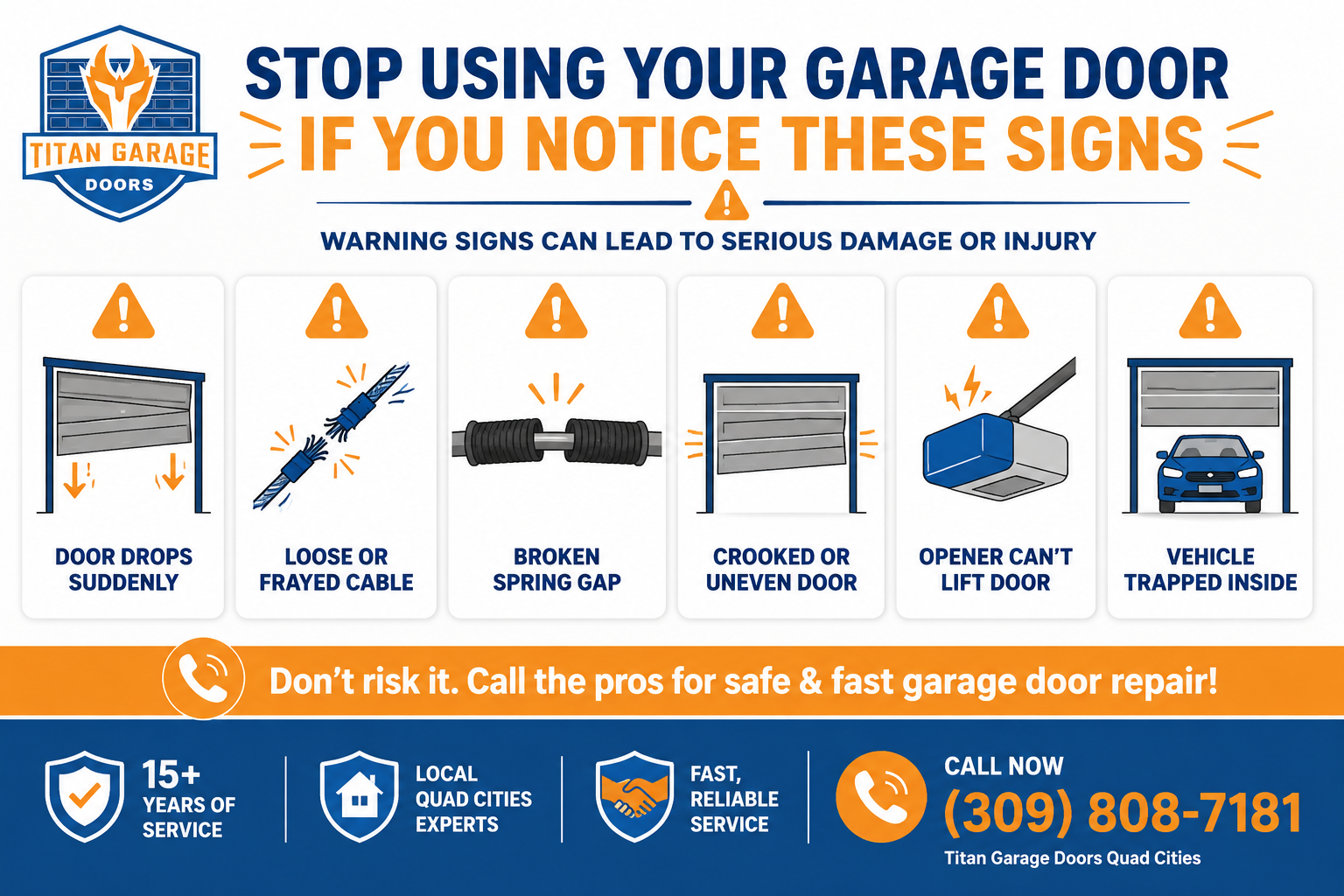
You should stop using the door if:
- It drops quickly when closing
- It rises unevenly
- It makes loud popping or grinding sounds
- A cable looks loose or frayed
- You see a gap in the torsion spring
- The opener struggles or stops partway
- The door feels too heavy to control by hand
Do not stand under a door that moves unpredictably. You should also avoid pulling, pushing, or forcing it if the spring system no longer supports the weight. If the door traps your car or leaves your home unsecured, call for emergency garage door repair instead of trying to lift it yourself.
What Signs Point to a Garage Spring Problem?
A spring problem often causes more than one warning sign. Paying attention to these changes can help you schedule service before the door stops moving. Use this quick table to match the symptoms you notice with the most likely cause.
| What You Notice | Possible Cause | What to Do |
|---|---|---|
| Door feels heavy by hand | Weak or worn springs | Schedule a spring inspection |
| Door drops when partly open | Poor spring balance | Stop using the door and call a technician |
| Opener strains or moves slowly | Springs are not carrying enough weight | Check the spring system before replacing the opener |
| One side rises faster | Cable, spring, or balance issue | Avoid operating the door |
| Loud bang and visible spring gap | Broken torsion spring | Request broken spring repair |
| Scraping or grinding sounds | Worn rollers, hinges, or tracks | Have the moving parts inspected |
A single symptom does not always confirm a broken spring. However, several signs together strongly suggest that the spring system needs inspection. If you notice these issues near your home in Downtown Moline, Prospect Park, Overlook, or the Floreciente neighborhood, schedule a garage door service before the problem becomes an emergency.
FAQs: Heavy Garage Door
Should you test a heavy garage door yourself?
You can look for obvious warning signs, such as a gap in the torsion spring, loose cables, or uneven door movement. However, you should never adjust springs, cables, or garage door spring tension yourself. These parts are under high tension and can cause serious injury. If your heavy garage door feels unsafe to lift or will not move properly, schedule a professional inspection instead.
Can heat and frequent use make a heavy garage door worse?
Yes. Summer heat in the Quad Cities does not usually break garage door springs on its own, but it can expose springs that are already worn. Frequent daily use also adds more opening and closing cycles, which speeds up normal wear.
Will my garage door opener burn out if the door feels heavy?
It can. The opener is designed to guide the garage door, not lift its full weight. If weak springs force the opener to do more work than it was designed for, the motor and internal parts can wear out faster. Addressing the cause of a heavy garage door early may help prevent a more expensive garage door opener repair.
How do I know if I need garage door spring repair or spring replacement?
That depends on the condition of the springs. If the springs have lost tension, become damaged, or reached the end of their service life, a technician may recommend garage door spring repair or replacement.
When should I call for emergency garage door repair?
Call for emergency garage door repair if your garage door will not open, traps your vehicle, drops suddenly, or has a broken spring or damaged cable. These problems can make the door unsafe to operate and should be inspected by a trained technician as soon as possible.
Get Help With a Heavy Garage Door in Moline, IL
Titan Garage Doors Quad Cities provides professional garage door spring repair, opener inspections, and emergency garage door repair throughout Moline and nearby Quad Cities communities. Our certified technicians inspect the full system, explain what is causing the problem, and provide a clear spring replacement estimate before any work begins.
Contact Titan Garage Doors Quad Cities today at (309) 808-7181 to schedule an inspection and get your heavy garage door working safely again.