15 YEARS OF SERVICE

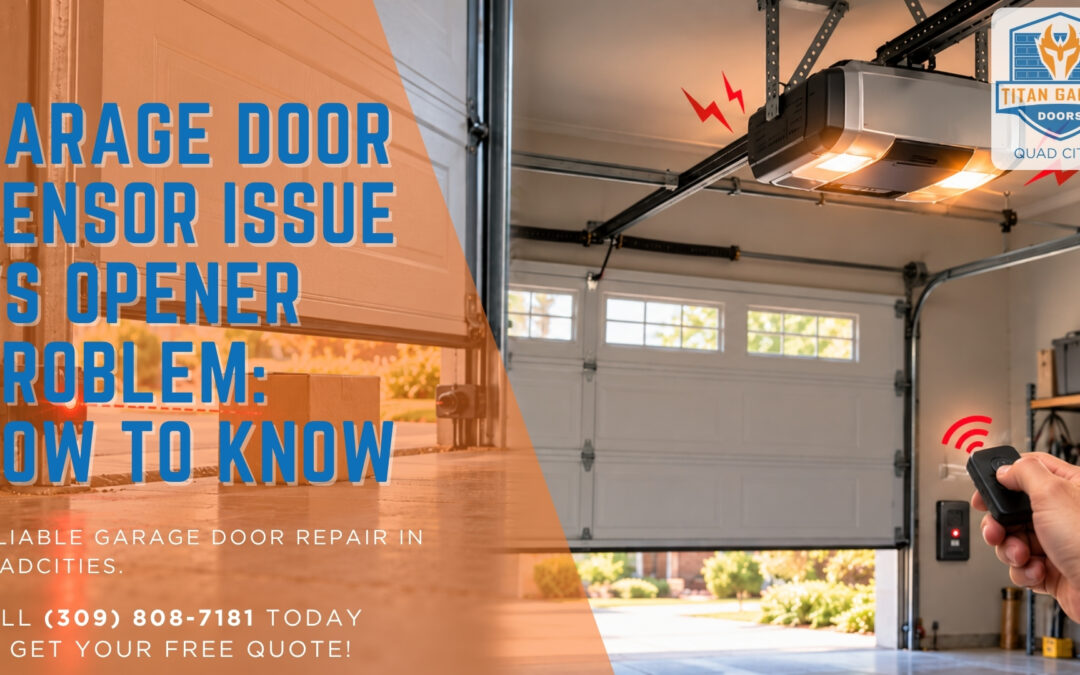
Your garage door won’t close, and you’re not sure what’s wrong. Is something blocking the safety sensors, or is the opener starting to fail? Both problems can interrupt your routine, but they don’t always require the same repair. Understanding sensor vs opener problems starts with noticing how your door behaves.
A door that opens normally but refuses to close may have a sensor issue. However, if the opener doesn’t respond at all, the problem could involve its power supply, controls, or motor. For homeowners in Moline, IL, and nearby Quad Cities communities, this guide explains the differences, what you can safely check, and when professional repair makes sense.
Sensor vs Opener: How Do They Work Differently?
Your garage door opener and safety sensors work together, but they have different jobs.
The garage door opener operates the motor that moves the door. It responds to commands from your remote, wall control, or keypad.
Meanwhile, the garage door safety sensors sit near the bottom of the opening, facing each other. They create an invisible beam across the doorway. If something interrupts that beam while the door closes, the opener should stop or reverse the movement.
So, how can you tell which part is causing trouble?
| What You Notice | Possible Sensor Issue | Possible Opener Issue |
|---|---|---|
| Door opens but won’t close | Common possibility | Also possible |
| Door reverses before reaching the floor | Blocked or misaligned sensor | Travel settings or mechanical resistance |
| Sensor indicator light blinks | Alignment or wiring problem | Less likely |
| Opener makes no sound | Usually not the sensor | Power or control problem |
| Motor runs, but door doesn’t move | Unlikely | Drive mechanism or door connection |
| Remote fails, but wall control works | Usually not the sensor | Remote, battery, or receiver issue |
Note: These clues can help narrow your search, but they don’t confirm the cause on their own. A technician may need to inspect both systems if the symptoms overlap.
Sensor vs Opener: Signs of a Faulty Safety Sensor
Sensor problems often become noticeable when you try to close the garage door. The opener may still lift it normally, which makes the sudden refusal to close confusing.
Here are three symptoms worth checking:
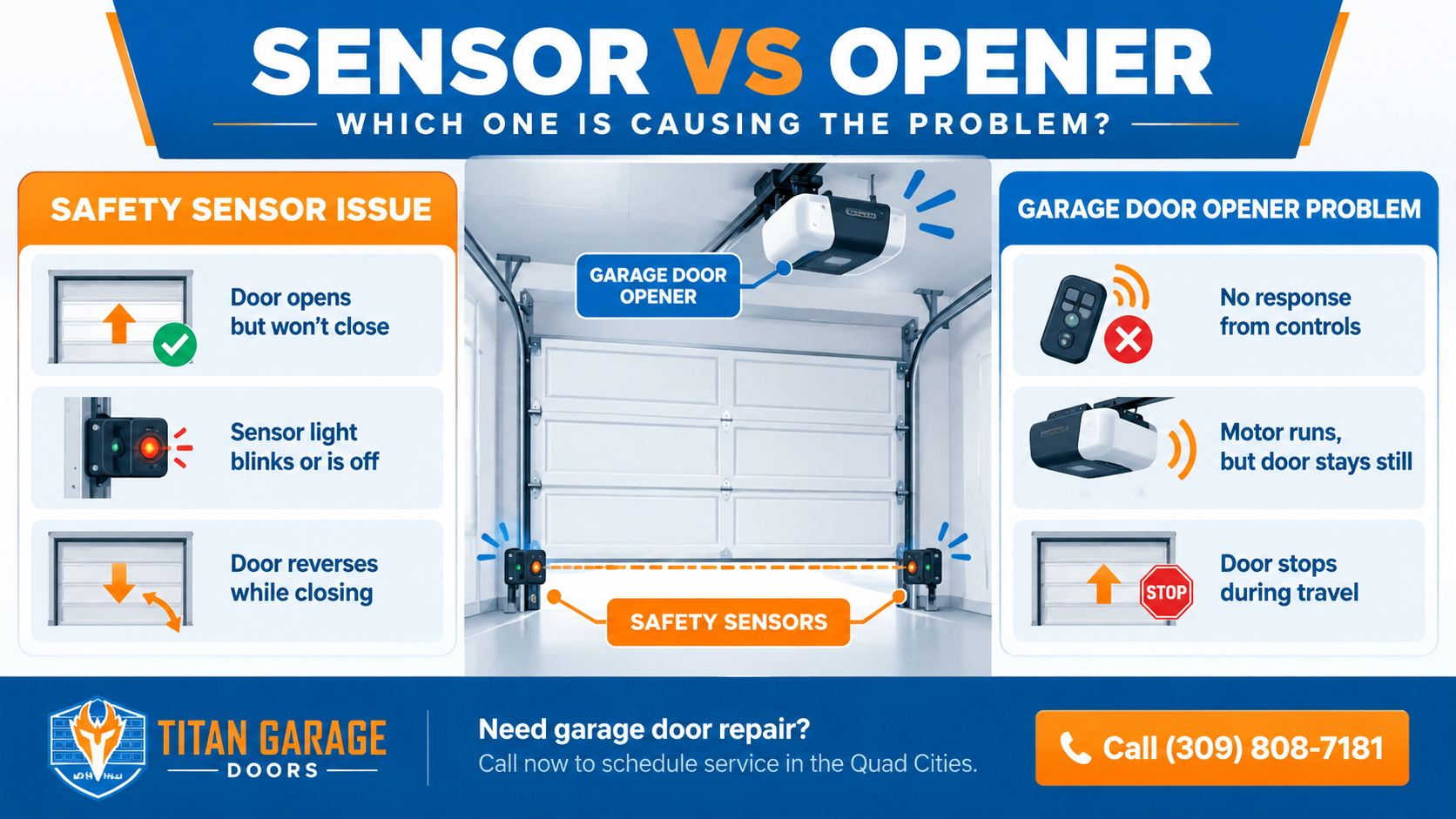
1. The Garage Door Keeps Reversing
Does the door start moving downward, then suddenly return to the open position? A blocked or misaligned sensor could explain the garage door reversing, particularly when the problem occurs near the beginning of the closing cycle.
Check for storage boxes, tools, or other objects near the bottom of the tracks. Even something small can interrupt the beam.
2. One Sensor Light Is Blinking or Off
Many sensors have indicator lights that help show whether they’re receiving power or communicating properly. If one light blinks or stays off, the sensor may have shifted, lost power, or developed a wiring problem.
Keep in mind that light colors and patterns vary by manufacturer. Check your opener’s manual before interpreting them.
3. The Door Closes Only While You Hold the Wall Button
Some garage door openers allow a special closing procedure when their safety sensors aren’t working properly. If your door closes only while you continuously hold the wall control, that behavior may point toward a sensor problem.
However, this isn’t a permanent solution. The safety system needs attention before you return to normal automatic operation.
Signs the Garage Door Opener May Be Failing
Not every door problem starts with the sensors. If your garage door won’t open, for example, the opener or another part of the lifting system may be responsible.
Pay attention to these symptoms:
1. The Opener Doesn’t Respond
You press the remote, but nothing happens. There’s no motor sound, light, or movement. Start by checking whether the opener has power. A tripped breaker, disconnected plug, or power outage can prevent it from responding.
If the wall control works but the remote doesn’t, the issue may involve the remote battery or programming rather than the motor.
2. The Motor Runs, but the Door Stays Still
Hearing the opener run without moving the door can indicate a disconnected trolley, worn drive component, or another mechanical issue.
The trolley connects the opener’s moving mechanism to the door. If that connection fails, the motor may operate without lifting anything. A broken spring can also prevent normal movement, so don’t assume the opener needs replacement.
3. The Door Stops or Struggles During Travel
An opener that stops midway may have a motor, control, or travel-setting problem. However, the door itself could also be binding in the tracks or struggling because of damaged lifting hardware.
That’s why professional garage door opener repair should begin with checking how the door moves, not simply replacing the motor.
How to Troubleshoot Sensor vs Opener Problems at Home
Not sure whether your garage door sensors or opener are causing the trouble? You can start with a few simple checks before scheduling a repair. Pay attention to how the door responds, since even small details can help narrow down the problem.
1. Test the Wall Control and Remote
Start by pressing the wall control, then try your remote. Does the door respond to one but not the other?
If the wall control works but the remote doesn’t, the remote battery or programming may be the problem. If neither responds, check whether the opener has power and whether its circuit breaker has tripped.
What this tells you: A completely unresponsive opener usually points toward a power or control issue rather than the safety sensors.
2. Look for Blocked or Misaligned Sensors
If your garage door opens but refuses to close, check the two safety sensors near the bottom of the tracks.
Look for storage boxes, leaves, or tools blocking their path. Gently clean the lenses with a soft, dry cloth, and check whether one sensor appears tilted or has a blinking indicator light.
What this tells you: A blocked or misaligned sensor may explain why the door won’t close, even when the opener works normally.
3. Perform a Simple Garage Door Sensor Test
Want to know whether the sensors actually detect an obstruction? With the garage door fully open and no visible mechanical problems, place a cardboard box between the sensors. Stand clear of the opening and press the remote to close the door.
The door should remain open while the box blocks the sensor beam. If it attempts to close despite the obstruction, stop the test and arrange professional service.
For a more detailed walkthrough, read our guide on how to test garage door safety sensors before winter.
What this tells you: If the door responds correctly to the blocked beam, the sensors are performing this basic safety function. If it doesn’t, the safety system needs attention.
4. Pay Attention to the Opener’s Response
When you press the remote or wall control, what happens?
- No sound or movement: Check the opener’s power supply and controls.
- Motor runs, but the door stays still: The opener’s drive mechanism or door connection may need inspection.
- Door starts closing, then reverses: Sensor problems, opener settings, or resistance in the door’s movement could be responsible.
- Door stops halfway: The opener or garage door hardware may need further troubleshooting.
What this tells you: The way the opener responds can help a technician identify which parts need closer inspection.
These checks can help you recognize common sensor vs opener problems, but they won’t identify every possible failure. If the door hangs crooked, has a broken spring, or looks unstable, keep the area clear and arrange professional garage door service instead of running more tests.
When Sensor vs Opener Issues Need Professional Repair
You’ve checked the remote, cleaned the sensor lenses, and cleared the garage door opening, but the problem continues. At this point, a professional inspection can help identify what’s wrong without guessing which parts need replacement.
It’s time to schedule service if you notice any of these warning signs:
- The door closes despite a blocked sensor beam. The safety system may not be responding correctly, so stop automatic operation until a technician checks it.
- Sensor lights keep blinking or stay off. If cleaning and clearing the area don’t help, the sensors may have an alignment, wiring, or power issue.
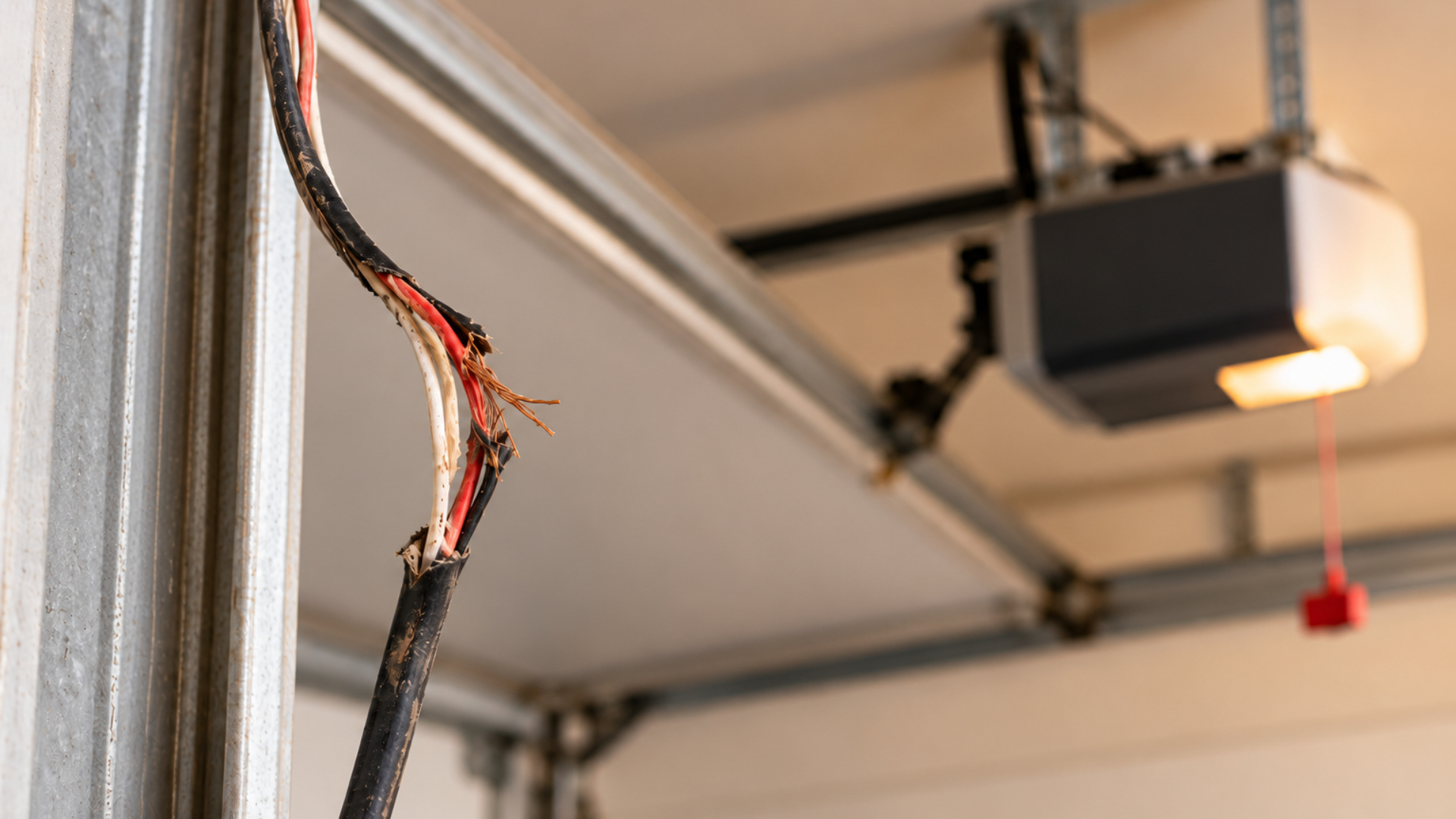
- You see loose or damaged wires. A technician can inspect the connections and determine whether they need repair.
- The opener has power but won’t respond. The problem may involve the controls, motor, or another internal component.
- The motor runs, but the door doesn’t move. A disconnected or damaged drive mechanism, broken spring, or other hardware problem could be responsible.
- The garage door keeps reversing. If nothing blocks the sensors, the technician may need to check the opener settings and the door’s movement.
The next step isn’t always replacing the sensors or buying a new opener. A technician should first confirm whether the problem calls for opener sensor repair, wiring work, or another type of garage door opener repair.
Concerned about sensor replacement cost? Ask for a clear diagnosis and repair estimate before approving the work. That way, you’ll understand which parts need attention, what the service includes, and why the technician recommends that solution.
FAQs About Sensor vs Opener Problems
Can a bad garage door sensor stop the door from opening?
Usually, no. Standard photo-eye sensors primarily protect the closing cycle. If the door won’t open, check the opener’s power, controls, and lifting system.
Why does my garage door reverse when nothing is blocking it?
Dirty or misaligned sensors can cause this. However, track resistance, incorrect opener settings, or other mechanical problems may also trigger reversing.
Can I replace garage door sensors without replacing the opener?
Yes, in many cases. Compatible replacement sensors can restore the safety function without requiring a new opener.
How do I know whether my opener motor is bad?
A motor that fails to respond despite having power may need professional testing. However, faulty controls, wiring, or other components can produce similar symptoms.
Is it safe to keep using a garage door with faulty sensors?
A malfunctioning safety system needs repair. Keep the sensors connected and have the issue corrected before resuming normal automatic operation.
Get Professional Garage Door Sensor and Opener Repair in Moline, IL
Is your garage door refusing to close, reversing unexpectedly, or struggling to respond? Titan Garage Doors Quad Cities can help you find the cause and get things working properly again.
We provide professional garage door sensor repair, opener troubleshooting, and safety system inspections in Moline, IL, and surrounding Quad Cities communities. Our certified technicians will inspect the problem, explain your repair options, and recommend the right solution.
Looking to save on your repair? Ask about our current discounts and special offers when scheduling your service. Call Titan Garage Doors Quad Cities at (309) 808-7181 today to book your garage door repair and find out which offers may apply!