15 YEARS OF SERVICE
Roll-up garage door repair might not be on your to-do list until your warehouse door starts making strange noises or refuses to open. Suddenly, deliveries are waiting, employees can’t move equipment, and your daily schedule starts falling behind.
For businesses in Moline, IL, and across the Quad Cities, a working roll-up door keeps loading areas, storage facilities, and service bays accessible. Even a small problem can become frustrating when employees use the door throughout the day.
So, how can you tell whether your door needs a simple adjustment or professional repair? This guide covers five warning signs, what they may mean, and the steps you can take before a damaged door interrupts your business.
How Does a Commercial Roll-Up Garage Door Work?
A commercial roll-up door uses narrow metal sections, called slats, that connect to form a flexible curtain. When you open the door, the curtain coils around a barrel above the doorway. Tracks on both sides guide the curtain, while a spring system helps balance its weight. Depending on the model, you may operate the door with a chain hoist, hand crank, or electric motor.
Unlike sectional overhead doors, which travel along tracks toward the ceiling, rolling steel doors wrap into a compact coil. That design works well for warehouses, storage facilities, and commercial buildings with limited overhead space.
However, damaged slats, worn guides, or lifting-system problems can interfere with normal movement. Recognizing these changes early helps you decide when to request commercial roll-up door repair.
5 Warning Signs You Need Roll-Up Garage Door Repair
Most rolling doors show changes in how they look, sound, or move before they stop working completely. If your employees use the same entrance every day, encourage them to report anything unusual.
These five signs deserve a closer look:
1. Bent or Damaged Door Slats
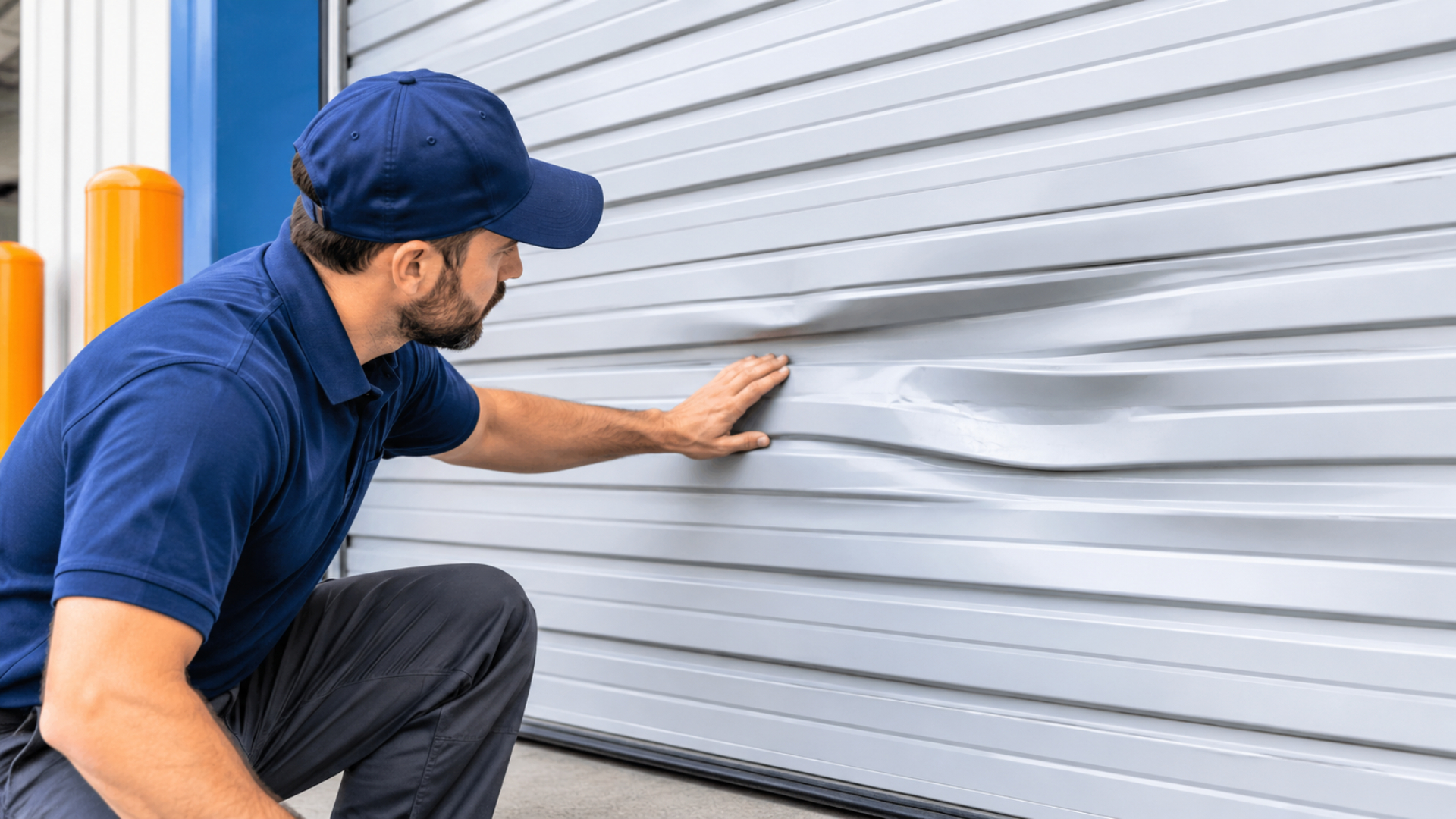
A forklift, delivery cart, or pallet can accidentally strike a roll-up door. Even a minor impact may bend one or more metal slats.You might notice dents, gaps between sections, or a curtain that no longer sits evenly inside the guides.
Why does this matter? Damaged slats can catch as the door coils upward, creating additional strain on nearby components.
What to check: Look for visible dents, bent edges, or gaps from a safe distance. If the curtain catches or binds, stop operating the door and arrange an inspection.
2. The Roll-Up Door Gets Stuck or Moves Unevenly
A roll-up door stuck halfway open can delay deliveries and leave part of your building exposed. Sometimes, the door moves slowly before stopping. In other cases, one side appears to rise differently from the other. Possible causes include damaged guides, worn components, spring problems, or an obstruction in the door’s path.
What to check: Look for loose objects around the opening and note where the door stops. Keep people and equipment clear of the doorway. Never pull on a stuck curtain or attempt to force the door through its tracks.
3. Grinding, Scraping, or Banging Sounds
Commercial roll-up doors make noise during operation, especially in busy industrial settings. Still, you should recognize when the sound changes. A new scraping noise may indicate that the curtain is rubbing against a guide. Grinding or banging can point to worn components, loose hardware, or problems around the barrel assembly.
The timing matters, too. Does the noise happen only when opening, or do employees hear it during both directions?
What to check: Listen from a safe location and record when the sound occurs. Stop using the door if you hear loud or repeated mechanical noises.
4. The Door Won’t Close or Seal Properly
A roll-up door that leaves a gap at the bottom can create problems beyond everyday convenience. Rain, wind, dust, and pests may enter through an opening. For warehouses that store inventory or equipment, those gaps deserve attention. The problem may involve a damaged bottom bar, worn weather seal, bent slats, or a curtain that no longer travels fully into position.
What to check: Inspect the closed door visually for uneven gaps, damaged seals, or misaligned sections. If the door won’t close securely, schedule for a same-day garage door service rather than trying to push it into place.
5. The Motor Runs, but the Door Doesn’t Move
You press the control button and hear the operator running. However, the door stays where it is. That can indicate a problem with the motor’s drive components, operator connection, or the door’s mechanical system.
Some rolling steel door problems also involve worn chains, damaged gears, or a lifting system that no longer supports normal movement.
If the operator isn’t responding as expected, our guide on how to troubleshoot common commercial garage door opener problems explains other warning signs and safe checks to consider.
What to check: Note whether the motor runs, clicks, or stops unexpectedly. Leave operator adjustments, chain repairs, and electrical work to a trained professional. These systems contain moving parts that can cause serious injuries.
How to Check a Commercial Roll-Up Door Safely
When your commercial roll-up door stops working, you don’t always know what’s causing the problem. Is something blocking the opening, or is there an issue with the operator? Before scheduling roll-up garage door repair, a few simple observations can help you understand what’s happening without touching any mechanical components.
Here’s what you can safely check:
Step 1: Check for Obstructions Around the Door
Start by looking around the doorway. Pallets, packaging materials, tools, or other warehouse equipment may block the door’s path.
If you spot something in the way, remove it only when the door is stable and you can reach it safely. Keep employees and forklifts clear of the opening while you inspect the area.
Step 2: Look for Visible Door Damage
Take a look at the door from a safe distance. Are any metal slats bent or separated? Does the door hang unevenly or appear out of alignment? Also, check for visible damage along the side guides, bottom bar, and weather seal. These signs may help explain why the door sticks, makes noise, or struggles to close.
If the curtain looks crooked or damaged, stop operating the door and arrange an inspection.
Step 3: Check the Power and Controls
If the door appears stable and shows no obvious mechanical damage, check whether the building has power and whether the accessible control station displays an error. Pay attention to how the operator responds. A silent motor may point to a power or control issue, while a running motor with no door movement may indicate a mechanical problem.
Leave electrical repairs, operator adjustments, and wiring checks to a qualified technician.
Step 4: Take Note of the Problem
The more details you can share, the easier it is for a technician to understand the situation. Think about what happened before the door stopped working. Did someone notice a grinding sound? Did the door begin moving more slowly over the past few days? Perhaps the problem started after a delivery or equipment impact.
Write down the symptoms, when they started, and whether the problem happens consistently. These details can help the technician focus the inspection and recommend the right repair.
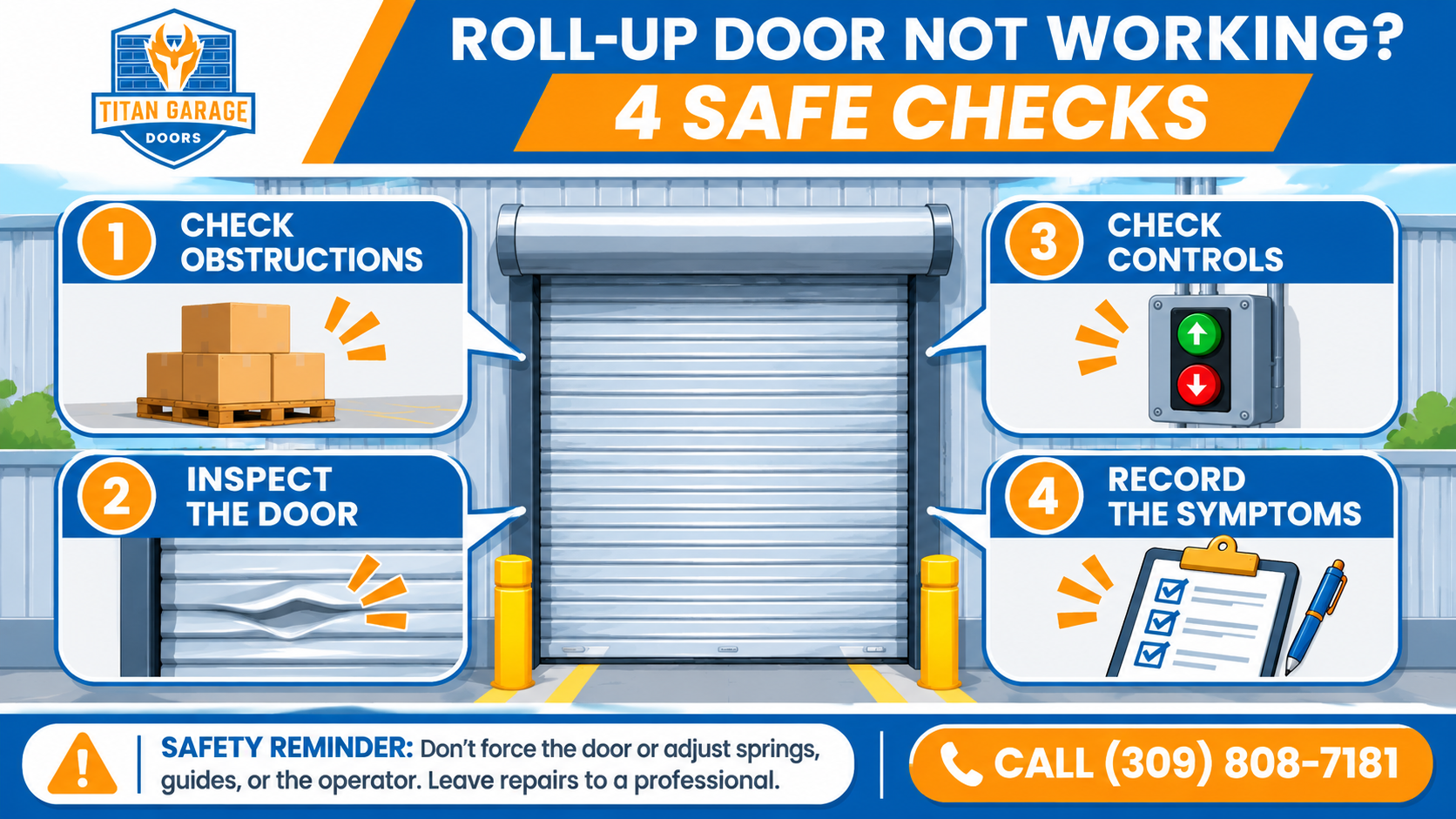
Safety Reminder: Never force a damaged roll-up door or attempt spring, guide, or operator repairs yourself. The U.S. Consumer Product Safety Commission (CPSC) provides garage door safety guidance. Keep the area clear and leave hazardous repairs to trained professionals.
What Different Roll-Up Door Problems May Mean
Several components can cause similar symptoms. Use this table as a quick reference when describing the problem to a repair company.
| What You Notice | Possible Cause | Next Step |
|---|---|---|
| Bent or separated slats | Impact damage | Request a curtain inspection |
| Door sticks halfway | Guide or lifting-system issue | Stop operation |
| Grinding or scraping | Worn parts or curtain friction | Schedule service |
| Gap under closed door | Bottom seal or alignment issue | Check visible damage |
| Motor runs, door stays still | Operator or drive problem | Request professional diagnosis |
These are possible explanations rather than confirmed diagnoses. A technician needs to inspect the door before recommending specific repairs.
When Should You Schedule Professional Roll-Up Door Repair?
Some problems may seem manageable at first, especially when the door still opens occasionally. However, an unreliable commercial door can create safety and security concerns.
Arrange professional commercial overhead door service when:
- The curtain has bent, cracked, or separated slats.
- The door hangs crooked or moves unevenly.
- Grinding or banging sounds continue during operation.
- The door repeatedly sticks or refuses to close.
- The motor runs without moving the curtain.
- You notice damaged guides, springs, chains, or other lifting components.
Keep the affected opening out of service if the door appears unstable or unsafe. A technician can inspect the curtain, guides, barrel, spring system, operator, and safety devices. From there, you can determine whether the problem requires a component repair, adjustment, or more extensive work.
Commercial Roll-Up Garage Door Repair FAQs
Can you repair individual slats on a commercial roll-up door?
Sometimes. A technician may replace individual damaged slats if the curtain design and overall condition allow it. Extensive damage may require a larger section or full curtain replacement.
Should I repair or replace my commercial roll-up door?
Consider the extent of damage, the door’s age, repair history, parts availability, and overall condition. A technician can explain whether repair or replacement makes better financial sense.
How often should a commercial rolling steel door be inspected?
Follow the manufacturer’s maintenance recommendations and applicable inspection requirements. High-use doors may need more frequent professional attention.
Don’t Let a Faulty Roll-Up Door Slow Down Your Business
When your roll-up door starts acting up, waiting for it to stop working completely can cost your business valuable time. At Titan Garage Doors Quad Cities, we help businesses in Moline, IL, and surrounding communities identify and resolve commercial door problems. Whether you’re dealing with bent slats, uneven movement, a faulty operator, or a door that won’t close, our team can inspect the system, explain what’s wrong, and recommend practical repair options.
We understand that unexpected repairs aren’t always in the budget. That’s why we offer payment plans, ongoing discounts, and special offers to help make commercial door service more manageable. Ask our team about current availability and eligibility.
Keep your deliveries moving and your business accessible. Call Titan Garage Doors Quad Cities at (309) 808-7181 to schedule a professional roll-up garage door inspection and get a clear plan for your next steps.