15 YEARS OF SERVICE

A power outage can turn a normal day into a stressful one fast. You press the garage door remote, but nothing happens. Your car may be stuck inside, your garage may be locked down, and you may not know what to touch first. The good news is that you can often open garage door manually if the door is in good condition and the emergency release works properly. The key is to move slowly, follow the right steps, and never force a heavy or damaged door.
This guide explains how to use the garage door emergency release, how to lift the door safely, what to check if it will not move, and when to call Titan Garage Doors Quad Cities for emergency garage door repairs.
What Your Garage Door Behavior Means
Before you try to open the door by hand, pay attention to how it moves and feels. The way your garage door responds can tell you whether it is safe to continue or if you should stop and call a technician.
| What You Notice | What It May Mean | What to Do Next |
|---|---|---|
| Door lifts smoothly | The door is likely balanced | Continue carefully and secure it after opening |
| Door feels very heavy | Possible broken spring or balance issue | Stop lifting and call a technician |
| Door opens unevenly | Cable, roller, or track issue | Do not force the door |
| Door will not move at all | Lock, stuck track, or damaged hardware | Check for a manual lock, then call for service |
| Door slides down after opening | Weak spring or poor balance | Close it carefully and avoid walking under it |
| Release cord will not pull | Trolley may be jammed or under tension | Do not yank the cord |
| Opener will not reconnect | Trolley, rail, or opener issue | Test once, then schedule service if it fails |
Open Garage Door Manually: Quick Safety Check First
Before you touch the emergency release cord, take a quick look at the door. This step matters because a garage door can be heavy, and damaged parts can make it unsafe to lift by hand.
Start with these checks:
- Make sure the door is fully closed.
- Look for broken springs above the door.
- Check if any cable is loose, frayed, or hanging.
- Look for bent tracks or stuck rollers.
- Move kids, pets, tools, and storage boxes away from the door.
- Do not stand under the door while testing it.
If the door is halfway open, crooked, or jammed, do not pull the release cord. A door in that position can drop or move suddenly. In that case, call a garage door technician before trying manual garage door operation.
How to Open Garage Door Manually During a Power Outage
Once the area is clear and the door looks stable, you can begin. These steps are meant for a door that is fully closed and not damaged. If anything feels wrong, stop right away.
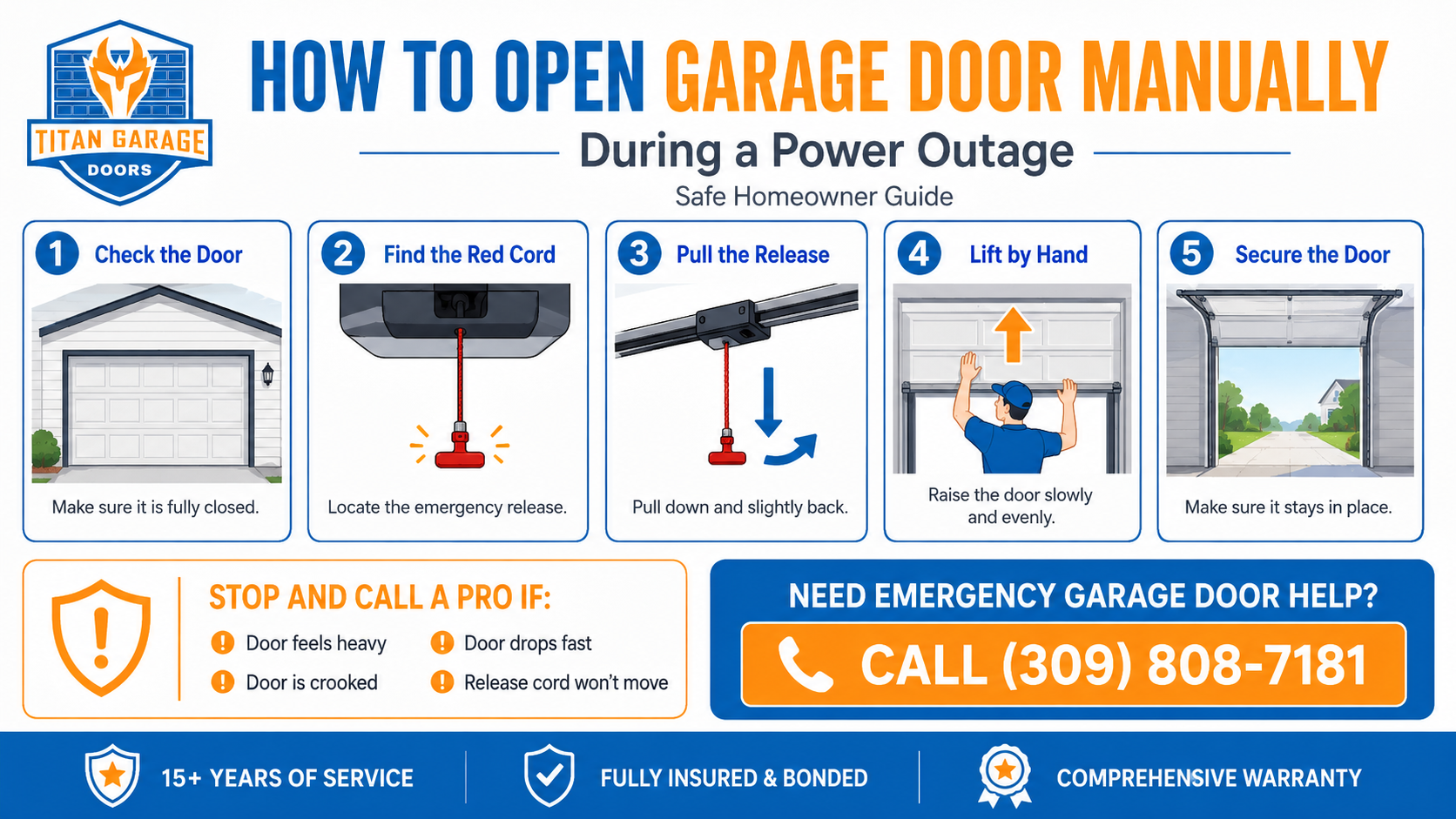
Step 1: Make Sure the Garage Door Is Closed
Start by checking that the garage door is fully closed and sitting evenly on the floor. This helps reduce the risk of sudden movement when you disconnect the opener.
If the door is open or stuck halfway, do not pull the release cord. The opener may be holding the weight of the door. Once disconnected, the door could drop.
Step 2: Find the Emergency Release Cord
Most automatic garage door openers have a red emergency release cord. It usually hangs from the opener rail near the center of the garage.
This cord connects to the trolley, which is the moving part that links the opener to the door. Pulling the cord lets you disengage the garage door opener so you can lift the door by hand.
Step 3: Pull the Emergency Release Cord
Pull the red cord down and slightly back toward the opener. Use a firm, steady pull. You should feel the trolley disconnect from the opener carriage.
Do not yank the cord hard. If the cord will not move, stop. The trolley may be stuck, or the door may be under tension. Forcing it can damage the opener or make the door unsafe.
Step 4: Lift the Garage Door by Hand
Now you can try to open garage door manually. Stand in front of the door, place both hands on the handle or lower section, and lift with steady pressure.
A balanced garage door should move smoothly. It may feel heavy, but it should not feel impossible to lift. If the door rises unevenly, shakes, or only opens a few inches, stop right away.
Step 5: Close and Secure the Garage Door
If you need to close the door manually, lower it slowly with both hands. Keep your fingers away from panel joints, tracks, and rollers. Make sure the door reaches the floor and sits flat.
If your garage door has a manual lock, use it only after the door is fully closed. This can help keep your garage secure during the outage.
How to Reconnect the Opener After You Open Garage Door Manually
When power returns, you will need to reconnect the opener before using the remote or wall button again. The process can vary by opener model, but the basic steps are often simple.
First, make sure the garage door is fully closed. Then pull the emergency release cord toward the opener or press the wall button. On many systems, the trolley reconnects when the opener runs through a full cycle.
After it reconnects, test the door from a safe distance. Watch how the door moves. It should open and close smoothly. If it jerks, shakes, reverses, or sounds strained, stop using it and schedule a garage door opener repair.
When Not to Open Garage Door Manually
There are times when trying to open garage door manually is not safe. Garage door safety matters during power outages because a disconnected door can become dangerous if the spring, cable, or track is damaged. Since the CPSC has reported 62 deaths and 49 injuries to children under 15 in past garage door opener incidents, homeowners should never force a heavy, crooked, or unstable door after pulling the emergency release cord.
If the door has damaged parts, the opener may not be the real problem. The door itself may need repair. Do not continue if you notice:
- A broken garage door spring
- A cable hanging loose
- A crooked garage door
- A bent track
- A loud pop or snap
- A door that drops fast
- A door that will not stay open
These signs can point to spring, cable, roller, or track damage. Those parts carry a lot of tension. Do not try to adjust them yourself. Instead, call for expert garage door repairs in Moline. Titan Garage Doors Quad Cities can inspect the springs, cables, rollers, tracks, opener trolley, and emergency release system before the door causes more damage or becomes a safety risk.
Common Reasons a Garage Door Will Not Open During a Power Outage
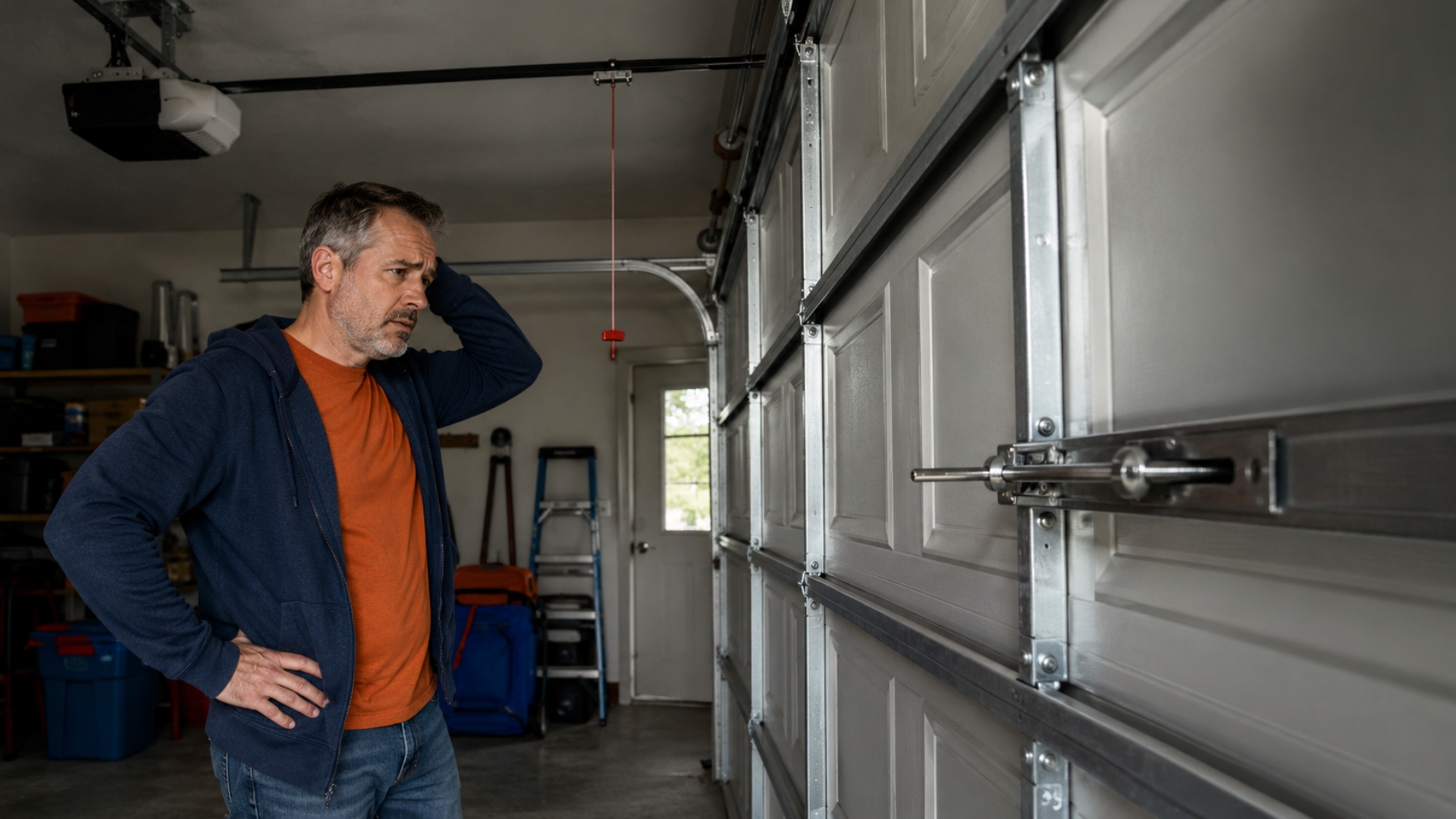
Have you tried the steps above and your garage door still won’t open? Sometimes the outage is only part of the problem. The opener may have no power, but the door should still move by hand if the system is in good condition.
If it does not move, the cause may be:
- A manual lock is engaged.
- The weather seal is stuck to the floor.
- The rollers are jammed.
- The track is bent.
- The spring is broken.
- The cable is off the drum.
- The opener trolley is stuck.
If the door feels stuck, do not pry it open with tools. This can bend the panels or damage the track. It is safer to call for emergency garage door repairs.
FAQs About Opening Your Garage Door Manually
Can I open garage door manually from outside?
You can only open it from outside if your door has an outside emergency release kit or another safe access point into the garage. If you are locked outside during a power outage, call a professional for help.
Why is it hard to open garage door manually?
A garage door may feel hard to lift if the spring is broken, the door is unbalanced, the rollers are stuck, or the tracks are damaged. Stop lifting if it feels unsafe.
Will pulling the emergency release cord damage my opener?
No, not when used correctly. The emergency release is designed for power outages and manual use. The safest time to pull it is when the garage door is fully closed.
Can I use my remote after opening the garage door by hand?
Not right away. After you pull the emergency release cord, the opener and door are disconnected. You need to reconnect the trolley before using the remote or wall button again.
Should I call for service after I open garage door manually?
Call for garage door service near you if the door felt heavy, moved unevenly, made loud noises, would not stay open, or would not reconnect. These signs may point to a deeper garage door problem.
Conclusion
Knowing how to open garage door manually can make a power outage less stressful. Start with a quick safety check. Then find the emergency release cord, pull it carefully, lift the door with both hands, and secure the door before walking or driving under it.
However, do not force the door. If it feels too heavy, gets stuck, hangs crooked, or slides down after opening, the system may have a spring, cable, track, or roller issue. In that case, stop and get help.
Emergency Garage Door Repairs in Quad Cities
Need help during or after a power outage? Titan Garage Doors Quad Cities can help with emergency garage door repairs, stuck doors, broken springs, cable issues, opener problems, and doors that will not reconnect after manual operation.
If your garage door will not open safely, do not risk damage or injury. Call Titan Garage Doors Quad Cities at (309) 808-7181 today for fast local service and a Free Estimate.