15 YEARS OF SERVICE

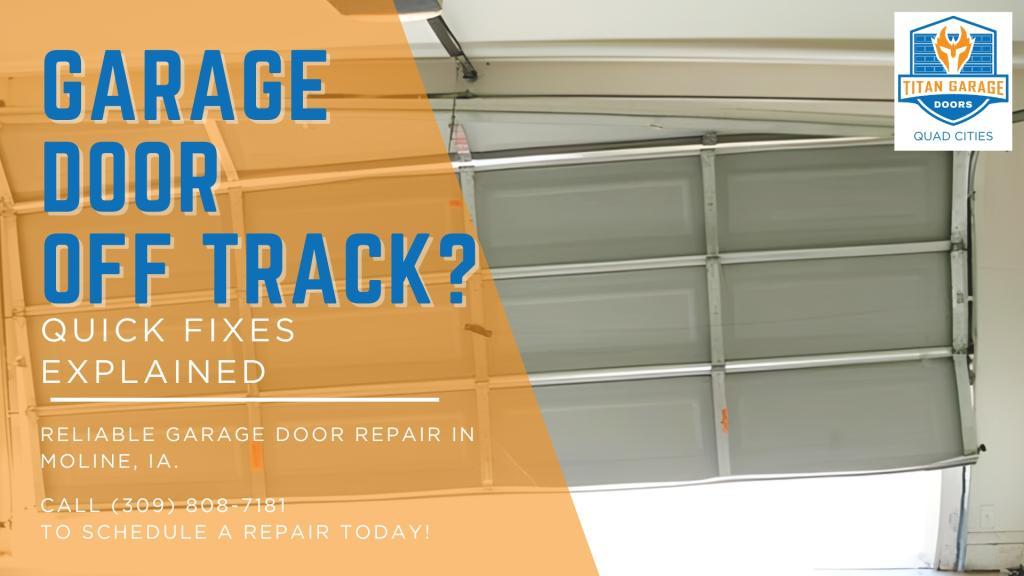
If your garage door is off track, it’s more than just a hassle – it’s a safety risk. A derailed door can collapse, damage your opener, or leave your home vulnerable. Here’s what you need to know:
- Signs of an Issue: Look for uneven alignment, stuck rollers, or grinding noises. Stop using the door immediately.
- Common Causes: Dirt in tracks, bent or loose tracks, damaged rollers, broken springs, or accidental impacts.
- Quick Fixes: Disconnect the opener, clean tracks, tighten bolts, and reseat rollers (if safe). Never attempt to adjust springs or cables yourself.
- When to Call a Pro: If cables are frayed, springs are broken, or the door is severely misaligned, professional help is necessary.
Regular maintenance, like monthly inspections and yearly tune-ups, can prevent derailments and save you from costly repairs. For emergencies or complex issues, rely on experts like Titan Garage Doors Quad Cities to ensure safe and reliable repairs.
Garage Door Top Roller Out Of The Track | SAVE MONEY
How to Tell If Your Garage Door Is Off Track
Spotting the warning signs early is crucial before attempting any repairs.
Visual and Audio Warning Signs
A misaligned garage door is often easy to recognize – it might hang unevenly, with one side lower than the other, or get stuck in an awkward position. Take a close look at the rollers. If they’re not sitting properly in the tracks or there are noticeable gaps between the rollers and the rails, the door is likely off track. You may also see daylight sneaking in under or around the sides of the door when it’s supposed to be fully closed.
Sounds can also give it away. If you hear grinding, scraping, or crunching noises when the door operates, it’s a red flag that the rollers aren’t gliding smoothly. Loud bangs or popping sounds could mean a roller has jumped the track or that a spring has broken. These signs shouldn’t be ignored – move quickly to the safety steps outlined below.
Safety Steps to Take Right Away
The moment you suspect your garage door is off track, stop using it immediately. Don’t force it open or closed with the automatic opener, as that can lead to further damage to the door panels, motor, or trolley. Instead, pull the emergency release cord (usually red) to disconnect the motor and prevent any accidental activation.
Once the motor is disengaged, make sure the door is secure to avoid a sudden fall. Use C-clamps or locking pliers to lock the vertical tracks just below the rollers. This will keep the door in place. Clear the area of children, pets, and vehicles to ensure everyone’s safety. Also, steer clear of the springs and cables – they’re under a lot of tension and can cause serious injuries if they snap. After securing the door, it’s time to call in a professional for a detailed inspection and repair.
Why This Problem Needs Fast Attention
An off-track garage door isn’t just inconvenient – it’s dangerous. It can collapse unexpectedly, posing a serious risk to anyone nearby. Plus, it can lead to costly damage to the opener, springs, and cables if left unaddressed. A door that doesn’t close properly also leaves your home exposed to potential theft, bad weather, and unwelcome pests. Acting quickly can help you avoid these risks.
Why Garage Doors Go Off Track
Knowing why garage doors derail can help you address small issues before they turn into bigger, more dangerous problems. Most of the time, derailments happen because of everyday wear and tear, but they can also occur suddenly due to accidents. Let’s break down the main culprits behind these track alignment issues.
Dirt and Objects Blocking the Tracks
Debris like leaves, sticks, or even tools left behind can pile up in the tracks, pushing the rollers out of place and causing misalignment. Over time, fine dust mixed with old lubricant can create a sticky residue, preventing the rollers from spinning smoothly. Instead of gliding, the rollers drag, which can lead to flat spots or seized bearings. Considering the weight of a typical two-car garage door – at least 150 pounds – this added friction can cause serious problems[4].
Bent or Loose Tracks
Garage door tracks need to stay straight, aligned, and firmly secured. However, loose bolts, accidental impacts, or even foundation shifts can knock tracks out of position. Rust and corrosion only make the situation worse over time. Since most garage door systems are designed to last for roughly 10,000 operation cycles[3], these issues often become more noticeable as the system ages.
Damaged Rollers
Rollers take a lot of wear and tear over time, especially if they aren’t properly lubricated. Frequent use can cause them to crack, chip, or seize up entirely. When bearings seize, the rollers drag along the track, creating resistance that can pull them out of alignment. Metal rollers may rust, leading to rough surfaces, while nylon rollers can wear down, losing the smooth edges they need to operate efficiently. If the rollers aren’t working as they should, the entire door system can become unstable.
Broken Springs and Cables
The springs and cables in your garage door’s counterbalance system are under a lot of tension to handle the door’s heavy weight. If a spring breaks or a cable snaps, the door can become unbalanced – one side might drop while the other stays raised. This sudden imbalance can knock the rollers off the tracks and put undue strain on the remaining hardware. Spotting these problems early can save you from more extensive repairs down the line.
Physical Impact and Forced Operation
Accidents happen, and they’re another common reason garage doors go off track. Backing into a partially closed door, for example, can bend tracks, knock rollers loose, or damage mounting brackets in an instant. Forcing the opener to work through resistance can also strain the motor and bend tracks further. Combined with the weight of the door, these actions can turn a minor issue into a costly repair – professional fixes typically range from $125 to $400[2].
Simple Fixes for Off-Track Garage Doors
If you’ve spotted signs that your garage door is off track, there are a few steps you can take to realign it. For minor derailments caught early, you might be able to handle the issue yourself. But remember, safety is the top priority – an off-track door can be unstable and may collapse unexpectedly.
Safety Steps Before You Begin
Before starting any repairs, disconnect the power to your garage door opener by unplugging the motor or switching off the breaker. Follow the emergency disconnection procedure to ensure the door is no longer powered. Secure the door by clamping the vertical tracks near the rollers – this creates a physical stop to prevent it from sliding or falling. Always wear safety glasses and gloves, and use a sturdy stepladder to safely reach higher sections without overextending.
Avoid touching or attempting to adjust torsion springs, extension springs, or lift cables. These components are under extreme tension and can cause severe injuries if mishandled.
Once your workspace is secure, clean the tracks and check for debris or damage.
Removing Debris and Cleaning the Tracks
Small items like leaves, sticks, or even tools can force rollers out of the track. Use a vacuum or compressed air to clear out any dirt or debris, then wipe the track interiors with a damp cloth and mild detergent to remove grease and buildup. Check for hidden obstructions, dents, or loose bolts that could snag a roller, and tighten any mounting hardware as needed.
Skip lubricating the inside of the tracks, as lubricants tend to attract grime. Instead, apply lubrication to the roller stems and hinges to keep things running smoothly.
Tightening Loose Parts
Loose track brackets can allow the tracks to shift, increasing the chances of derailment. Use a wrench to tighten all mounting bolts that secure the tracks to the wall or ceiling. If the tracks seem slightly bent or misaligned, gently tap them back into position with a rubber mallet – avoid using a standard hammer, which could damage the metal or finish.
For precise alignment, loosen the mounting brackets slightly, use a level to ensure the tracks are perfectly vertical, and then retighten the bolts. Once the tracks are secure, check for any dislodged rollers.
Putting Rollers Back on Track
If a single roller has slipped out and the tracks aren’t severely bent, you can likely reseat it without much trouble. Use pliers to gently pry open the outer edge of the metal track where the roller came off, then guide the roller back into place. A flathead screwdriver or rubber mallet can help with this process if needed.
After the roller is reseated, use the rubber mallet to restore the track lip to its original shape. Apply a silicone-based lubricant to the rollers and hinges (but not inside the tracks) to ensure smooth movement. Before reconnecting power, manually raise and lower the door several times to ensure it operates smoothly without catching.
When to Call a Professional
While minor repairs can be handled at home, some situations require expert help. Stop immediately and contact a professional if you notice frayed or broken lift cables, damaged springs, multiple rollers off track, or if the door is severely tilted with bent tracks. Issues with the bottom brackets also demand professional attention, as these high-tension parts can be dangerous to adjust.
Knowing when to step back and call for assistance can save you from injuries and prevent more costly repairs later on.
sbb-itb-cf36777
When Professional Help Is Needed
Sometimes, garage door problems go beyond what you can fix on your own, making professional help not just helpful but necessary.
Dangerous Problems That Need Expert Repair
Certain garage door issues are simply too dangerous to handle without proper training. For instance, broken torsion or extension springs and frayed lift cables are under extreme tension and can cause serious injuries if mishandled [6]. There have been documented cases of severe injuries resulting from attempts to fix these components without the right tools or expertise [8]. Trying to repair these on your own can worsen the problem and put your safety at risk.
Other issues, like warped tracks or electrical faults in the opener, also require professional attention to avoid further damage or potential hazards [5][7]. If your home’s foundation has shifted, causing significant misalignment of the garage door, a professional needs to assess the situation. These structural problems often go beyond simple adjustments and might need more extensive repairs to ensure the door operates safely [7].
What Happens During Professional Repairs
When you bring in a professional technician, they follow a step-by-step process to ensure the repair is both safe and effective. First, they inspect the door to pinpoint the root cause of the problem, whether it’s damage from an impact, worn-out rollers, or broken high-tension components. Once they identify the issue, they secure the door with proper clamps and disconnect the power to work safely [1].
The actual repair might involve tasks like straightening or replacing bent tracks, reseating or replacing damaged rollers, and fixing or swapping out frayed cables or broken springs with specialized tools [4]. After addressing the main issues, they use a level to align the tracks properly and tighten all mounting bolts. Before wrapping up, technicians perform balance and safety tests, including checking the auto-reverse function and photo-eye sensors, to ensure everything is working smoothly.
Opting for professional repairs can save you money in the long run by avoiding the cost of a full door replacement – or worse, medical bills from injuries caused by DIY attempts with high-tension components. This thorough process ensures your garage door operates safely and efficiently for years to come.
Why Choose Titan Garage Doors Quad Cities

Titan Garage Doors Quad Cities offers 24/7 emergency repair services for both residential and commercial garage doors, so you’re never left stranded when your door malfunctions. Their skilled technicians are trained to handle complex issues, from structural problems to high-tension components, and they work with a wide variety of garage door brands.
A malfunctioning garage door isn’t just inconvenient – it’s a potential security risk. Titan Garage Doors Quad Cities understands the importance of quick, reliable repairs and even offers flexible payment options, including “pay over time” plans, to make professional service more accessible. Their process includes precise diagnosis, safe handling of hazardous parts, complete realignment, and rigorous safety testing to ensure your door operates reliably and securely for the long haul.
How to Prevent Off-Track Problems
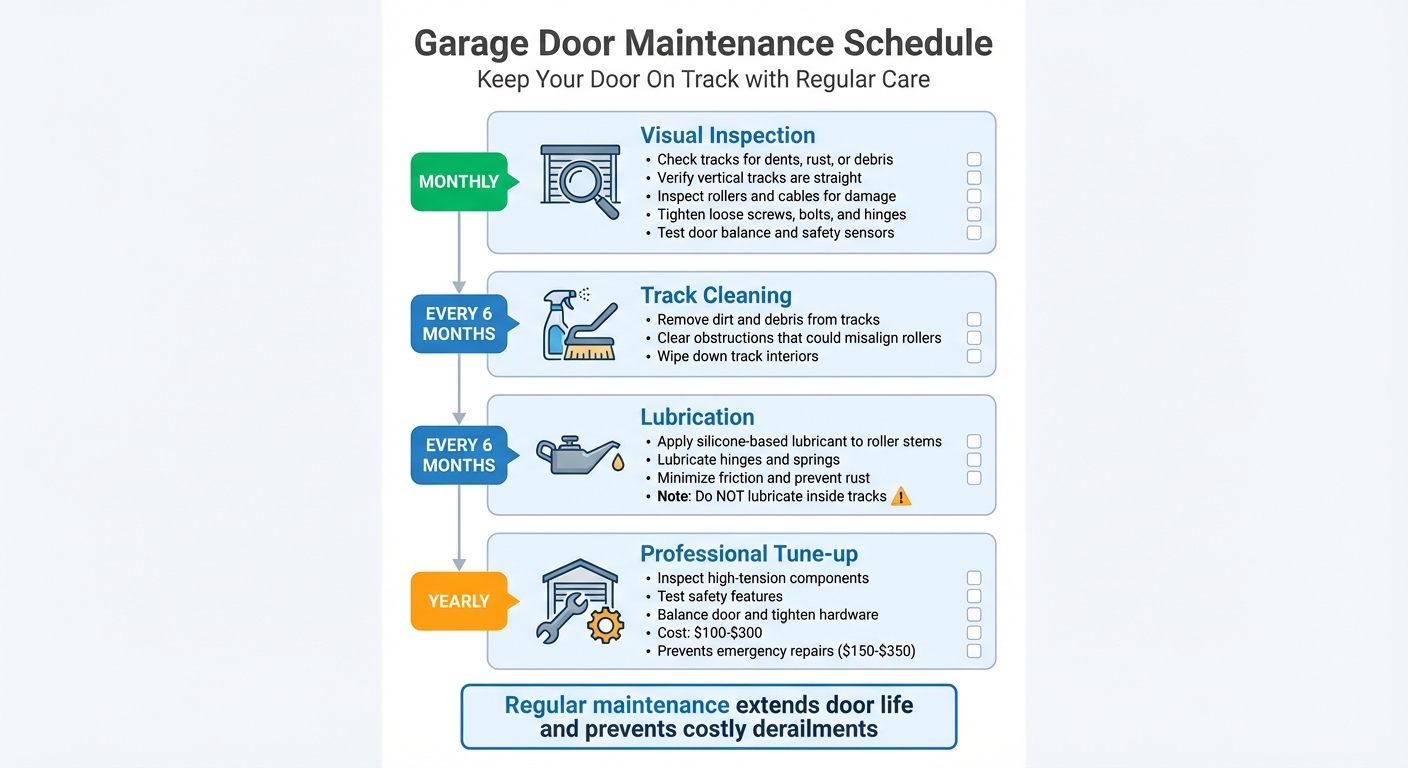
Garage Door Maintenance Schedule: Monthly to Yearly Tasks
Keeping your garage door on track is much easier – and cheaper – than dealing with derailments and the repairs they require. Simple, routine maintenance can save you from unnecessary headaches and expenses.
Monthly Visual Checks
Take a close look at your garage door system every month. Check the tracks for dents, rust, or debris, and make sure the vertical tracks are straight while the horizontal ones have a slight downward angle. Inspect the rollers and cables for any signs of damage, such as fraying or corrosion, especially near the lower roller bracket where wear tends to start. Tighten any loose screws, bolts, or hinges to prevent the tracks from shifting. Don’t forget to test the door’s balance manually and confirm that the photo-eye sensors and auto-reverse features are functioning as they should.
Regular Cleaning and Lubrication
Every six months, clean the tracks to get rid of any dirt or debris that could push the rollers out of place. While you should never lubricate the tracks themselves, applying a silicone-based lubricant or lithium grease to the roller stems, hinges, and springs can help reduce friction and stave off rust. If you live near the coast or in an area with harsh weather, consider lubricating every three to four months instead. Always unplug the garage door opener before starting any maintenance work for safety.
Proper Door Operation
Be mindful of how you use your garage door. If it feels like it’s sticking or resisting, avoid forcing it open or closed. Grinding, banging, or squeaking noises are red flags – stop and inspect the door if you hear them. Repeatedly operating the door or accidentally bumping it with your vehicle can also bend the tracks or damage the rollers, so be cautious. Once a month, switch the opener to manual mode and operate the door by hand to identify any sticking points the motor might otherwise push through. These habits, paired with regular maintenance, can help keep your door running smoothly.
Yearly Professional Maintenance
An annual tune-up by a professional, like Titan Garage Doors Quad Cities, can make a big difference in preventing derailments. Technicians will inspect high-tension components like torsion springs and lifting cables, which are dangerous for homeowners to handle, and ensure the door is balanced. They’ll also test safety features and tighten any loose hardware. This service usually costs between $100 and $300 – much less than the $150 to $350 emergency repairs could set you back[10][6]. Regular professional maintenance ensures that everything – sensors, springs, and other key components – works as it should. Here’s a quick reference guide for these tasks:
| Maintenance Task | Recommended Frequency | Purpose |
|---|---|---|
| Visual Inspection | Monthly | Look for loose bolts, gaps, or bent sections[4] |
| Track Cleaning | Every 6 Months | Clear debris that could misalign rollers[4] |
| Lubrication | Every 6 Months | Minimize friction and prevent rust[10] |
| Professional Tune-up | Yearly | Catch worn parts before they fail[9] |
Conclusion
When your garage door goes off track, it’s not something to ignore. Taking swift action not only protects your home but also extends the life of your door. If you notice grinding noises, uneven gaps, or sudden stops, disconnect the power immediately and secure the door to avoid further damage or potential collapse.
For minor issues like clearing debris from tracks or tightening loose bolts, many homeowners can handle the fixes themselves. However, for serious problems like broken springs, frayed cables, or badly bent tracks, it’s crucial to call a professional. These components operate under high tension and require the right tools and expertise to handle safely [2].
Titan Garage Doors Quad Cities provides a full range of repair services for off-track doors. From realigning tracks to replacing damaged rollers and cables, their skilled technicians take care of the risky tasks that should never be attempted by homeowners, such as adjusting torsion springs. With 24/7 emergency support, they’re ready to respond quickly, keeping your home secure from weather and potential intruders.
Staying proactive with maintenance can save you from expensive emergency repairs. Simple tasks like monthly visual inspections, lubricating parts twice a year, and scheduling annual professional tune-ups help catch small problems before they turn into major issues. By combining these regular checks with expert care, you ensure your garage door remains safe, reliable, and ready to perform when you need it most.
FAQs
What should I do if my garage door comes off its track?
If your garage door goes off track, the first step is to stop using it immediately to prevent any further damage or potential injuries. Locate the emergency release cord – usually a red rope – and pull it to disconnect the door from the opener. Once disconnected, carefully lift the door manually and secure it in place. You can use locking pliers or ask someone to assist you in holding it steady.
If you notice the rollers are misaligned, you can try to gently guide them back onto the track. However, avoid forcing anything, as this could cause more harm. For more complicated issues or if the door feels unsteady, it’s a good idea to reach out to a professional service like Titan Garage Doors Quad Cities to ensure the repair is handled safely and effectively.
What can I do to keep my garage door from going off track?
To keep your garage door running smoothly and avoid it going off track, start by cleaning and lubricating the tracks on a regular basis. This helps reduce friction and ensures everything moves as it should. Also, take the time to check and tighten all the mounting bolts to keep the system stable and secure.
It’s equally important to inspect key components like the rollers, cables, and springs. If you notice signs of wear or damage, replace them promptly to prevent breakdowns. Keep the tracks clear of debris and double-check that they’re properly aligned to avoid operational issues.
Finally, be mindful when parking or moving objects near the garage door. Accidental bumps can bend the tracks, throwing the system out of alignment. A little routine maintenance and careful handling can go a long way in keeping your garage door safe and functional.
When should I call a professional to fix a garage door that’s off track?
If your garage door tracks are badly bent or completely detached, or if several rollers have come off, it’s time to call in a professional. Other warning signs include grinding noises or a door that can’t be safely realigned. And if you’re uncertain about tackling the repair on your own, it’s always better to leave it to an expert. Attempting to fix a severely damaged door without the right expertise can not only make the problem worse but also pose serious safety risks.