15 YEARS OF SERVICE


Vinyl garage doors are a practical, low-maintenance option for homeowners looking for durability and cost-efficiency. Compared to wood, steel, and aluminum, vinyl stands out for its resistance to dents, rust, and rot, making it ideal for humid or coastal environments. With a lifespan of 10–20 years, vinyl doors require minimal upkeep, such as occasional cleaning and lubrication, and their color-through construction hides scratches effectively.
Here’s a quick breakdown of garage door materials and their key features:
- Vinyl: Durable, rust-proof, dent-resistant, and low-maintenance; costs $900–$3,500.
- Wood: Offers natural beauty and customization but requires high upkeep; prices start around $2,000.
- Steel: Affordable and strong but prone to rust and dents in humid areas; ranges from $750–$3,500.
- Aluminum: Lightweight and rust-resistant but dents easily; costs $1,500–$2,500.
For homeowners prioritizing durability, ease of maintenance, and performance in challenging climates, vinyl is a strong contender. Proper installation and lighter color choices can further enhance its longevity.
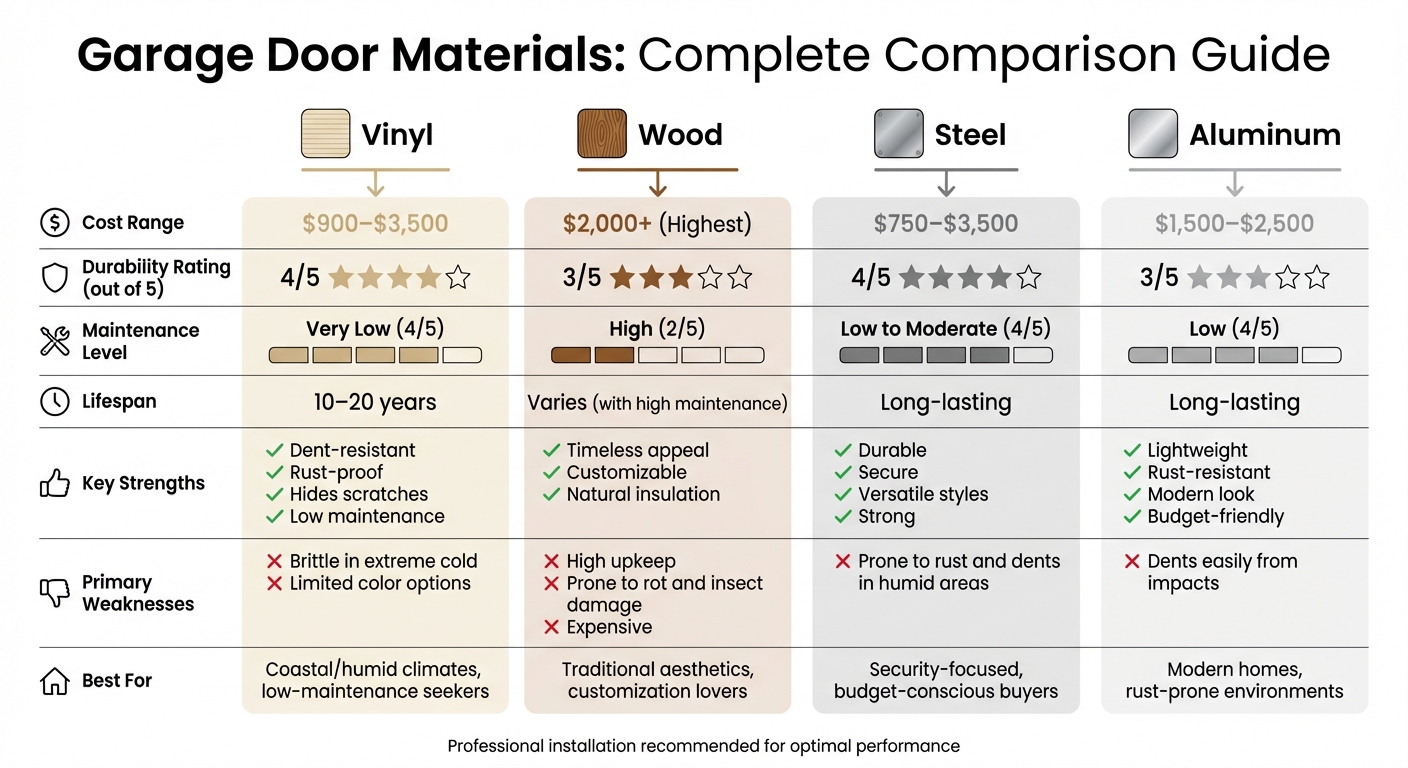
Garage Door Materials Comparison: Vinyl vs Wood vs Steel vs Aluminum
1. Vinyl
Durability
Vinyl garage doors are built with a sturdy combination of rigid PVC (polyvinyl chloride) over a reinforced steel frame, giving them excellent structural strength [1]. One of vinyl’s standout qualities is its resistance to dents and dings, making it a great choice for households with lots of activity [3]. On top of that, vinyl is completely waterproof, which means you won’t have to worry about rot or insect damage [7].
“Vinyl garage doors are in many ways sturdier than steel garage doors. Whereas steel doors are prone to being dented and dinged, vinyl doors are highly resistant to damage.” – Creative Door [3]
Another big plus? Its color-through construction. Since the color runs through the entire material rather than sitting on the surface, scratches and scuffs are barely noticeable [1]. For coastal homeowners, vinyl is a smart pick because it naturally stands up to salt air and sand [3]. With proper care, these doors can last anywhere from 10 to 20 years, and some even come with lifetime warranties [1].
Now, let’s look at how vinyl’s cost and long-term value stack up against other materials.
Cost
Vinyl garage doors hit a sweet spot when it comes to pricing. They’re not the cheapest option, but their moderate upfront cost, combined with low maintenance expenses, offers excellent long-term value. Unlike some materials, vinyl doesn’t require rust treatments or regular painting and staining, which saves you money over time. Plus, its lightweight design reduces wear and tear on your door opener and other hardware, helping those components last longer [4].
If you’re considering premium insulated vinyl doors, they can cost up to $5,000. These models often come with R-values between 8 and 15, which can make a noticeable difference in energy efficiency, especially if your garage is attached to your home [9].
Maintenance
One of vinyl’s biggest perks is how little maintenance it requires. Cleaning is simple – just power wash or use a mild detergent twice a year. To keep things running smoothly, lubricate the hinges, rollers, and tracks annually with a silicone-based lubricant [4][12]. That’s it. No painting, staining, or rust inspections needed, unlike other materials.
“Vinyl is a smart choice because they offer the positive qualities of real wood without the maintenance. They’re insect-, salt-, moisture-, fungus-, and rot-resistant, and they won’t splinter, twist, or warp.” – Artisan Custom Doorworks [7]
Avoid painting vinyl doors to preserve their factory finish. If painting becomes necessary, use 100% acrylic latex paint with a Light Reflective Value (LRV) of 60 or higher to prevent heat damage and warping [7].
This low-maintenance nature makes vinyl both practical and visually appealing.
Aesthetics
Vinyl garage doors offer a clean, consistent look, often featuring embossed textures that mimic wood grain. While they don’t capture the finer details of real wood, they still provide an attractive appearance [3]. However, the color choices are somewhat limited compared to steel doors, so it’s important to pick wisely when purchasing. Vinyl isn’t made for repainting, so sticking with lighter factory colors like whites and beiges is a good idea. Darker shades tend to absorb more UV heat, which can lead to warping or fading over time [6][9].
While vinyl doesn’t offer the same level of customization as wood or steel, its integrated color ensures it maintains its look for years without the peeling or chipping that can plague painted surfaces. For modern or coastal homes where durability is key, vinyl is a practical and stylish choice that holds up well against the elements.
Watch THIS Before You BUY Your Next Insulated Garage Door
2. Wood
Wood garage doors bring a natural charm that’s hard to match, but their practical challenges make them a more demanding choice compared to other materials.
Durability
Wood doors are undeniably beautiful but come with durability concerns. Unlike materials like vinyl, wood is highly vulnerable to moisture. Prolonged exposure to rain or humidity can lead to rotting, warping, or swelling, making it less suitable for coastal or humid regions [13].
“Natural woods like cedar, fir and redwood offer natural insulation and attractive designs.” – Viking Overhead [13]
Although certain woods, like Spanish Cedar, resist fungi and termites better, even these options require consistent upkeep [8]. Additionally, wood’s heavier weight compared to vinyl or aluminum puts more strain on springs and door openers over time [13]. On a durability scale of 1 to 5, wood scores a 3, falling short of vinyl’s 4 [11].
These durability issues inevitably lead to higher maintenance demands and increased costs over the long term.
Cost
Wood stands out as the most expensive material for garage doors [13]. Custom wood doors start at about $2,540 and can climb beyond $4,630 depending on size and design [14]. In contrast, vinyl doors typically range from $900 to $3,500 [5]. Beyond the initial cost, wood requires ongoing investment in painting or staining to preserve its appearance [11].
Maintenance
The upkeep for wood garage doors is intensive. Regular painting or staining is essential to protect against chipping, fading, and decay [8]. High-quality exterior latex paint or specialized stains must be applied to all surfaces [8]. On a maintenance scale – where 5 represents minimal effort – wood scores only a 2, while vinyl, steel, and aluminum rate a more manageable 4 [11]. Darker paint colors are particularly prone to fading under direct sunlight, requiring frequent touch-ups [8]. Annual inspections for fungal decay and pest damage, along with lubricating hinges and tracks every 3–6 months, are necessary due to wood’s weight and susceptibility to termites and other pests [5][8].
Aesthetics
When it comes to appearance, wood garage doors are in a league of their own [11]. The natural grain and warmth of real wood provide a rich, authentic look that synthetic materials can’t quite replicate. Wood can also be custom-milled into intricate designs, from Craftsman and Colonial to Barn and Modern styles [14].
Unlike vinyl’s limited color options, wood can be stained or painted in virtually any shade, including deep, rich tones [7]. Popular wood species include Western Red Cedar (naturally resistant to decay but softer), Spanish Cedar (noted for its termite resistance), and Douglas Fir (valued for its strength and beauty) [8]. While undeniably striking, the high cost and maintenance requirements associated with wood make it a choice that demands careful consideration.
3. Steel
Steel doors are known for their strength, affordability, and ability to provide enhanced security.
Durability
Steel is built to last. It’s resistant to warping, cracking, and rotting – problems often associated with wood. Plus, it holds up better than aluminum when faced with physical impacts or harsh weather conditions [10][13]. On a durability scale of 1 to 5, steel earns a solid 4 [11]. The one drawback? Rust and corrosion, particularly in humid or coastal areas [11][13]. However, modern solutions like hot-dipped galvanized steel and baked-on polyester paint help combat this issue. If the surface gets damaged, quick repairs are essential to prevent rust [13][15]. With its superior structural strength, steel adds a layer of security that’s hard to beat [3][15].
Cost
When it comes to cost, steel is a budget-friendly option. Prices typically range from $750 to $3,500 [2], making it more affordable than materials like vinyl, which can cost anywhere from $900 to $5,000 [9]. Steel is not just economical upfront – it also tends to have lower maintenance costs compared to wood [11]. This combination of affordability and lower upkeep makes steel a practical choice for many.
Maintenance
“Occasional cleaning with soap and water is all it takes to keep them looking their best.” – Clopay [16]
Steel doors are relatively low-maintenance. Regular cleaning and prompt repairs for any paint damage are all that’s needed to keep them in great shape [10][16]. Thanks to this ease of care, steel scores a 4 out of 5 for maintenance, especially when compared to the higher demands of wood [11].
Next, let’s see how aluminum stacks up in these key areas.
Aesthetics
Steel doors offer a wide range of design options, from sleek modern flush panels to classic carriage house styles [13]. Some manufacturers even provide stamped wood-grain textures that mimic the look of natural wood, giving you the warmth of wood without the hassle of high maintenance [13][15]. Steel also takes paint well, allowing for customization to match various architectural styles. However, its color choices may be more limited compared to genuine wood [10][15]. Whether you’re after a traditional or contemporary look, steel provides plenty of design flexibility while keeping upkeep manageable [16].
sbb-itb-cf36777
4. Aluminum
Aluminum garage doors stand out for their lightweight design, resistance to rust, and sleek, modern aesthetic. They strike a balance between affordability and style, making them a popular choice for contemporary homes.
Durability
When it comes to durability, aluminum has its strengths and weaknesses. It naturally resists rust and corrosion, which makes it an excellent option for homes in humid or coastal areas [16][17][19]. As Crystal Young from Performance Building Products explains:
“Aluminum garage doors are a popular option for homeowners looking for a lightweight, rust-resistant door with a modern look” [17].
However, aluminum is more prone to dents compared to tougher materials like steel or vinyl [10][11]. On a durability scale of 1 to 5, aluminum earns a 3 [11][16][18]. Its lightweight construction, while less impact-resistant, reduces strain on mechanical components, potentially extending the life of your garage door system [10][19].
Cost
Cost is often a deciding factor, and aluminum excels in this category. It’s one of the most affordable garage door materials, with prices typically ranging from $1,500 to $2,500 [2]. On an affordability scale, aluminum scores a perfect 5, outpacing steel (4/5), vinyl (3/5), and wood (2/5) [11]. While basic models are budget-friendly, premium options with large glass panels may exceed the cost of standard steel doors [1][19]. Additionally, its lightweight nature and minimal maintenance requirements can lead to savings over time [2][10].
Maintenance
“Among their many benefits, aluminum garage doors are not susceptible to rust or corrosion, making them a great choice for a long-lasting look.” – Clopay [16]
Aluminum requires very little upkeep, making it a low-maintenance option. Cleaning it occasionally with mild detergent and warm water is usually enough to keep it looking fresh [20]. To ensure smooth operation, lubricate moving parts like hinges and rollers with a silicone-based lubricant, which avoids attracting dirt like oil-based products do [20]. In coastal environments, rinsing the exterior weekly with fresh water can prevent salt buildup [20]. On a maintenance scale, aluminum scores a 4 out of 5, outperforming wood (2/5) and holding its own against steel and vinyl [11].
Aesthetics
Aluminum shines in the aesthetics department, particularly for modern and contemporary homes. Its clean lines and metallic finish create a sleek, minimalist look [10][11][17]. Many aluminum doors feature full-view designs with large glass panels that let in plenty of natural light, further enhancing their modern appeal [10][16][18]. While it doesn’t offer the warm texture of wood, aluminum’s streamlined design makes it a standout choice for homes with a modern architectural style. These qualities make aluminum an attractive option for homeowners prioritizing style alongside functionality.
Advantages and Disadvantages of Each Material
Every garage door material comes with its own set of strengths and weaknesses, balancing factors like durability, cost, upkeep, and appearance. Here’s a quick breakdown of the key points for each material.
Vinyl
Vinyl stands out for being dent-resistant and rust-proof, with built-in color that hides scratches effectively. It’s a great choice for areas with high humidity or coastal climates. On the downside, it can become brittle in extremely cold weather and is generally limited to lighter colors, as darker shades may absorb heat and warp [4].
“Vinyl garage doors won’t rot, rust or warp, which makes them perfect for damp, rainy locations” [4].
Wood
Wood offers timeless charm and a customizable design, along with natural insulation. However, it demands regular upkeep – like staining or painting – to fend off rot, warping, and insect damage. These maintenance needs, combined with its high upfront cost, make wood the priciest option overall.
Steel
Steel is known for its durability, security, and versatile design options, including styles that mimic wood. That said, it needs rust-prevention treatments in coastal areas and can dent or corrode in humid conditions.
Aluminum
Aluminum is lightweight, rust-resistant, and delivers a sleek, modern look. It’s easy to maintain and performs well in humid environments. However, it’s more susceptible to dents from impacts compared to other materials.
Here’s a quick comparison of the materials:
| Material | Key Strengths | Primary Weaknesses | Maintenance Level | Cost Range |
|---|---|---|---|---|
| Vinyl | Dent-resistant; rust-proof; hides scratches | Brittle in extreme cold; limited colors | Very Low | $900–$3,500 |
| Wood | Timeless appeal; customizable; insulated | High upkeep; prone to rot and insect damage | High | Highest |
| Steel | Durable; secure; versatile styles | Prone to rust and dents in humid areas | Low to Moderate | Low to Moderate |
| Aluminum | Lightweight; rust-resistant; modern look | Dents easily | Low | Budget-Friendly |
Conclusion
When comparing materials for garage doors, each comes with its own set of advantages, but vinyl stands out as a practical choice for many homeowners. The decision ultimately depends on your priorities, but vinyl offers a compelling combination of benefits. It’s rust-proof, resistant to dents, and requires minimal upkeep – just an occasional wash with mild soap and water. Unlike wood and steel, which demand regular maintenance, vinyl maintains its appearance even with minor scratches.
A properly maintained vinyl garage door can last anywhere from 10 to 20 years. While the initial cost typically falls between $900 and $3,500, the savings on maintenance can add up significantly over time compared to wood’s frequent refinishing or steel’s occasional treatments.
For those living in coastal or humid regions, vinyl is an excellent choice as it resists corrosion and warping. To get the most out of your door, lighter colors are recommended since darker shades can absorb heat, potentially leading to warping. Beyond the material itself, proper installation is key to ensuring long-term performance.
Professional installation makes all the difference in avoiding premature wear and tear. Titan Garage Doors Quad Cities specializes in expert installations across the Quad Cities area, covering everything from precise track setup to final adjustments. They also offer annual maintenance services to keep your garage door operating smoothly and quietly.
If you’re looking for a durable, low-maintenance, and cost-effective option, vinyl might be the perfect fit. For professional installation and dependable maintenance, visit Titan Garage Doors Quad Cities at https://titangaragedoorsquadcities.com.
FAQs
What are the benefits of choosing vinyl garage doors compared to other materials?
Vinyl garage doors come with a range of benefits that make them a go-to option for many homeowners. One standout feature is how easy they are to maintain. Unlike other materials, vinyl resists rust, warping, and fading, meaning you won’t have to spend much time or effort on upkeep.
Another big plus is their toughness. Vinyl is lightweight but surprisingly strong, holding up well against dents and everyday wear and tear. This makes it an option that can last for years without losing its appeal.
On top of being practical, vinyl garage doors are often easier on the wallet compared to wood, steel, or aluminum options. Plus, they can be designed to look like wood, complete with realistic grain patterns, offering that classic aesthetic without the hassle of painting or staining. For anyone seeking a budget-friendly, durable, and stylish garage door, vinyl checks all the boxes.
How does the price of vinyl garage doors compare to materials like wood or steel?
Vinyl garage doors tend to be a more budget-friendly option compared to wood and are often on par with or slightly less expensive than steel. Prices for vinyl doors typically start at around $900, with premium models ranging between $2,400 and $5,000. For comparison, wood garage doors usually fall between $2,000 and $5,000 or more, while steel doors occupy a similar mid-range price bracket but can sometimes surpass the cost of entry-level vinyl options.
For homeowners looking for a durable, low-maintenance garage door that doesn’t sacrifice style, vinyl offers an appealing and cost-conscious choice.
How do I maintain a vinyl garage door to keep it in great shape?
Keeping your vinyl garage door in good shape doesn’t have to be complicated. Aim to clean it once a year with a mild detergent or use a power washer to clear off dirt and debris. Make sure to lubricate the hinges, rollers, and tracks regularly to keep everything running smoothly. Check the weather-stripping too – if it’s worn out, replace it to maintain energy efficiency and shield your garage from the elements. Don’t forget to inspect the metal hardware for rust or minor damage, and take care of any issues right away to avoid bigger problems down the line. With these straightforward steps, your vinyl garage door can remain both functional and attractive for years.