15 YEARS OF SERVICE

Yes – if you want the look of real wood and you’re ready to pay for it. In most cases, wood garage doors cost more up front, need more care over time, and can be harder on hardware in places with humid summers and freezing winters.
Here’s the short answer in plain terms:
- Single wood doors often start around $1,500 installed
- Two-car wood doors can run $2,000 to $10,000+
- Maintenance every 1 to 3 years is part of the deal
- Over 20 years, wood can cost $1,500 to $3,000 in upkeep, vs. $200 to $400 for steel
- In places like the Quad Cities, moisture and freeze-thaw swings can lead to more warping, sticking, and finish wear
- Wood may be worth it if you care most about appearance, custom design, and long-term home value
If I had to sum it up in one line: wood garage doors can be worth the money, but only if you can handle the upkeep.
Quick comparison
| Factor | Wood Garage Doors | Steel/Faux Wood |
|---|---|---|
| Upfront cost | Higher | Lower to mid-range |
| Maintenance | High | Low |
| Weather risk | Higher | Lower |
| Weight | Heavy | Lighter |
| Design options | More custom options | Fewer, but still many |
| Long-term cost | Higher | Lower |
So before buying, I’d look at three things: price, maintenance, and weather exposure. If those line up with your budget and how long you plan to stay in the home, wood may make sense.
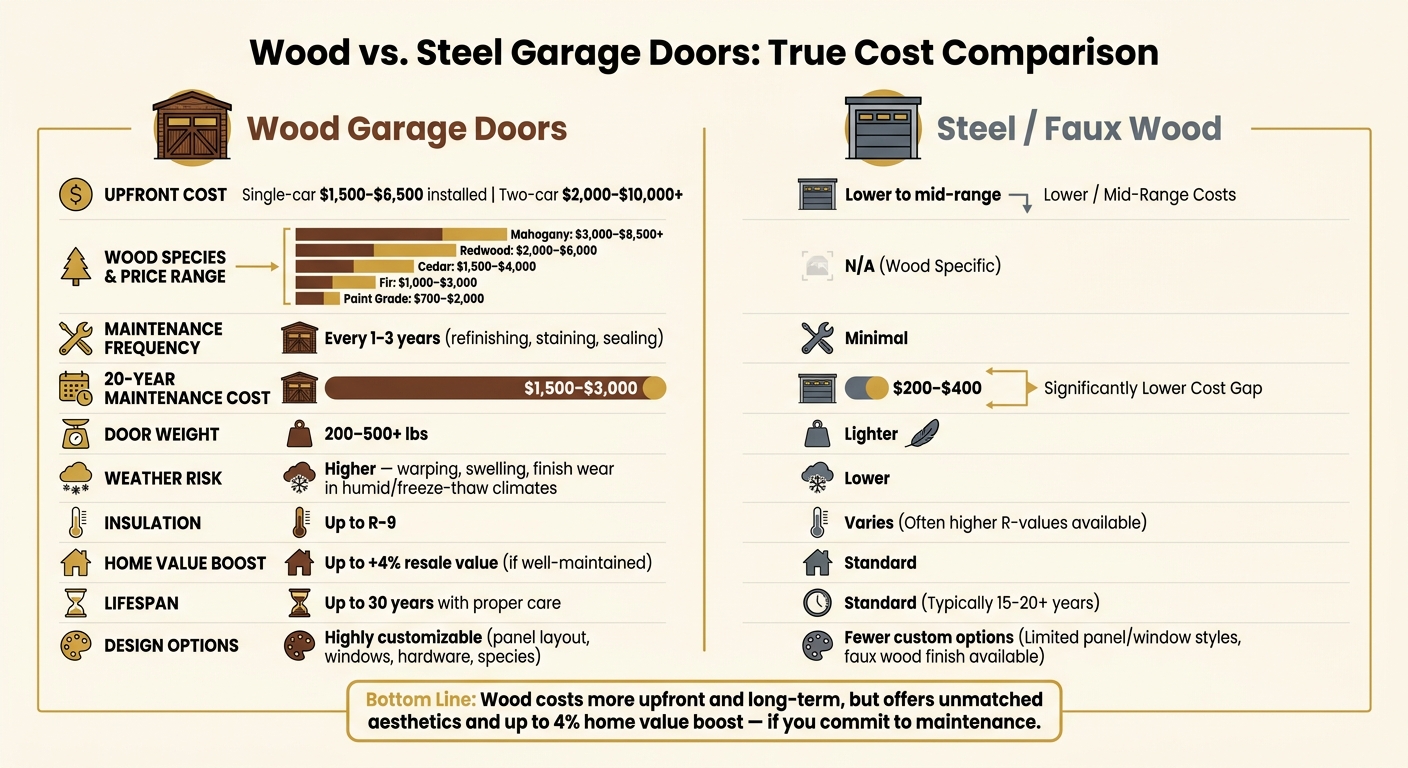
Wood vs. Steel Garage Doors: Cost & Maintenance Comparison
What Wood Garage Doors Actually Cost
Upfront Material and Installation Costs
The price comes down to three main things: wood species, door size, and how custom you want to get. For most homes, a single-car wood garage door costs $1,500 to $6,500 installed, while a two-car door usually lands at $2,000 to $10,000+.[1][8]
Here’s how door-only pricing usually breaks down:
| Wood Species | Unit Cost (Door Only) | Notes |
|---|---|---|
| Paint Grade (Plywood/MDO) | $700 – $2,000 | Most affordable; requires paint |
| Fir | $1,000 – $3,000 | Budget-friendly softwood; easy to stain |
| Cedar | $1,500 – $4,000 | Good moisture resistance |
| Redwood | $2,000 – $6,000 | High decay resistance |
| Mahogany | $3,000 – $8,500+ | Premium hardwood; very dense and durable |
Extras can push the price up fast. Insulation adds about 20%, windows add $100 to $1,000+, and custom finishes or design details add another 15% to 25%.[1][4][8][10]
Then there’s installation. Professional installation usually adds $150 to $800.[1][7] And because wood doors often weigh 200 to 500+ lbs, they may need heavy-duty springs and a stronger opener. That can tack on another $150 to $500.[1]
Maintenance and Repair Costs Over Time
The sticker price is only part of the story. Wood doors need regular refinishing, whether that means staining, painting, or sealing, usually every one to three years to help guard against moisture and UV damage.[2][7]
If that upkeep slips, the problems can snowball. Moisture can lead to warping, rot, and cracked panels. And once that starts, repair bills tend to follow.
Common repair costs include:
Over a 20-year span, maintenance for a wood garage door can add up to $1,500 to $3,000, compared with $200 to $400 for steel.[11] That’s a pretty big gap, and it matters if you’re looking past the day-one price.
How Quad Cities Weather Affects Wood Door Costs
Weather changes the numbers more than many homeowners expect. Hot, humid summers make wood fibers swell, while freezing winters make them contract. That back-and-forth stress wears down finishes faster and can knock the door out of alignment.[8]
In the Quad Cities, humidity and freeze-thaw cycles can make sealants and hardware costs pile up sooner. Even wood species known for rot resistance still need regular sealing in this kind of climate.[1][2]
sbb-itb-cf36777
Why Some Owners Still Choose Wood
Curb Appeal and Architectural Fit
Wood still stands out for one big reason: it looks the part.
Even with the higher price, many homeowners pick wood because no other common garage door material quite matches the grain, texture, and warmth of the real thing. On a Craftsman bungalow, a Tudor, or a carriage-house style home, a wood garage door can feel less like an add-on and more like a key part of the front exterior.
So what makes wood worth the extra money?
Wood Species, Customization, and Insulation Options
Looks are only part of it. Wood also gives buyers more say in how the door looks and how it performs.
You can tailor details like:
- Panel layout, such as raised, recessed, or flush
- Window style
- Decorative hardware, including wrought iron strap hinges or pulls
That kind of control helps the door fit the house better, which can make the higher price easier to justify.
The wood species matters too. Cedar helps fight moisture and insects. Mahogany is known for resisting warping. Fir and oak offer a classic middle-ground choice.
Insulated wood doors can reach about R-9, which makes them a better match for attached garages, workshops, or hobby spaces. That added insulation can help keep garage temperatures more steady.
Home Value and Resale Appeal
A well-kept wood door can improve curb appeal and may help support resale value. Some reports show up to a 4% boost in home value, along with strong replacement ROI. [12][9]
But there’s a flip side. A peeling, warped, or faded wood door can drag resale appeal down instead.
That’s where the tradeoff starts: wood can look great and add value, but only if you keep up with the maintenance.
How Much Do Wooden Garage Doors Cost
Main Drawbacks to Consider Before You Buy
Wood looks its best when the owner is ready for regular upkeep, heavier hardware, and the wear that comes with changing weather.
Upkeep and Weather Risks
Wood doors need sanding, repainting or restaining, and resealing every 1 to 3 years. In harsh weather, that cycle can come even sooner.
If you skip that work, problems tend to stack up fast. Moisture can lead to warping, rot, cracked panels, and even attract pests. Replacing one damaged panel costs $150 to $400 [7]. That risk goes up in the Quad Cities, where humidity and freeze-thaw cycles can wear down finishes faster.
Weight, Hardware Wear, and Safety
The same density that gives wood its high-end feel also puts more strain on the hardware.
A single-car door can weigh 200 to 300 lbs., and a two-car door can go past 500 lbs. [1] That extra load wears down springs, tracks, rollers, and the opener motor faster. It also adds more danger during spring or cable work. Installation, balancing, and any hardware service should be left to a professional.
How Wood Compares to Steel, Aluminum, and Faux Wood
The main differences come down to cost, upkeep, and how well each material holds up over time.
Steel makes up about 70% of all U.S. garage door sales because it weighs less and needs less maintenance [7]. Faux wood composite gives you a similar look with much less upkeep, at about 40% to 60% of the price of real wood [7]. Aluminum is the lightest choice, but it dents easily and usually does a poor job with insulation.
When a Wood Garage Door Is Worth the Cost
Best Fit for Home Style, Budget, and Ownership Plans
After you look at both the upfront price and the long-term spend, wood makes sense for a pretty specific type of homeowner.
It’s worth the cost when looks, lifespan, and resale value matter more to you than the extra work that comes with upkeep. That usually means homes with a more classic look, like traditional, Craftsman, Tudor, or carriage-house styles. It also makes more sense for owners who expect to stay put for 20 years or more[1][2].
In that case, the higher price can make sense. A well-kept wood garage door can last up to 30 years[1][2]. It may also add as much as 4% to resale value[8]. But there’s no getting around the tradeoff: wood needs regular care. In the Quad Cities, choosing rot-resistant wood matters most.
When Professional Installation and Maintenance Matter Most
Wood doors are heavy. That’s why professional installation matters more here than it does with lighter materials.
A two-car wood door can weigh 400 to 500 pounds or more, which means it needs properly sized springs, careful alignment, and a 1/2 to 3/4 horsepower opener[3]. If any of that is off, you’re putting a lot of stress on the door and opener.
Titan Garage Doors Quad Cities handles installation, opener setup, spring sizing, and maintenance for heavier wood doors. That kind of help matters when you’re trying to protect a door that can cost $2,000 to $10,000+ to install[1].
Conclusion: Are Wood Garage Doors Worth It?
For the right homeowner, wood garage doors can be worth the cost.
They bring natural warmth, strong curb appeal, and a high level of customization. High-quality wood garage doors can increase a home’s value by up to 4% [12]. If the look, home value, and design options matter enough to you, wood can make sense.
But there’s a catch: you have to be okay with the upkeep.
The main tradeoff is the higher upfront price and regular maintenance. That matters even more in the Quad Cities climate, where seasonal weather can lead to warping and sticking [6][5].
That maintenance commitment is the line between a smart buy and an expensive headache. With steady care, wood garage doors can last for decades. Skip that care, and repair costs can pile up fast.
FAQs
How long do wood garage doors usually last?
With proper maintenance, wood garage doors usually last 15 to 30 years. But that range depends a lot on how well you keep up with care.
Wood is porous, so it needs a fresh coat of paint or stain every 2 to 5 years. That finish helps shield the door from moisture, UV exposure, and swings in temperature. Skip that upkeep, and the door is more likely to warp, rot, or crack much sooner.
Which wood species is best for my climate?
It depends on your local climate. Western Red Cedar is often the top pick because it naturally resists rot, decay, and insects. That makes it a smart fit for humid regions and coastal areas where moisture is a constant battle.
Redwood has similar moisture resistance. Mahogany is another strong option, especially if you want a wood that stays stable in different weather conditions.
If your area gets sharp temperature swings, cedar is usually the safest bet. Just plan to keep it sealed or stained every two to four years.
Is a wood garage door a good fit for my home?
A wood garage door makes sense if you care more about curb appeal, craftsmanship, and long-term home value than easy upkeep. It’s a strong match for traditional, rustic, or custom homes.
That said, wood does need regular refinishing, usually every 1 to 3 years, and the upfront cost is higher. It can also be a tougher sell in harsh climates or for homeowners who want a more hands-off option.