15 YEARS OF SERVICE

When your garage door refuses to close in Moline, IL, leaving it open can be a real concern, especially during cold Quad Cities winters. A faulty safety sensor could be the cause, but how much should you expect to pay for repairs? The safety sensor repair cost depends on the type of problem and the work needed to fix it.
In this guide, we’ll cover typical repair price ranges, the factors that affect your final bill, and what to check before scheduling professional service in the Quad Cities.
How Much Is the Average Safety Sensor Repair Cost?
Garage door safety sensor replacement generally costs between $70 and $300, based on national pricing estimates published by Angi and HomeGuide in 2026. However, the amount you pay depends on the sensor type, opener model, wiring condition, and labor involved.
Here’s how the two pricing guides compare:
| Pricing Source | Estimated Replacement Cost | Reported Average |
|---|---|---|
| Angi (2026) | $70–$190 | $160 |
| HomeGuide (2026) | $125–$300 | $200 |
Sources: Angi’s Garage Door Sensor Replacement Cost Guide and HomeGuide’s Garage Door Sensor Replacement Cost Guide.
Note that these are national estimates, not fixed prices from Titan Garage Doors Quad Cities. They also focus on sensor replacement rather than every type of sensor repair. A sensor that only needs cleaning or realignment may cost less to fix. However, damaged wiring, incompatible parts, or additional opener problems can increase the final bill.
For homeowners in Moline, IL, and nearby Quad Cities communities, the best way to determine the actual safety sensor repair cost is to have the problem diagnosed before approving replacement parts.
5 Factors That Affect Safety Sensor Repair Cost
Two garage doors can show the same problem but need different repairs. One may have a sensor that slipped out of alignment, while the other has damaged wiring or a faulty part. That’s why safety sensor repair cost depends on what the technician finds during the inspection.
Here are five factors that can affect your final bill:
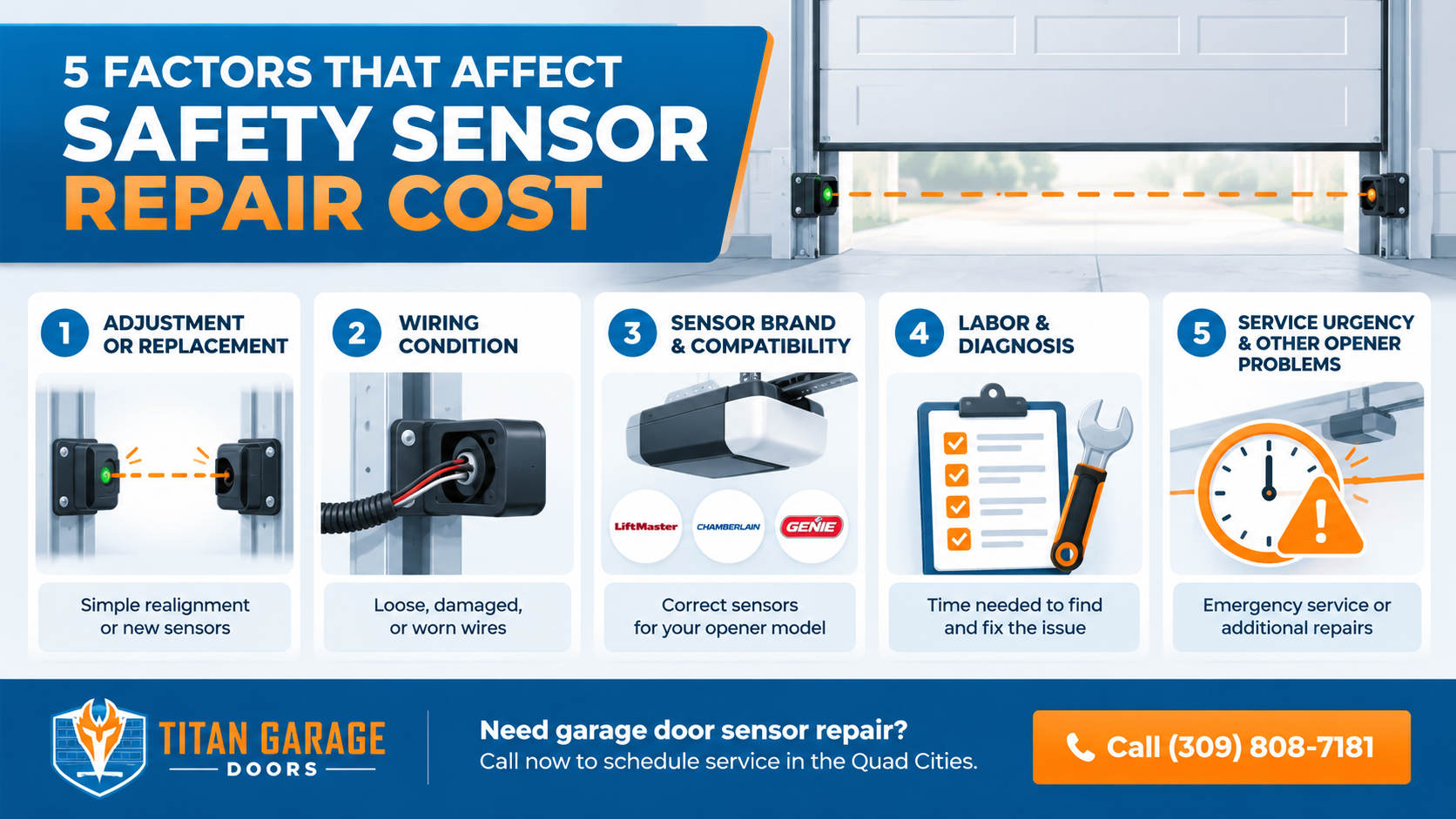
1. Sensor Alignment vs. Complete Replacement
Not every sensor problem requires new parts.
Garage door safety sensors sit near the bottom of the opening and face each other. When something knocks one out of position, the sensors may lose their connection and prevent the door from closing normally. A technician may only need to correct the alignment and confirm that the sensors communicate properly.
However, if a sensor has failed internally, cleaning or repositioning it won’t solve the problem. Replacement becomes the better option.
That difference matters because an adjustment usually requires fewer parts and less work than installing a new sensor set.
2. Damaged Wiring or Loose Connections
Sometimes the sensors work, but their wiring does not. Moisture, accidental impacts, pests, and everyday wear can damage the small wires connecting the sensors to the opener. A loose connection may also interrupt the signal.
The repair cost depends on where the problem occurs and how much wiring needs attention. A simple connection repair may take less work than replacing a damaged wire that runs along the garage wall or ceiling.
This is one reason technicians should inspect the wiring before recommending new sensors.
3. Sensor Brand and Opener Compatibility
Not every garage door safety sensor works with every opener. Different manufacturers use specific sensor designs, wiring arrangements, and compatibility requirements. Even openers from the same brand may need different replacement parts depending on their age and model.
A common replacement sensor may be easier to source than a part for an older or less common opener.
Before installing anything, a technician should confirm the opener model and select compatible sensors. Buying an inexpensive but incompatible sensor can leave you with the same problem and an additional expense.
4. Labor and Troubleshooting Time Affecting Safety Sensor Repair Cost
The replacement sensor itself is only one part of the bill. Professional garage opener troubleshooting may include checking sensor lights, inspecting wiring, confirming alignment, testing the opener, and verifying the safety response after repair.
A straightforward alignment issue may take less time to resolve. However, an intermittent problem that appears only under certain conditions can require more testing. For example, a door that refuses to close only during bright afternoon sunlight may need a different diagnosis than one with a visibly broken sensor.
Labor charges may also include a service call or diagnostic fee. Ask whether the company applies that fee toward the repair.
5. Urgency and Additional Opener Problems
A sensor issue can become urgent when your garage door refuses to close and leaves your home unsecured. Some companies charge more for emergency or after-hours appointments. The final amount may also increase if the technician discovers a separate problem with the opener.
For instance, garage door reversing can happen because of blocked sensors, but opener settings or mechanical resistance can also cause unexpected reversals.
A proper diagnosis helps prevent unnecessary sensor replacement when another component needs attention.
What to Look for in a Garage Door Sensor Repair Estimate
Before agreeing to a repair, make sure you understand what you’re paying for. A good estimate should explain the problem, the recommended fix, and the total cost without leaving you guessing about extra charges.
Here’s what to look for in your quote:
- Diagnosis: What caused the sensor to stop working, and how did the technician confirm it?
- Recommended repair: Can the technician realign or repair the sensor, or does it need replacement?
- Parts and labor: Does the estimate show the cost of replacement parts and the work involved?
- Additional fees: Are there separate charges for the service visit, troubleshooting, or emergency scheduling?
- Safety testing: Will the technician check that the sensors detect an obstruction and stop the door from closing?
Don’t hesitate to ask why a replacement is necessary, especially if the sensors appear undamaged. A technician should be able to explain the reason and confirm that the new parts are compatible with your opener.
The lowest quote isn’t always the best value. Compare what each estimate includes, not just the total price. That way, you’ll know whether you’re paying for a simple adjustment, new sensors, or additional garage door opener repair.
Need a clear answer about your garage door sensor problem? Titan Garage Doors Quad Cities can inspect your sensors, identify the issue, and explain the repair options before work begins. Contact us today to schedule professional sensor repair and get your garage door closing safely again.
3 Simple Sensor Checks Before Calling for Repair
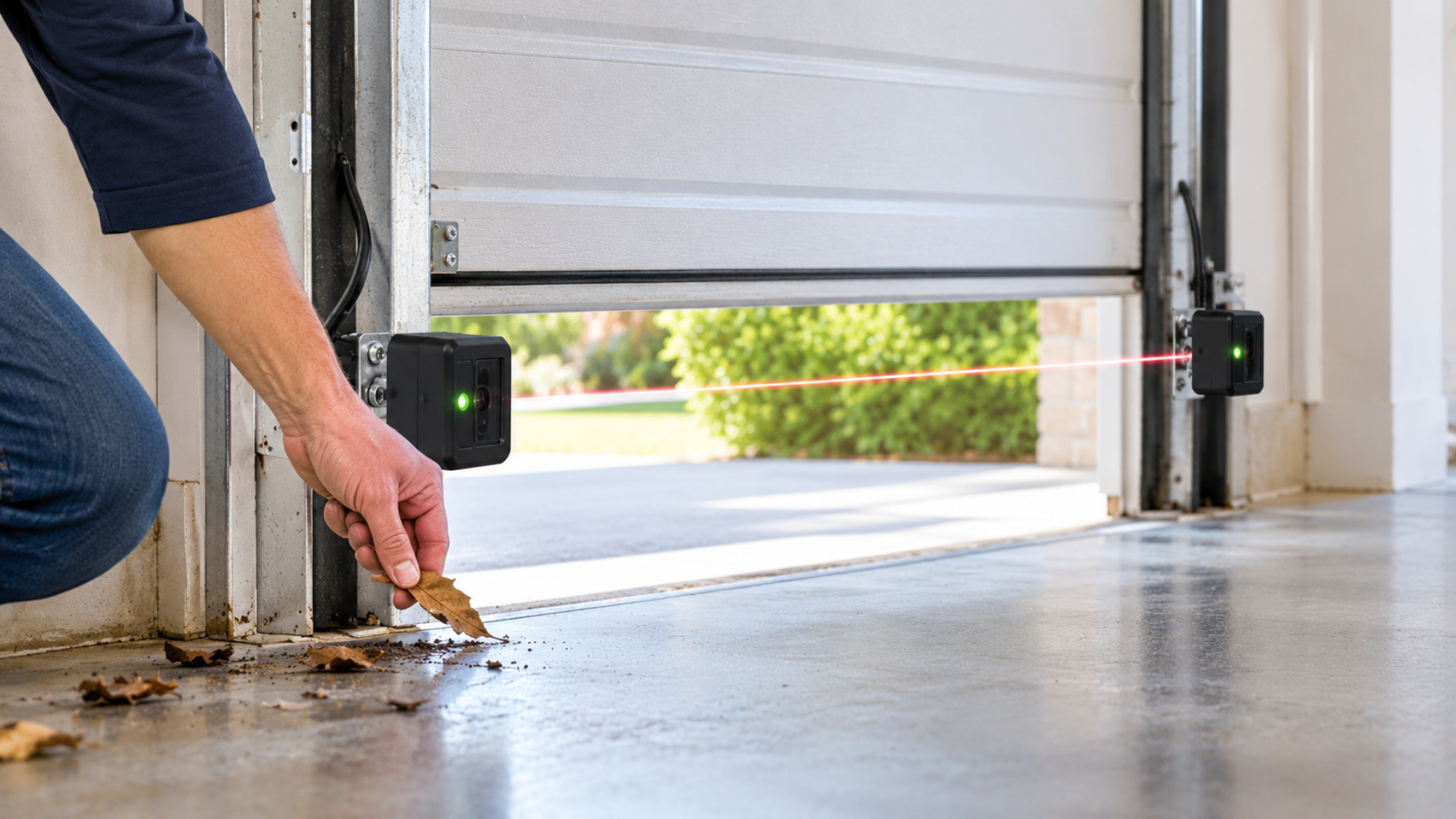
Not every garage door sensor problem requires replacement. Sometimes, a blocked sensor or dirty lens is all it takes to stop the door from closing. A few quick checks can help you understand what might be wrong before calling for service.
Start with these three steps:
- Clear the sensor area. Move storage boxes, tools, leaves, or other objects that might block the invisible beam between the sensors.
- Clean both sensor lenses. Gently wipe away dust, dirt, or cobwebs with a soft, dry cloth.
- Check for visible damage. Look for crooked sensors, loose brackets, or damaged wires without touching the electrical connections.
Want to check whether the sensors are working properly? Our guide on How to Test Garage Door Safety Sensors Before Winter explains how to perform a safe garage door sensor test and understand the results.
If the door still refuses to close or keeps reversing, the problem may need professional attention. A technician can check whether sensor alignment, wiring, replacement parts, or another garage door opener repair will restore normal operation.
For your safety, leave electrical repairs and sensor adjustments that involve wiring to a qualified technician. Keep the safety sensors connected and working as designed.
Safety Sensor Repair Cost FAQs
Is it more affordable to repair or replace garage door sensors?
If the problem involves dirt, an obstruction, or minor misalignment, correcting it may cost less than replacing the sensors. However, a failed sensor usually needs replacement rather than an internal repair.
Do I need to replace both garage door safety sensors?
Not always. Some opener systems allow compatible individual replacements, while others use matched sensor pairs. A technician should check the model and condition of both sensors before recommending replacement.
Can bad sensors cause a garage door to reverse?
Yes. If the sensors detect an obstruction or lose their connection, the opener may stop or reverse the door. However, mechanical resistance and opener settings can also cause reversing, so diagnosis matters.
Will my garage door opener need replacement if the sensors fail?
Usually not. Many sensor problems can be resolved without replacing the entire opener. An older opener with additional electrical or mechanical problems may need further evaluation.
Does homeowners insurance cover sensor replacement?
Standard homeowners insurance generally does not cover ordinary wear or routine equipment failure. Coverage may apply when a covered event causes damage, depending on the policy and circumstances.
Get a Clear Quote for Garage Door Sensor Repair in Moline, IL
Does your garage door keep reversing, refuse to close, or show signs of a sensor problem? Don’t wait until you cannot secure your garage.
Titan Garage Doors Quad Cities provides garage door opener repair, sensor replacement, and troubleshooting for homeowners in Moline, IL, and surrounding Quad Cities communities. Our certified technicians can inspect the sensors, check the wiring, identify the cause, and explain the recommended repair before work begins.
Call Titan Garage Doors Quad Cities at (309) 808-7181 today to schedule professional sensor repair and restore safe, reliable garage door operation.