15 YEARS OF SERVICE

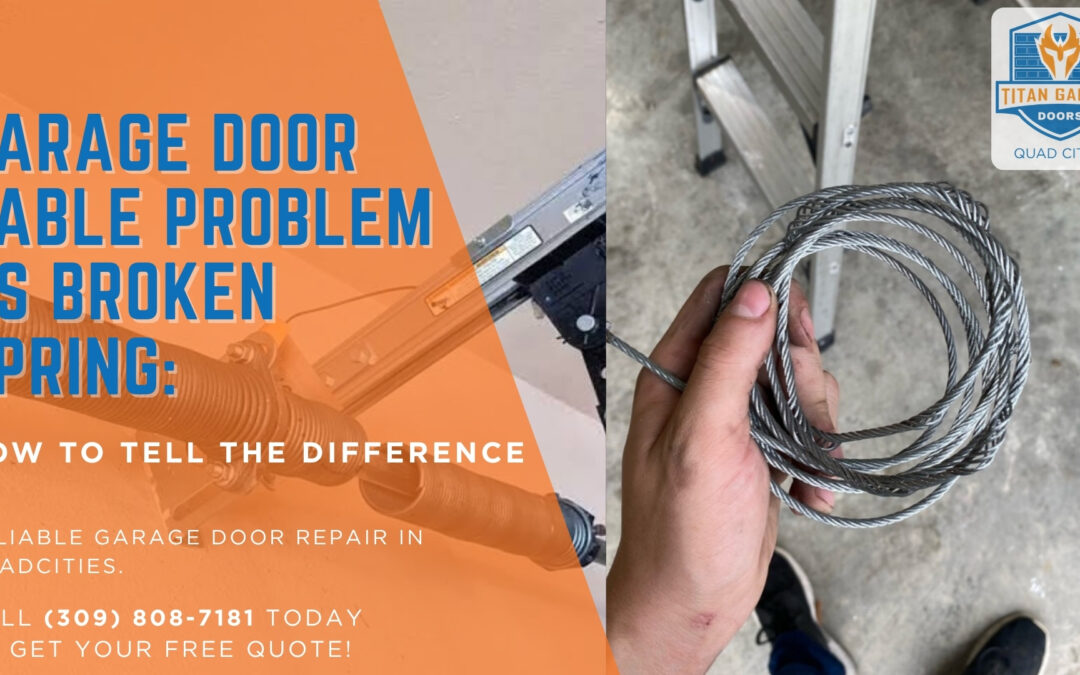
Your garage door suddenly will not open normally. Maybe one side rises while the other stays low. Perhaps the opener runs, but the door barely moves. You may even see a loose cable hanging beside the track. So, what actually broke? Telling a cable vs spring problem apart can be difficult because these parts work together every time your garage door moves. A problem with either one can leave the door heavy, crooked, stuck, or unsafe to operate.
Still, there are clues you can look for without touching anything. Understanding those differences can also help you describe the problem when you call for garage door repair in Moline or elsewhere in the Quad Cities.
Why Cable and Spring Problems Can Look Similar
Garage door springs and cables perform different jobs, but they depend on each other.
The springs provide the lifting force that balances most of the door’s weight. The cables, on the other hand, transfer that force to the door so both sides can rise and lower evenly. Your opener then controls the movement rather than lifting the entire weight by itself.
Because the parts work as a system, one failure can affect the others. A broken spring can leave cables loose, while a damaged cable can make the door tilt even when the spring remains intact. That is why diagnosing the problem based on one symptom can lead you in the wrong direction.
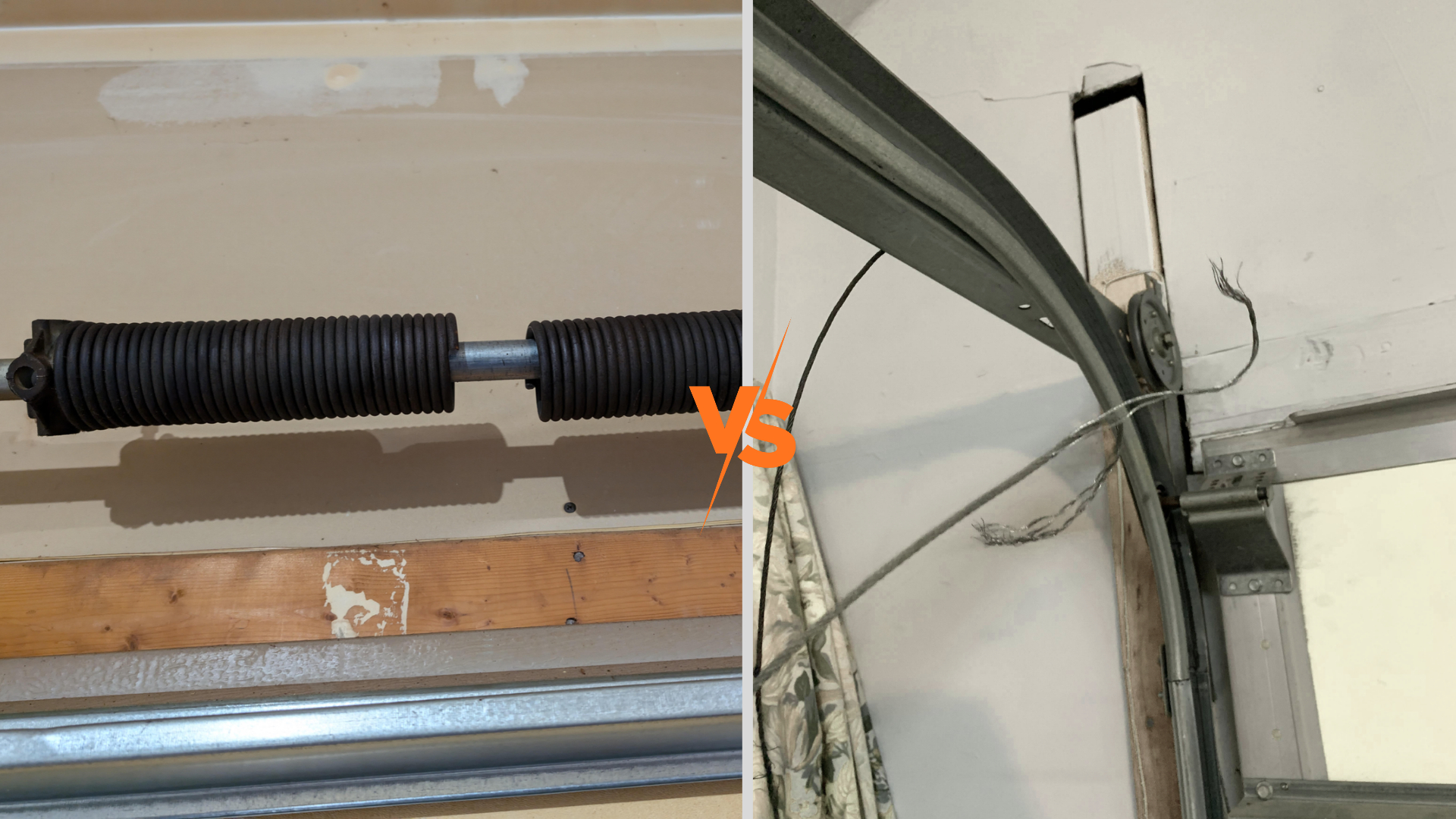
Cable vs Spring: A Quick Comparison
Before looking at each problem in detail, this comparison can help you understand the most common differences.
| What You Notice | Cable Problem | Broken Spring |
|---|---|---|
| Frayed or broken wire strands | ✓ | |
| Loose cable beside the door | ✓ | |
| One side rises differently | ✓ | Possible |
| Door hangs noticeably crooked | ✓ | Possible |
| Visible gap in a torsion spring | ✓ | |
| Loud bang from the garage | Possible | ✓ |
| Door suddenly feels extremely heavy | Possible | ✓ |
| Opener runs but struggles to lift | Possible | ✓ |
| Cable has come off the drum | ✓ | Can happen after spring failure |
The table above gives you clues, not a final diagnosis. Since one failure can affect several components, a technician should inspect the complete lifting system before recommending repair.
Now, let’s go over the common signs you have a garage door cable problem.
Signs the Garage Door Cable May Be the Problem
Cable problems often show themselves through uneven movement or visible cable damage.
One of the easiest signs to spot is fraying. A healthy garage door cable should look tightly wound and consistent. If individual steel strands start sticking out, the cable has begun wearing down.
You may also notice that:
- One side of the door rises before the other.
- The door hangs crooked.
- A cable looks loose or tangled.
- The cable has slipped off the drum.
- You see rust, kinks, or broken strands.
- One cable looks noticeably different from the other.
A cable off drum deserves particular attention. You may see cable hanging near the upper corner of the door or notice that one side no longer lifts correctly. However, do not assume that the drum caused the problem. A spring or balance issue can sometimes cause the cable to lose tension and leave its normal position.
If you want to examine the cable visually without touching high-tension hardware, our guide on How to Spot Frayed Garage Door Cables Before They Fail explains the early warning signs in more detail.
Signs You May Have a Broken Garage Spring
A broken garage spring often changes how the entire door feels rather than only one side.
With a torsion spring system, one of the clearest signs is a visible gap in the spring above the garage door. The spring normally forms one continuous coil. When it breaks, the two sections separate and leave a noticeable space between them.
Another common clue is a loud bang. Homeowners sometimes hear a sudden noise from the garage and assume something fell. In reality, a spring may have released its stored tension when it broke.
You might also notice:
- The door becomes extremely heavy.
- The opener runs but cannot lift the door.
- The door rises only a few inches and stops.
- The door closes faster than normal.
- Cables suddenly appear loose after the spring breaks.
That last symptom causes plenty of confusion. If you see loose cables and assume you only need garage door cable replacement, you could miss the broken spring that caused the cables to lose tension.
Cable vs Spring: What Should You Do If You Cannot Tell What Broke?
You do not need to make the final diagnosis yourself. In fact, there are only a few things worth checking before calling for service.
From a safe distance:
- Look above the door. A visible gap in the torsion spring strongly suggests spring failure.
- Look along both sides. Check for loose, frayed, tangled, or broken cables.
- Check whether the door sits level. A noticeable tilt can point toward uneven lifting support.
- Think about what you heard. A sudden loud bang can accompany a spring failure.
- Stop if the door looks unstable. Do not pull cables, adjust drums, or try to reconnect spring hardware.
These observations give a garage door technician useful information without putting you near components that hold significant tension.
If the door is stuck open, hanging crooked, or has dropped unexpectedly, consider emergency garage door repair rather than continuing to operate it.
Cable Problems and Broken Springs Require Different Repairs
A cable problem and a broken spring can make the door behave in similar ways, but they do not call for the same repair. The infographic below highlights the key differences in how Titan Garage Doors Quad Cities handles each issue, showing the steps we take to ensure safe, reliable repairs.
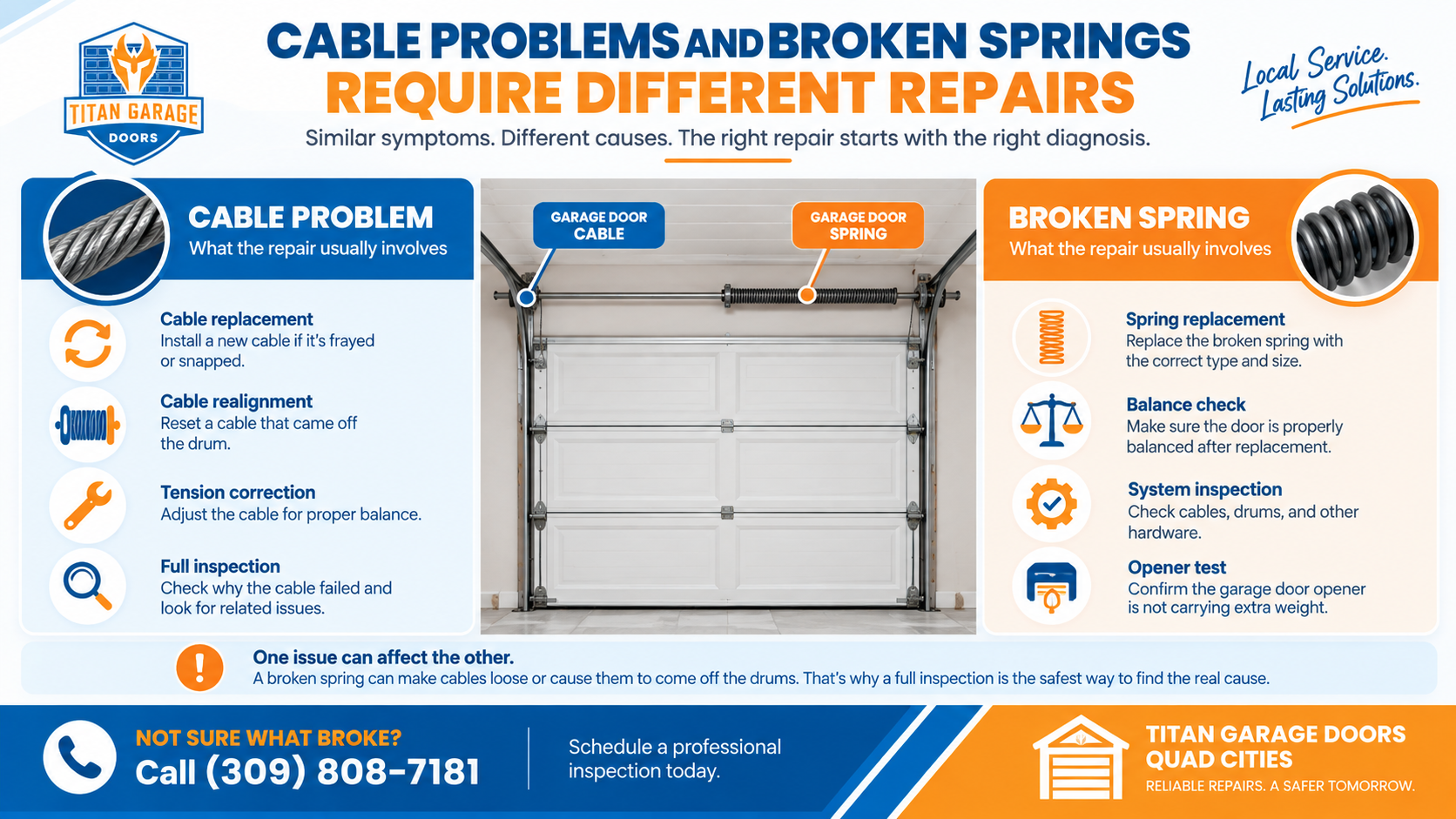
The important part is finding out what caused the failure in the first place. A loose cable, for example, may look like the main problem, but a broken spring can sometimes cause the cable to lose tension or come off the drum. In other cases, the cable itself may be worn or damaged while the spring is still working properly. That’s why understanding cable vs spring issues is so important.
Our expert technicians look beyond the first visible symptom. Checking the cable, spring, drums, door balance, and opener helps confirm whether one part failed on its own or whether the problem affected several parts of the system. The goal is not simply to replace the part that looks damaged. It is to restore smooth, balanced movement and make sure the door works properly after the repair.
Frequently Asked Questions About Cable vs Spring Problems
Can a garage door cable break if the spring is still good?
Yes. Cables can wear from age, corrosion, repeated use, or improper movement even when the spring still works. Fraying often appears before complete cable failure.
Why are my cables loose after the garage door spring broke?
When a spring breaks, the lifting system loses tension. That change can leave the cables slack or allow them to move out of position.
Can I open a garage door with a broken spring or cable?
Avoid operating a door with a confirmed broken spring or damaged cable. The door may be much heavier or less stable than expected, and continued use can create additional damage.
Does a crooked garage door always mean a broken cable?
No. A cable problem is one possible cause, but roller, track, spring, or balance problems can also make a door move unevenly. A professional inspection can identify the actual cause.
Which repair costs more, a broken spring or garage door cable?
It depends on the door, parts, and extent of the damage. A straightforward cable replacement may cost less than some spring repairs, but a cable failure that causes additional damage can increase the total. Get an inspection before comparing repair costs.
Get Expert Garage Door Diagnosis in the Quad Cities
If your garage door suddenly becomes heavy, crooked, stuck, or difficult to lift, Titan Garage Doors Quad Cities can identify whether the problem comes from the cable, spring, or another part of the lifting system.
We provide professional garage door repair in Moline and surrounding Quad Cities communities, including garage door cable replacement, garage door spring replacement, and emergency garage door repair when the door becomes unsafe or unusable.
Contact Titan Garage Doors Quad Cities at (309) 808-7181 to schedule an inspection and find out what actually broke before replacing the wrong part.