15 YEARS OF SERVICE

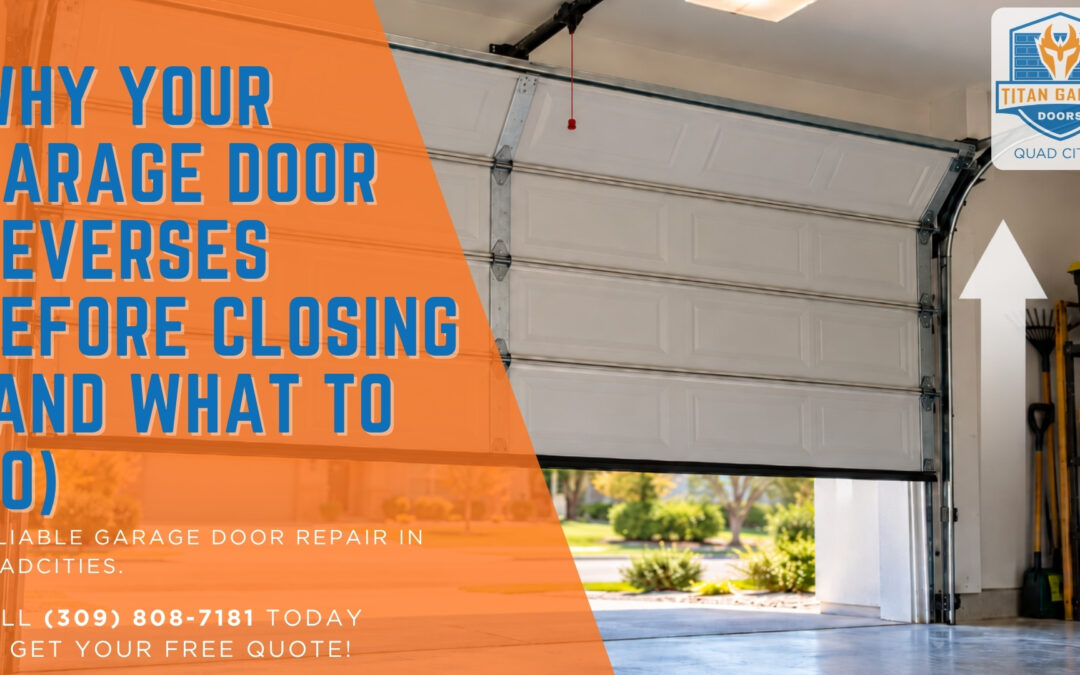
You press the garage door remote, watch the door start closing, and then it suddenly goes back up. You try again, but the same thing happens. Now your garage is wide open, and you’re wondering what’s wrong. Garage door reversing can happen for several reasons, from a dirty safety sensor to a problem with the opener or door tracks. Sometimes, a quick check solves the issue. Other times, the door needs professional attention.
If you’re dealing with a garage door that won’t close in Moline, IL, or elsewhere in the Quad Cities, this guide explains what causes the problem, what you can safely check, and when to schedule a repair.
Why Does Your Garage Door Reverse Before Closing?
Your garage door doesn’t reverse for no reason. Most modern garage door openers have built-in safety features that stop or reverse the door when something interferes with closing. For example, the safety sensors near the floor help detect objects in the doorway. The opener also monitors resistance as the door moves. If it detects a problem, it may reverse the door to help prevent injury or damage.
But what happens when the doorway is clear and the door still goes back up? That’s when you need to look beyond the safety feature itself. The system may be reacting to something you can’t immediately see, or a component may not be working correctly.
The point where your garage door reverses can offer an important clue. A door that reverses immediately may have a different problem from one that reaches the floor before going back up. Let’s look at the common causes and what each one means for your garage door.
5 Common Causes of Garage Door Reversing
A reversing garage door doesn’t automatically mean you need a new opener. In many cases, the problem starts with something much smaller.
Here are five issues worth knowing about:
1. Dirty or Misaligned Garage Door Safety Sensors
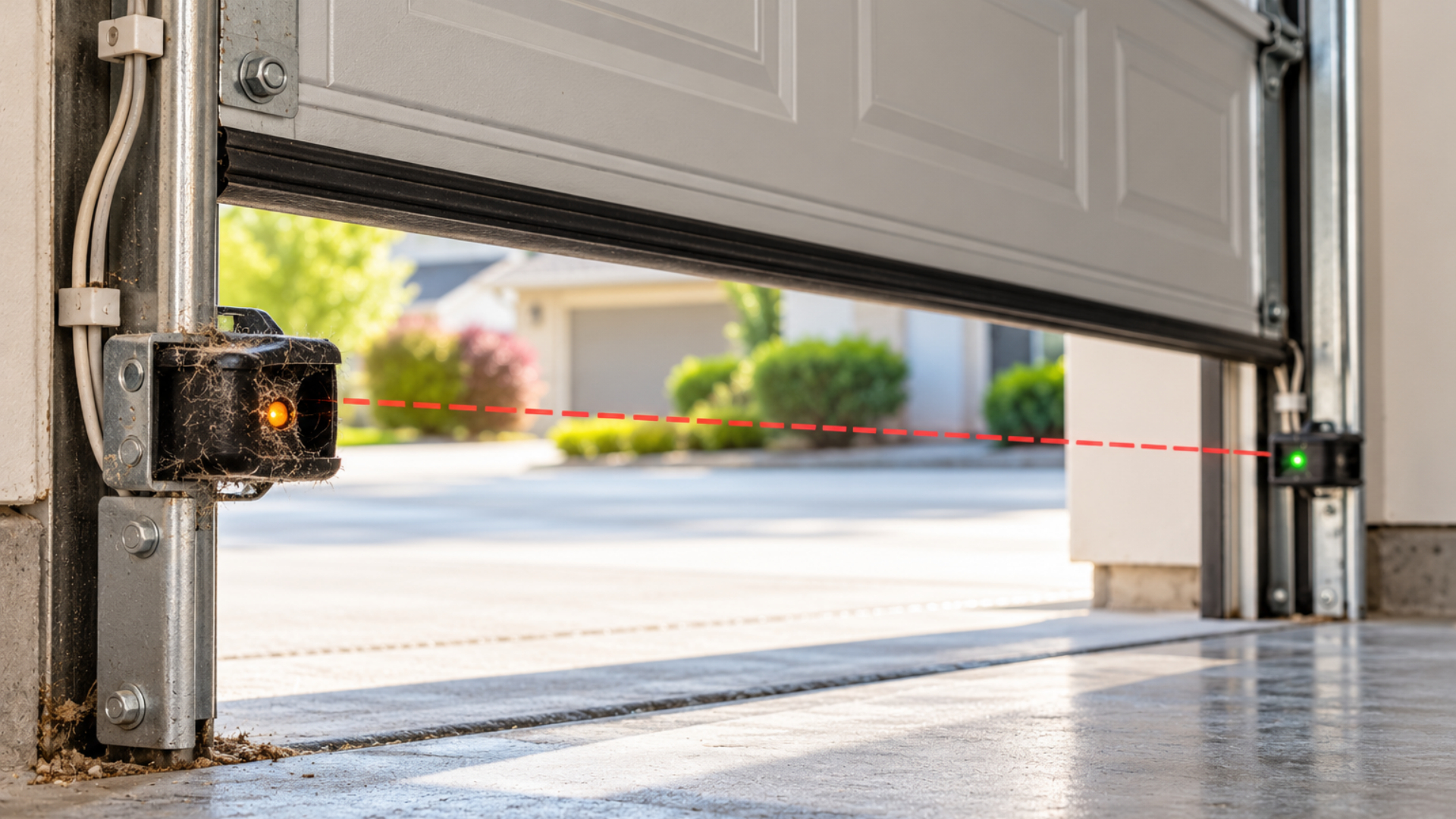
Your garage door safety sensors sit near the bottom of the tracks, facing each other. They create an invisible beam across the opening. When something blocks that beam, the opener should prevent the door from closing normally.
Dust, cobwebs, storage boxes, or a sensor that someone accidentally bumped can interfere with the signal. As a result, the door may reverse even though you can’t see anything in its way.
What to check: Look for objects between the sensors, gently clean both lenses, and check whether the sensors appear crooked.
2. Something Is Blocking the Door’s Path
Sometimes, the problem really is an obstruction. A broom, children’s toy, or piece of stored equipment can sit partly inside the door’s path. Even a small object may trigger the opener’s safety response.
In Moline, changing weather can also bring leaves, dirt, and other debris into the garage entrance.
What to check: Inspect the floor, threshold, and visible track areas for objects or buildup. Keep your hands away from moving parts.
3. The Opener’s Travel Settings Need Adjustment
Your opener needs to know where the garage door should stop when it reaches the floor. Manufacturers call this its travel setting. If the opener tries to push the door farther than it should, the system may detect resistance and reverse.
This often explains why a door travels almost all the way down before going back up.
What to check: Notice whether the door consistently reverses just as it reaches the floor. A technician can verify the travel settings and check for other causes before making adjustments.
4. Worn Rollers or Track Problems
A garage door should move smoothly along its tracks. However, worn rollers, bent tracks, or loose hardware can interrupt that movement. When the opener encounters unusual resistance, its safety system may reverse the door.
You might also hear scraping or grinding sounds. Does one side appear to move differently from the other? That can point toward a mechanical problem rather than a sensor issue.
What to check: Look for visible track damage, uneven movement, or unusual gaps. Leave roller, track, cable, and spring repairs to a professional.
5. Garage Door Opener or Wiring Problems
Sometimes, the sensors look fine, but the door still reverses. Damaged sensor wires, loose connections, or a faulty opener component may interrupt communication between the safety system and motor.
In other cases, the opener’s force settings or internal controls may need attention.
What to check: Look for visible wire damage without touching electrical connections. If the problem continues, professional garage door opener repair may be necessary.
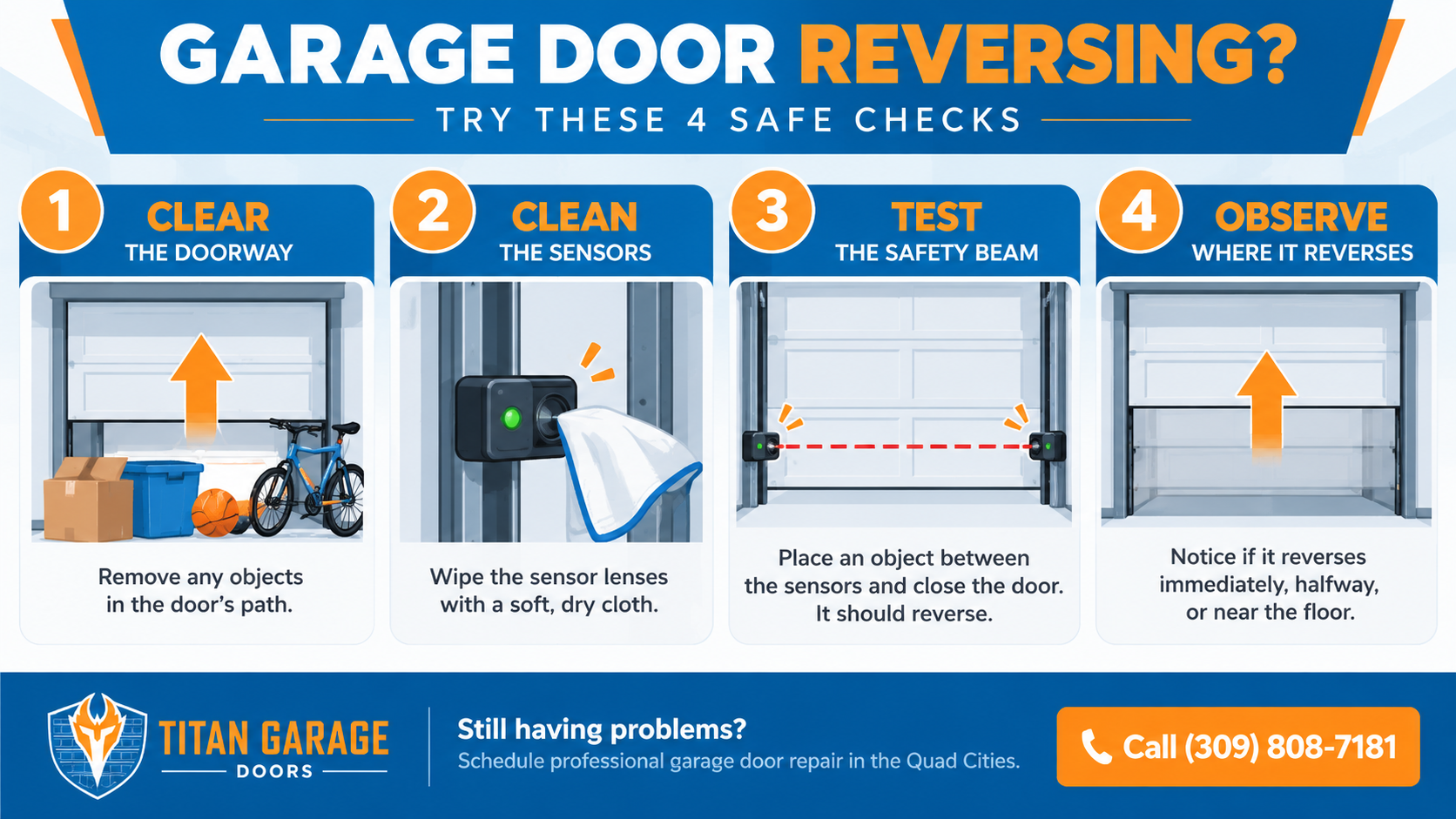
How to Troubleshoot a Garage Door That Keeps Reversing
Before scheduling service, you can perform a few simple checks to better understand the problem. These steps focus on areas homeowners can inspect without opening electrical components or adjusting high-tension hardware.
Step 1: Clear the Garage Door Opening
Start by looking across the entire doorway. Move tools, toys, boxes, and other objects away from the opening. Check the floor where the door meets the ground, too.
If something was blocking the path, clearing it may restore normal operation.
Step 2: Clean and Inspect the Safety Sensors
Find the small sensors near the bottom of both tracks. Gently wipe each lens with a soft, dry cloth. Then look at the indicator lights and check whether the sensors face each other.
A blinking or unlit indicator may suggest an alignment, wiring, or power problem. However, different opener brands use different light patterns.
Step 3: Perform a Garage Door Sensor Test
If the door has no visible mechanical damage and otherwise operates normally, you can check whether the sensors respond to an obstruction. Open the garage door fully then place a cardboard box between the sensors, then stand clear and press the remote to close the door. The door should not close normally while the box interrupts the sensor beam.
If it attempts to close despite the obstruction, stop the test and arrange professional service.
For more detailed instructions, read our previous guide on how to test garage door safety sensors before winter.
Step 4: Watch Where the Door Reverses
Once you’ve cleared the opening and removed the test box, pay attention to the door’s behavior if it is safe to operate. Does it reverse immediately, halfway down, or just before touching the floor? That detail can help distinguish sensor problems from travel-setting or mechanical issues.
If the door moves unevenly, makes loud noises, or appears damaged, stop testing and schedule an inspection.
When Does Garage Door Reversing Need Professional Repair?
A dirty lens or misplaced object may explain a simple sensor problem. However, repeated reversing can also signal an issue that requires tools, testing, or mechanical adjustments.
Schedule professional garage door opener service if:
- The door continues reversing after you clean the sensors and clear the opening.
- The sensor indicator lights remain off or blink unexpectedly.
- You notice damaged wiring, bent tracks, or worn rollers.
- The door reverses near the floor during every closing attempt.
- The door moves unevenly or makes scraping and grinding noises.
- The safety sensors fail the obstruction test.
At Titan Garage Doors Quad Cities, our approach is to identify what’s triggering the reversal before recommending a repair. That means checking the sensor condition and alignment, inspecting visible wiring, evaluating door movement, and testing the opener’s operation as appropriate.
Depending on the findings, the solution may involve opener sensor repair, sensor replacement, opener adjustments, or mechanical repairs.
Concerned about safety sensor repair cost? A proper diagnosis can clarify whether the sensors actually need replacement or whether another part of the system is responsible.
Can You Keep Using a Garage Door That Reverses?
If your garage door repeatedly reverses, it’s best to address the problem before relying on it for everyday use. A malfunctioning safety sensor can interfere with closing. Meanwhile, damaged tracks or lifting components may create additional hazards if you keep operating the door.
Don’t disconnect the sensors, force the door closed, or repeatedly press the remote hoping the problem will disappear. If the garage door won’t close and your garage remains exposed, arrange professional service. A technician can determine how to restore safe operation without compromising the opener’s safety features.
Garage Door Reversing FAQs
Why does my garage door reverse when it touches the floor?
The opener may have an incorrect travel setting, or the door may encounter resistance near the floor. A technician can check both before adjusting the opener.
Can cold weather cause garage door reversing?
Cold weather can affect door movement, especially when ice, debris, or stiff components create resistance. However, weather alone doesn’t confirm the cause. Inspect the doorway and arrange service if the problem continues.
Do I need a new opener if my garage door keeps reversing?
Not necessarily. Sensor alignment, wiring, travel settings, or door hardware may be responsible. Garage opener troubleshooting can help determine whether the opener needs repair or replacement.
Can I repair garage door sensors myself?
You can clean the lenses, remove obstructions, and inspect the sensor area visually. Leave electrical wiring repairs and uncertain sensor faults to a qualified technician.
Need Your Garage Door Closed Safely? Call Titan Garage Doors Quad Cities
A garage door that keeps reversing can interrupt your plans and leave your home exposed, especially when you’re trying to leave for work or settle in for the evening. Titan Garage Doors Quad Cities provides garage door sensor troubleshooting, opener repair, and professional garage door repair in Moline, IL, and surrounding Quad Cities communities.
Our certified technicians can inspect the sensors, opener, tracks, and related hardware to find out why your door keeps reversing and recommend the right repair.
Need the door closed safely? Ask about same-day garage door repair availability and our current discounts and special offers. Call Titan Garage Doors Quad Cities at (309) 808-7181 today to schedule service and get your garage door working properly again.