15 YEARS OF SERVICE


You press the opener, expecting the door to rise smoothly, but instead it starts, hesitates, shakes, and then continues upward. If your garage door jerky movement started after a busy summer, that change is worth paying attention to.
Summer in the Quad Cities often means more trips, more yard work, more kids coming and going, and more use of the garage as the main entrance. All of those extra cycles can bring existing wear to the surface. Heat, dust, and regular use can also make a small problem easier to notice.
The good news is that a jerky garage door does not automatically mean you need a major repair. However, it does mean something in the system is no longer moving as smoothly as it should. The goal is to figure out what changed before continued use creates a bigger problem.
Why Your Garage Door Gets Jerky After Summer
A jerky garage door usually points to added resistance, uneven lifting, or a part that has started wearing down. After months of frequent use, several different issues can create the same symptom.
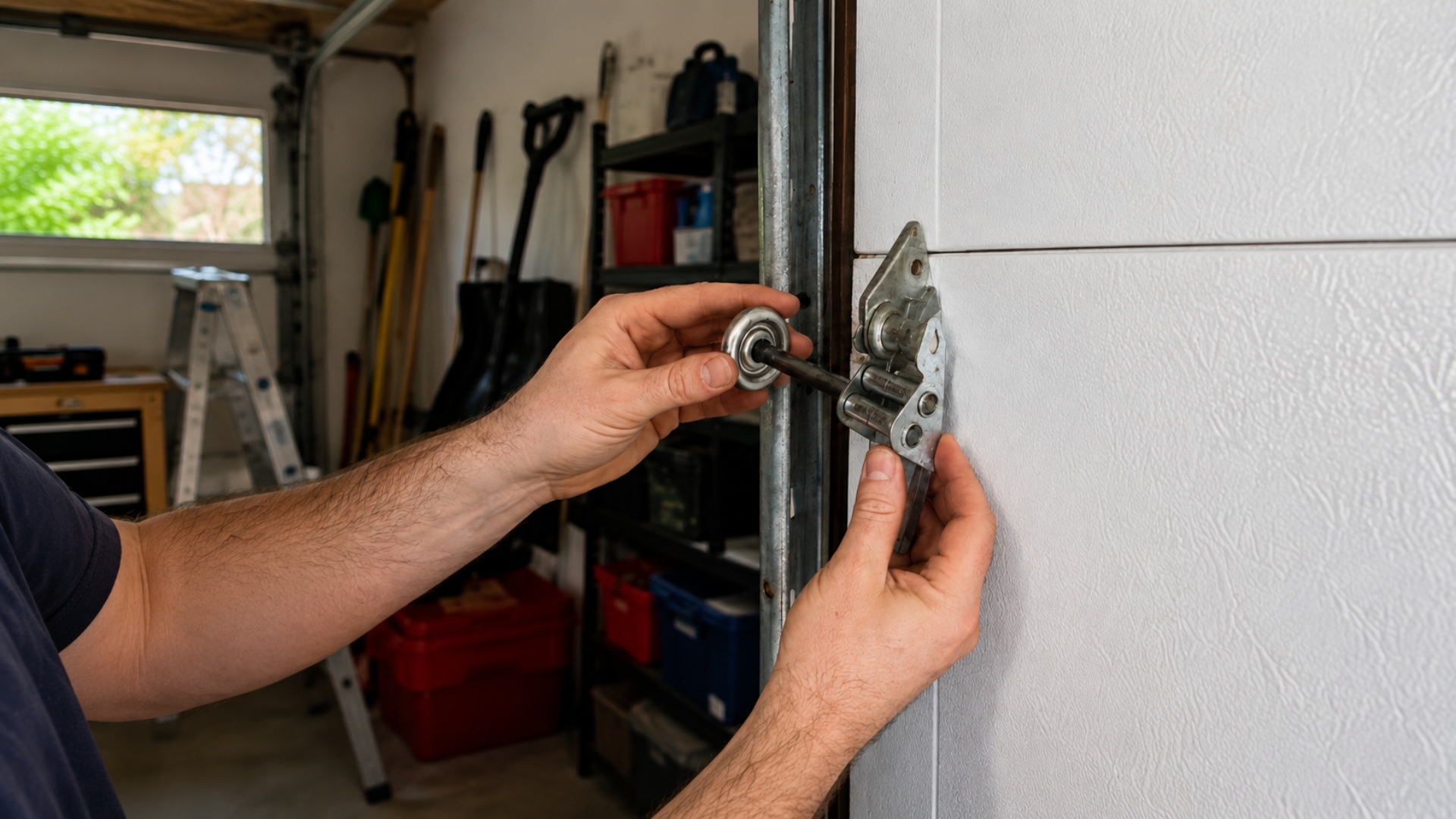
1. Worn Rollers Are No Longer Moving Smoothly
Garage door rollers guide the door through the tracks every time it opens and closes. After a busy summer, rollers that were already worn may start dragging, wobbling, or catching instead of rolling smoothly. You may notice the door shake at one specific point or hear scraping as it moves. If several rollers show wear, the movement can feel rough through much of the cycle.
This does not always mean the rollers have completely failed. However, worn rollers can create extra resistance and force other parts to work harder.
2. Weak Springs Are Affecting Door Balance
The garage door opener does not carry the full weight of the door. The spring system provides most of the lifting support. As springs weaken, they may no longer balance the door evenly. The opener then has to compensate, which can make the door hesitate, shake, or move unevenly.
A spring does not have to break before it causes trouble. In many cases, the first sign is a change in movement rather than a loud snap. If the door also feels heavier than usual or the opener sounds strained, the spring system deserves a closer inspection. Scheduling garage door spring repair early can help prevent additional strain.
3. Cable Wear Can Make One Side Move Differently
Lift cables work with the springs to raise and lower the garage door evenly. When one cable starts fraying, loosening, or sitting incorrectly on the drum, the door may no longer move evenly from side to side. That uneven pull can make the door shake, tilt, or catch during operation.
A cable problem can also become unsafe quickly. If one side of the door appears higher than the other or you notice a loose cable, stop using the door and schedule garage door repair.
Do not try to reposition the cable yourself. The cable works under spring tension and requires professional handling.
4. Track Resistance Can Interrupt Smooth Movement
A roller can only move smoothly if the track gives it a clear path. During summer, dirt, dust, leaves, and debris can collect around the garage. A slightly bent track or loose track bracket can also create resistance at one point. This often causes a jerky garage door to shake or hesitate in the same spot during every cycle.
You can look for obvious debris from a safe distance, but avoid loosening track hardware or forcing the track back into position. If the door has actually come out of the track, stop using it and call for same day garage door service.
5. The Opener May Be Straining Against Another Problem
When the door jerks, many homeowners assume the opener is failing because that is the part they hear running. Sometimes the opener does have a problem. However, it may simply be reacting to resistance somewhere else in the system. Weak springs, worn rollers, or poor balance can force the opener to pull harder than normal. That extra strain can make the movement look rough even when the opener is not the original cause.
Before replacing or adjusting the opener, a technician should inspect the full door system. That helps avoid fixing the wrong part while the real problem remains.
What to Do When Your Garage Door Starts Moving Jerky
You do not need to diagnose the exact problem yourself. Instead, focus on a few safe observations that can help you decide what to do next.
- Watch where the jerking happens. Notice whether it starts right away, happens in the middle, or appears at one specific point.
- Check what you can safely see. Look for debris in the tracks, visible roller damage, a loose cable, or an obvious spring gap.
- Stop if the movement looks unsafe. A crooked door, severe shaking, loose cable, or broken spring needs professional garage door repair.
If the door still operates but the jerking continues, schedule a garage door service before the extra resistance starts affecting other parts.
Garage Door Jerking? Use This Quick Guide
Once you notice jerky movement, you do not need to figure out the exact cause on your own. What matters is knowing what you can safely check and when you should stop using the door.
The quick guide below walks you through three simple steps: watch how the door moves, look for visible problems without touching high-tension parts, and choose the safest next step based on what you find.
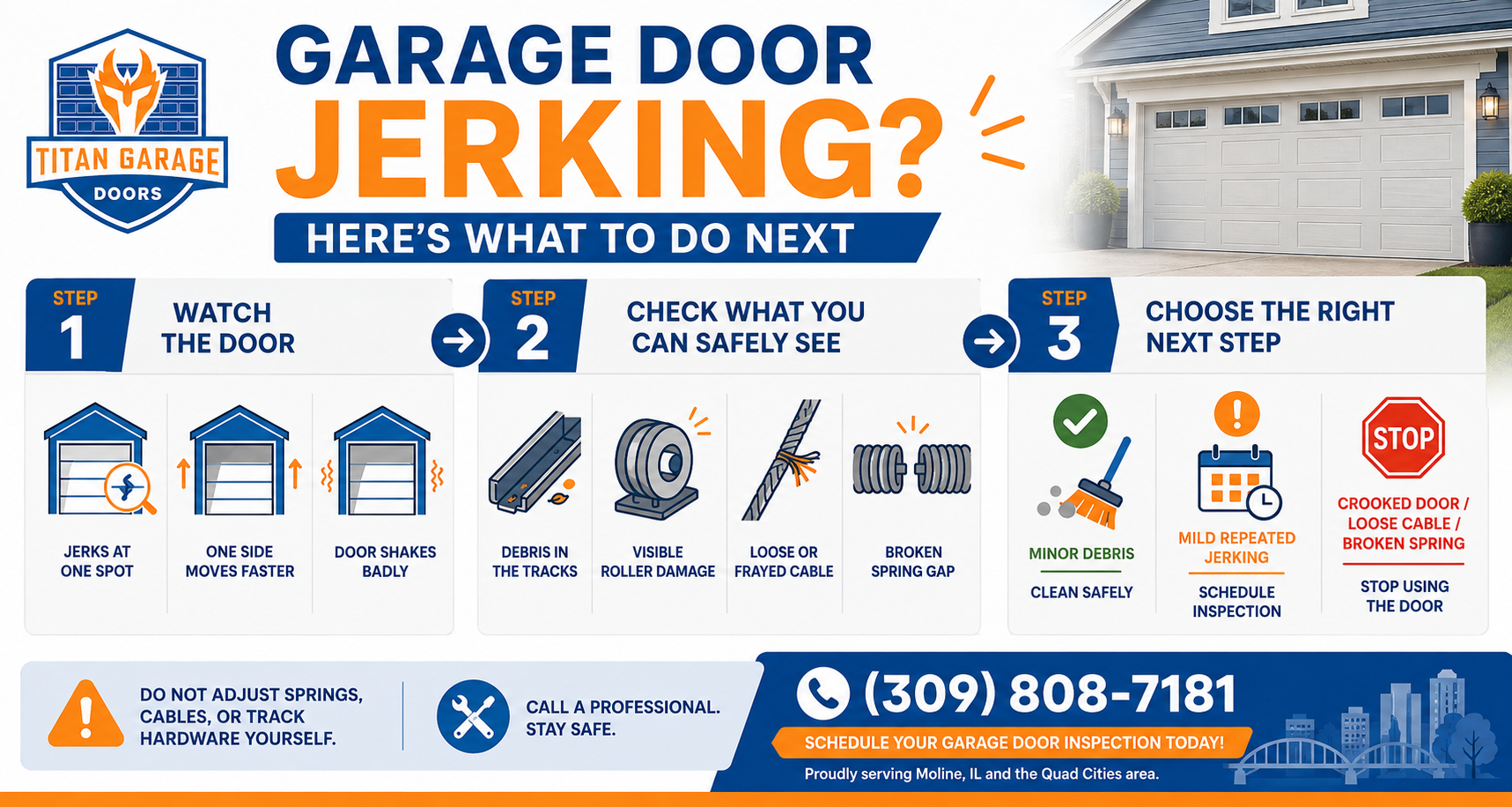
Use the guide as a quick reference, but leave springs, cables, track adjustments, and other high-tension parts to a trained technician.
Frequently Asked Questions
Can jerky movement damage the garage door opener?
Yes. If worn springs, rollers, or track resistance make the door harder to move, the opener may have to work harder during every cycle. Over time, that extra strain can wear down the motor, drive system, or internal parts.
Can a jerky garage door come off the track?
It can, especially if the movement comes from a damaged roller, cable problem, or track issue. Stop using the door if it starts leaning, shaking severely, or moving unevenly from side to side.
Can lubrication fix jerky movement?
Sometimes. Dry hinges or rollers can create rough movement, and the right garage door lubricant may help. However, lubrication will not fix a broken spring, worn roller, damaged cable, or bent track.
Can summer heat cause a jerky garage door?
Heat alone usually does not cause the problem. More frequent summer use, dust, dry moving parts, and existing wear can make the issue easier to notice after several busy months.
Should I replace the opener if the garage door jerks?
Not automatically. A technician should inspect the door balance, springs, rollers, tracks, and cables before blaming the opener. In many cases, the opener is reacting to another problem rather than causing the jerky movement.
Catch Jerky Garage Door Problems Before They Get Worse
A garage door should move in one smooth, controlled motion. If it starts hesitating, shaking, or moving unevenly after summer, those changes may signal a problem with the door’s springs, rollers, tracks, opener, or other moving parts.
The issue may be minor at first, but repeated jerking can place additional strain on the entire system. Having the door inspected while it still operates can help identify the cause, prevent further damage, and reduce the risk of a sudden breakdown.
If your garage door is no longer moving smoothly, contact a certified garage door technician to schedule an inspection and address the problem before it becomes a larger repair.
Schedule a Garage Door Inspection Today
If your jerky garage door started acting differently after summer, Titan Garage Doors Quad Cities can inspect the system and find the cause.
We provide professional garage door service, garage door tune-ups, and garage door repair for homeowners throughout Moline and nearby Quad Cities communities. Our technicians check the rollers, tracks, springs, cables, balance, and opener so you get a clear answer instead of a guess.
Contact Titan Garage Doors Quad Cities today at (309) 808-7181 to schedule a garage door inspection before rough movement turns into a door that will not open at all.