15 YEARS OF SERVICE

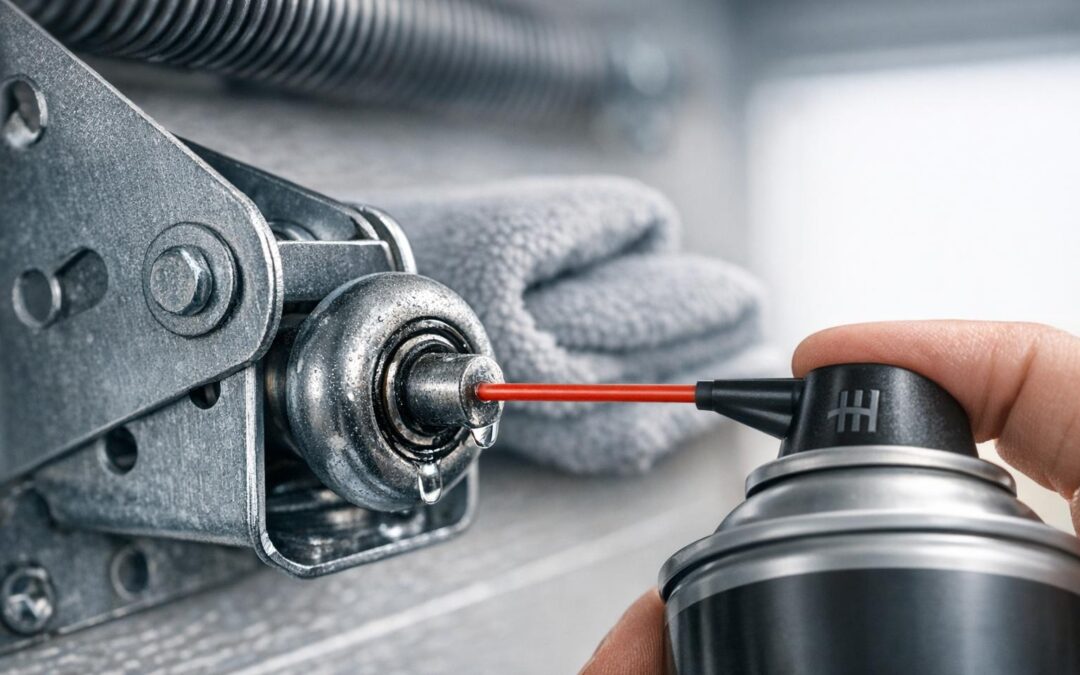
A noisy garage door is a sign it needs maintenance. Regular lubrication every 3 to 6 months can reduce noise, prevent wear, and extend its lifespan. Here’s what you need to know:
- Symptoms: Squeaks, grinding noises, or resistance when opening.
- Tools: Silicone or lithium-based sprays, ladder, gloves, and safety glasses.
- Steps: Disconnect the opener, clean parts, and apply lubricant to hinges, rollers, springs, and pulleys. Avoid lubricating tracks.
- Maintenance Tip: Test the door manually after lubrication and listen for unusual sounds.
Sticking to this routine can help avoid expensive repairs and keep your garage door running smoothly. If issues persist, consult a professional.
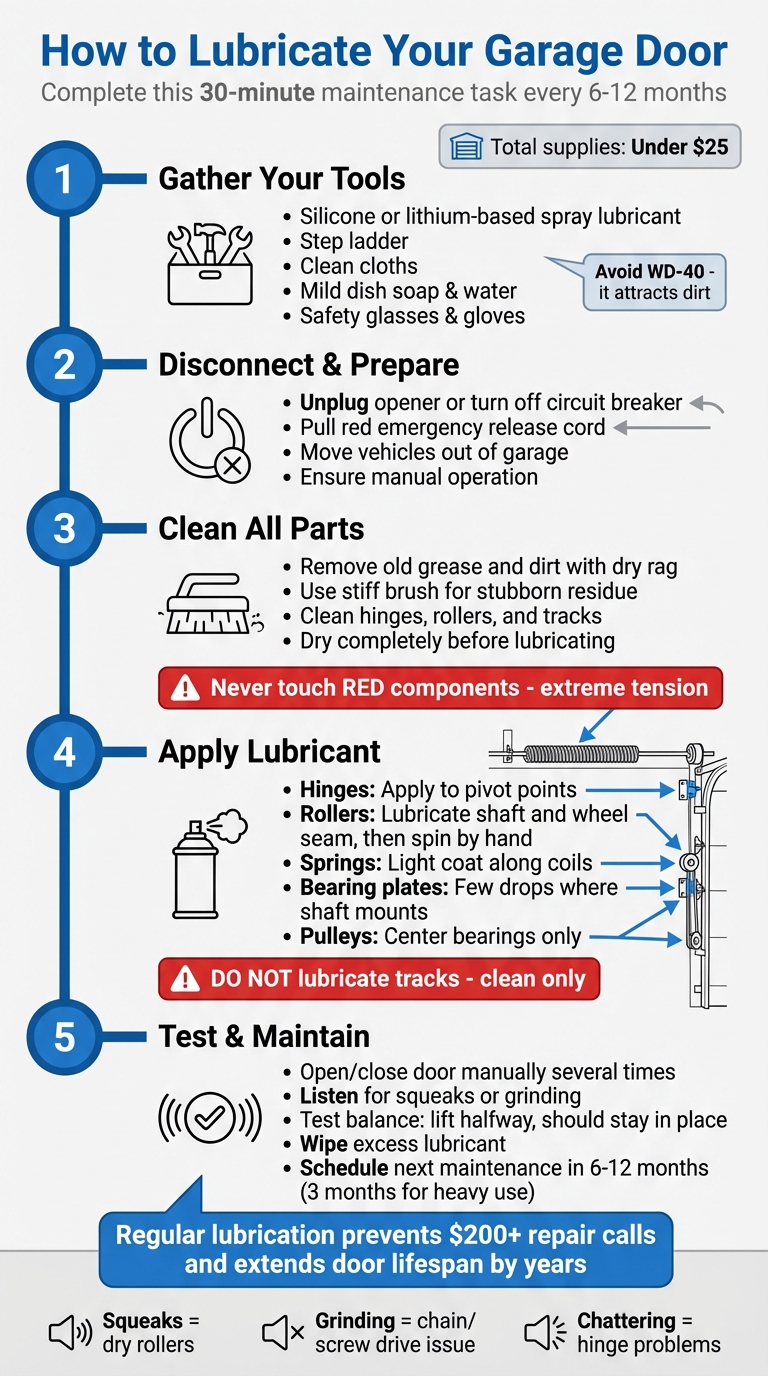
Step-by-Step Guide to Lubricating Your Garage Door
Garage Door Getting Louder? This is Why and How To Fix It!
sbb-itb-cf36777
Tools and Materials You’ll Need
Before diving in, make sure you have everything ready to keep the process quick and safe. Most of the supplies you’ll need are budget-friendly – typically under $25 total. A can of specialized garage door lubricant usually costs less than $10 [3].
Best Lubricants to Use
For most garage door parts, silicone-based sprays work best. They resist water, handle extreme temperatures, and don’t attract dust or dirt [2,3]. For areas under more stress, like springs and hinges, lithium-based lubricants are a better fit. They create a thicker, longer-lasting layer that reduces metal-on-metal wear [3,4]. Look for aerosol sprays with straw attachments to make applying lubricant in tight spots easier [3,4].
Steer clear of WD-40 and similar petroleum-based products. As Timothy Moore, Contributing Writer at Angi, points out: “While you can technically use WD-40 to lube a garage door, it is not the best option since the oil it leaves behind can attract dirt” [3]. These products act more like degreasers and can cause buildup and friction over time [2,3,4].
Other Supplies
A sturdy step ladder is essential for safely reaching components like springs and bearing plates. Keep clean cloths on hand to wipe away grime and excess lubricant. For cleaning tracks and other parts, use a mix of mild dish soap and water [3,4]. An old toothbrush can help scrub away stubborn residue in hard-to-reach areas.
Safety gear is a must: gloves protect your hands from chemicals, and safety glasses safeguard your eyes from any dripping lubricant [3,4]. If your garage door has nylon rollers, check if they have exposed metal bearings – those need lubrication, but solid nylon rollers should remain dry [4]. Once you’ve gathered all your tools and materials, you’re ready to prepare your garage door for proper lubrication.
Preparing Your Garage Door for Lubrication
Disconnect the Opener
Before working on any moving parts, make sure to completely power down your automatic opener. This means unplugging the unit or switching off its circuit breaker [2]. This step ensures no one can accidentally activate the door using a remote or wall button while you’re working near components like the chain, rollers, or springs.
Once the power is off, pull the red emergency release cord. This action disconnects the door from the automated system, allowing you to move it manually [5]. Manual operation is crucial for accessing hidden bearing surfaces and ensuring the lubricant spreads evenly across all parts. Also, move any vehicles out of the garage to avoid overspray and give yourself full access to the door mechanism [2]. With the door safely disconnected, you’re ready to clean the surfaces for a smooth lubrication process.
Clean the Tracks and Parts
The next step is to thoroughly clean the door’s components. Old grease and dirt can create a gritty paste if left behind, so take the time to remove them. Use a dry rag, stiff brush, or even an old toothbrush to scrub away dust and grime from tracks, hinges, and rollers. For tougher residue, a damp cloth with a few drops of mild dish soap works well [5].
Make sure all surfaces are completely bare before applying any lubricant. As Gunther advises: “You want to see bare metal or plastic before you apply anything new” [5]. After cleaning, dry all parts thoroughly with a microfiber towel – trapped moisture can lead to rust. Keep the tracks themselves dry, as lubricating them can attract debris and cause the rollers to slide rather than roll smoothly [5].
While cleaning, check for any loose screws, nuts, or bolts, and tighten them if needed. However, steer clear of any red-colored components. According to Raynor Garage Doors: “Red colored components are under extreme tension and can cause serious injury or death if removed” [2]. Adjusting or removing springs is a job strictly for professionals.
How to Lubricate Each Component
Rollers and Hinges
Once your garage door is clean and disconnected, you can start lubricating its parts to ensure smooth operation. Begin with the rollers and hinges, as they’re often the culprits behind noisy doors. For the hinges, apply a small amount of lubricant directly to the pivot points – where the metal rotates on the pin or bolt. Be careful not to overdo it, as excess lubricant can drip and attract dust.
For the rollers, there are two critical spots to address. First, apply lubricant where the central shaft connects to the bracket. Then, focus on the seam between the wheel and the center hub to ensure the internal bearings are properly lubricated. After applying, spin each roller by hand to work the lubricant into the bearings. If your door has nylon rollers with sealed bearings, use a dry silicone spray to prevent dust buildup.
Once you’ve lubricated the rollers and hinges, manually open and close the door a few times to evenly distribute the lubricant. Wipe away any excess with a clean rag. As general contractor Evan Gunther points out, this step ensures the mechanism continues to operate smoothly.
Springs, Cables, and Pulleys
Next, move on to the door’s spring system and related components. Start with the torsion springs, located above the door. Apply a light, even coat of lubricant along the spring coils. This reduces friction and helps prevent rust, which could cause the springs to wear out prematurely. Don’t forget to add a few drops of lubricant to the bearing plates where the torsion spring shaft is mounted.
If your system includes pulleys, lubricate their center bearings to allow smooth rotation. For doors with extension springs on the sides, focus on lubricating the pulleys rather than the springs themselves. The cables, however, typically don’t need lubrication. Keeping the pulleys in good condition will naturally reduce cable wear. Always wear safety glasses during this process to shield your eyes from rust particles or excess lubricant. Afterward, manually operate the door to help the lubricant seep into the bearings and spring coils.
Tracks
To wrap up, turn your attention to the tracks. Unlike other components, tracks should not be lubricated. Instead, manufacturers recommend simply cleaning them. As Clopay advises, “Wipe down the tracks with a damp cloth to remove any dirt and debris, but don’t add lubrication to the actual tracks. That just makes it harder for the rollers to move, forcing the opener to work harder.” Keeping the tracks clean and free of debris ensures the rollers can glide effortlessly without unnecessary resistance. Use a damp cloth to clean the tracks thoroughly, and leave them dry for optimal performance. Let the well-lubricated rollers do the work!
Testing and Ongoing Maintenance
Test the Door
Once you’ve lubricated all the components, it’s time to see how well everything works. Start by operating the door manually to check for smooth movement. Open and close it several times to ensure the lubricant spreads evenly across all parts.
Pay attention to the sounds the door makes as you move it. High-pitched squeaks usually mean the rollers are dry. Grinding noises might point to issues with the chain or screw drive, while chattering often signals problems with the hinges [5]. To check the door’s balance, lift it halfway and let go. It should stay in place or move slightly – just an inch or two. If it slams shut or shoots open, the springs likely need adjustment by a professional [5].
Make sure to wipe off any extra lubricant to avoid attracting dust. Leftover lubricant can mix with dirt, creating a gritty paste that could lead to more damage [5]. If certain areas still squeak after testing, apply a small amount of lubricant directly to those specific spots instead of reapplying it everywhere [1].
Maintenance Schedule
After confirming everything is running smoothly, it’s important to stick to a regular maintenance routine to keep your garage door in good shape. For most households, lubricating the door every 6 to 12 months is enough to ensure smooth operation [1][6]. However, if your garage door gets heavy daily use or you live in a humid or coastal area where moisture and salt can speed up wear, consider lubricating every 3 months instead [1][5]. Regular lubrication helps maintain balance and reduces noise over time.
“In my shop, we consider this a 30-minute task that consistently prevents $200-plus repair calls for seized rollers, worn chains, or a failed opener motor.” – Evan Gunther [5]
Between lubrication sessions, perform a quick monthly “ear test.” Stand in the garage while the door operates and listen for any unusual noises [5]. Additionally, check the door’s balance and test the safety reversal system by placing a 2×4 board flat on the ground under the door. The door should automatically reverse when it touches the board [6].
If you notice persistent grinding, loud bangs, or popping sounds despite proper lubrication, it’s time to call in the experts. Reach out to Titan Garage Doors Quad Cities for professional assistance. Professional lubrication services typically cost between $80 and $120, while adding a tune-up to an existing repair call usually costs $40 to $80 [5].
Conclusion
Keeping your garage door well-lubricated can significantly reduce friction, noise, and wear. By applying lubricant to hinges, rollers, and springs every 3 to 6 months, you can eliminate those annoying squeaks and safeguard your investment in a door you use daily [2].
Sticking to proper lubrication practices doesn’t just ensure smoother operation – it also extends the life of your door system.
“Lubrication is preventative maintenance that will extend the life of your garage door system.” – Clopay [1]
Routine lubrication can help you avoid costly repairs by minimizing wear and reducing the strain on your opener. Just make sure to use the lubricants recommended for your system.
That said, not every issue can be solved with lubrication. Garage door springs, for example, are under extreme tension and should only be handled by professionals. If your door remains noisy after lubrication, seems unbalanced, or makes loud banging sounds, it’s time to call in the experts. For a detailed inspection and repair, reach out to Titan Garage Doors Quad Cities.
Taking care of your garage door system with regular maintenance will keep it running smoothly for years.
“With regular lubrication, your garage door system will last for years to come.” – Raynor Garage Doors [2]
FAQs
How do I tell if the noise is from the rollers, hinges, or springs?
Listen closely to the type of noise and note when it happens. Rollers tend to squeak or squeal while moving, which often points to dryness. Hinges can make similar sounds, especially during opening or closing, typically caused by wear or insufficient lubrication. Springs might create banging, popping, or creaking noises, usually indicating tension problems. If lubricating doesn’t resolve the issue or the sound continues, it’s a good idea to reach out to a professional to ensure safety.
What if my garage door is still noisy after lubrication?
If your garage door is still noisy after applying lubricant, it might be a sign of worn-out rollers, hinges, or other components. Double-check that you’re using the correct type of lubricant and applying it properly. If the noise persists, it may be time to inspect the door more closely or replace any damaged parts. For ongoing problems, reaching out to a professional technician can help pinpoint and fix the issue efficiently.
When should I call Titan Garage Doors Quad Cities instead of DIY?
If you’re dealing with complex or potentially dangerous garage door problems – like broken springs, frayed cables, or a malfunctioning opener – it’s best to reach out to Titan Garage Doors Quad Cities. While simple tasks, such as lubricating the door’s moving parts, can often be handled on your own, persistent loud noises after lubrication or visible signs of wear and tear are clear indicators that professional help is needed. Their team is available around the clock, offering 24/7 support to ensure your garage door is repaired safely and efficiently.