15 YEARS OF SERVICE

Commercial garage door maintenance is easy to overlook when your doors open and close without a problem. But what happens when a loading dock door gets stuck during a delivery or your warehouse door refuses to close at the end of a shift? Suddenly, a routine workday becomes a headache.
For businesses in Moline, IL, and across the Quad Cities, commercial doors help keep deliveries, equipment, and employees moving. Whether you manage a warehouse, auto repair shop, or storage facility, you depend on those doors more than you might realize.
The good news? You don’t need a complicated system to stay ahead of problems. A simple maintenance plan can help you spot wear early, schedule inspections, and avoid unnecessary interruptions.
Why Commercial Garage Door Maintenance Matters
Think about how often your employees use your commercial doors. Some open a few times each morning, while others operate throughout the day. Every cycle puts wear on moving parts. Over time, rollers may deteriorate, hardware can loosen, and operators may start struggling. Without regular attention, these small changes can lead to unexpected repairs.
A good maintenance plan helps your business:
- Identify damaged or worn components early.
- Reduce unexpected interruptions during busy hours.
- Keep doors operating safely and reliably.
- Plan repair expenses instead of reacting to every breakdown.
- Maintain records of inspections and completed work.
Regular maintenance won’t prevent every failure. However, it gives you more opportunities to address problems before they affect your operations.
Here’s how to build one that works for your business.
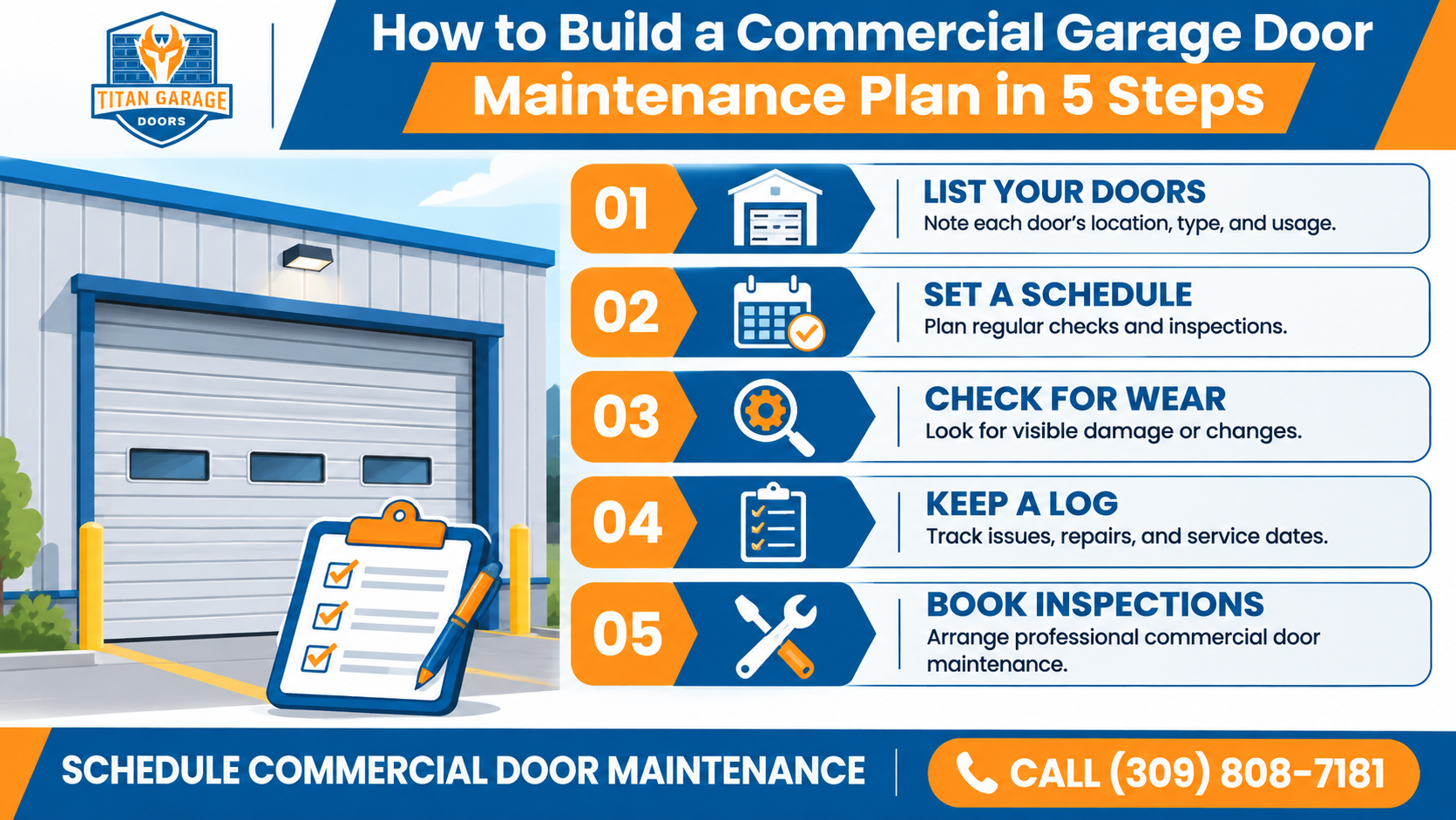
Step 1: Make a List of Every Commercial Garage Door
Before scheduling maintenance, figure out exactly what your business needs to maintain. Walk through your facility and identify each commercial door. If you manage several buildings, include every location.
Record the following details:
- Door location or identification number
- Door type, such as sectional overhead or rolling steel
- Approximate age and manufacturer, if known
- Manual or motorized operation
- Average daily usage
- Previous repairs or recurring problems
For example, a warehouse near Moline’s John Deere Road corridor may have several loading dock doors and one larger entrance for equipment. Those doors might look similar, but they may have very different maintenance needs. Give each door a simple label, such as Dock 1, Dock 2, or Service Bay A. This makes tracking problems much easier.
Step 2: Set a Commercial Garage Door Maintenance Schedule
Not every commercial door needs the same inspection schedule. A door that opens 40 times a day experiences more wear than one employees use twice a week. Door type, operating conditions, and manufacturer instructions also matter.
Start with this practical planning guide:
| Frequency | Maintenance Task |
|---|---|
| Daily | Report unusual noises, slow movement, or visible damage |
| Weekly | Check the doorway for obstructions and obvious damage |
| Monthly | Review door condition, seals, and maintenance records |
| Quarterly | Review recurring issues and determine whether additional service is needed |
| Annually | Arrange a professional commercial garage door inspection, or sooner if recommended |
These intervals are starting points, not universal requirements. High-use doors, specialized systems, and fire-rated doors may need more frequent inspections or specific testing. For busy facilities, coordinate commercial overhead door maintenance with slower shifts or planned downtime. That way, employees can continue working while technicians inspect the equipment.
Step 3: Create a Simple Visual Inspection Checklist
You don’t need to take apart a garage door to recognize early warning signs. In fact, your employees can help by reporting changes they notice during normal use.
Encourage them to watch for these problems:
- Look for Damage Around the Door. Check for dented panels, bent slats, rust, damaged bottom seals, or visible gaps. Forklifts and delivery equipment can accidentally strike commercial doors, so pay attention to areas near loading bays.
- Listen for Changes in Sound. Does the door suddenly grind, scrape, or bang during operation? New noises may indicate worn rollers, loose hardware, or other mechanical problems.
- Watch for Uneven Movement. A commercial door should travel smoothly without jerking, leaning, or getting stuck. If one side moves differently or the door stops unexpectedly, keep the opening clear and request professional service.
- Check for Visible Control Problems. Notice whether the wall controls respond normally or display an error.
If the motor runs but the door doesn’t move, avoid repeated attempts to operate it. Our guide on commercial garage door opener problems explains common warning signs and safe troubleshooting checks.
Safety Reminder: Keep visual checks simple. Never adjust springs, cables, tracks, or operator components yourself. If a door appears unstable, stop using it and arrange professional service.
Step 4: Keep a Commercial Garage Door Maintenance Log
Imagine an employee reports that Dock 2 makes a scraping noise. A week later, someone else notices the same problem. Without a record, you might treat those reports as separate incidents. A maintenance log helps you recognize patterns.
You can use a spreadsheet, maintenance app, or printed checklist. Keep these details together:
| Information | Example |
|---|---|
| Date | November 23, 2026 |
| Door ID | Dock 2 |
| Problem | Scraping noise during opening |
| Reported by | Warehouse supervisor |
| Action taken | Door removed from service; inspection requested |
| Follow-up | Technician visit pending |
After each professional visit, add the inspection findings, completed repairs, and recommended next service date. This history helps you understand which doors need extra attention and where maintenance expenses occur.
Step 5: Schedule Professional Commercial Garage Door Inspections
Employee observations are useful, but they can’t replace a trained technician’s inspection. Commercial doors contain heavy moving parts, high-tension springs, and electrical equipment. Some problems remain difficult to recognize without proper training.
During a professional commercial garage door inspection, a technician may:
- Examine springs, cables, rollers, and tracks.
- Inspect hinges, brackets, and related hardware.
- Check door movement and balance.
- Review operator and control performance.
- Test applicable safety devices.
- Identify parts that need adjustment or replacement.
The exact inspection depends on your door type and manufacturer’s requirements. For a broader explanation of commercial door systems and service needs, read our Ultimate Guide to Commercial Garage Door Services.
Professional inspections also give you an opportunity to discuss upcoming repairs before they become urgent.

Step 6: Plan Your Warehouse Door Maintenance Budget
Unexpected repairs can be frustrating, especially when your business already has equipment, staffing, and operating expenses to manage. Instead of waiting for something to break, include preventive garage door maintenance in your facility’s annual budget.
Consider the number of doors, their age, daily usage, and repair history. Ask your service provider for an inspection estimate and whether any recommended repairs need separate approval.
Remember to leave room for unexpected damage. A forklift accident or sudden component failure can happen even with a maintenance plan.
If you want to understand what a door breakdown can involve, see our loading dock door repair guide. A little planning now can make those unexpected decisions easier later.
Step 7: Review Your Commercial Garage Door Maintenance Plan Regularly
Your maintenance plan shouldn’t sit in a folder untouched for the next year. Review it whenever your facility changes its operating hours, adds equipment, or increases delivery traffic.
Are certain doors requiring more repairs than others? Have employees reported the same problem several times? Use that information to adjust inspection schedules and discuss recurring issues with your technician.
You can also learn from actual repair situations. In a commercial overhead door project on 41st Street in Moline, Titan Garage Doors Quad Cities investigated a motor operator that stopped responding. The project shows why control and operator problems deserve professional attention. A maintenance plan works best when your team updates it as conditions change.
Commercial Garage Door Maintenance FAQs
How often should a commercial garage door receive maintenance?
Follow the manufacturer’s recommendations and consider how frequently employees use the door. High-traffic facilities may need more frequent professional inspections than low-use locations.
Can employees perform commercial garage door maintenance?
Employees can report unusual noises, visible damage, and operating problems. However, trained professionals should handle mechanical adjustments, electrical repairs, and safety-system servicing.
What should a commercial garage door maintenance checklist include?
Include door condition, unusual noises, movement problems, visible hardware damage, control issues, inspection dates, and completed repairs.
What happens if you skip commercial garage door inspections?
You may miss developing wear, damaged components, or safety concerns. These problems can eventually interrupt operations or require more extensive repairs.
Does preventive maintenance eliminate emergency repairs?
No. Unexpected damage and component failures can still happen. However, regular inspections help identify problems early and support better repair planning.
Keep Your Business Moving With Titan Garage Doors Quad Cities
Your commercial doors shouldn’t become another daily worry. A clear maintenance plan helps you stay organized, catch developing problems, and plan service around your business schedule.
At Titan Garage Doors Quad Cities, we help business owners and facility managers in Moline, IL, and surrounding Quad Cities communities with commercial garage door maintenance, inspections, and repairs. Whether you manage one service bay or several warehouse doors, our team can inspect your equipment, explain any concerns, and recommend practical next steps.
Need to plan around your budget? Ask about our available payment plans, ongoing offers, and discounts. We’ll explain current options and eligibility before you decide.
Call Titan Garage Doors Quad Cities at (309) 808-7181 today to schedule a professional commercial door inspection and start building a maintenance plan that fits your business.